
Cooling seawater temperature at South Korean nuclear power plants approaches design limit
 Scan to share
South Korean Climate, Energy and Environment Minister Kim Sung-hwan said on August 11 that due to recent rises in seawater temperature, the temperature of seawater used for cooling at South Korean nuclear power plants has approached the design limit. The government is working with Korea Hydro & Nuclear Power (KHNP) to study countermeasures such as adjusting the location of water intake points.
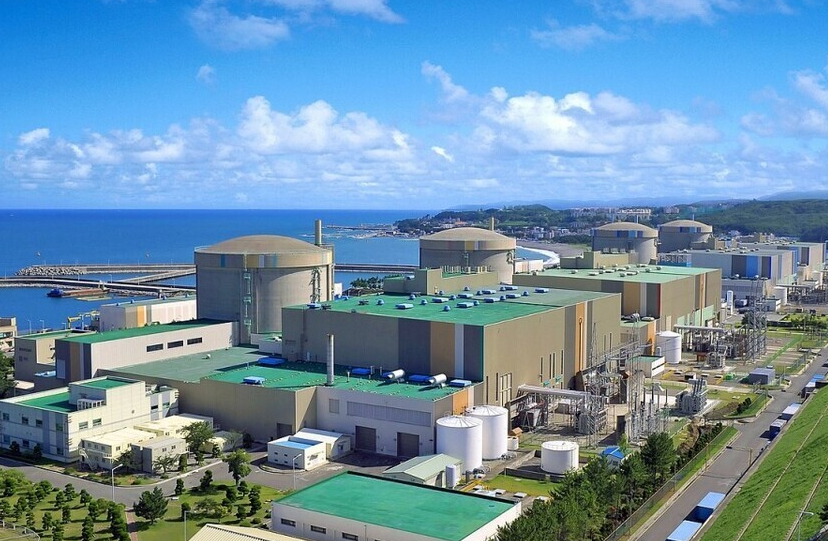
Kim Sung-hwan made the remarks on the same day while answering a question from lawmaker Park Ji-hye at a plenary session of the National Assembly's Climate, Energy, Environment and Labor Committee, stating that the temperature of seawater used for cooling at nuclear power plants has recently "approached the limit," and that KHNP and the government are closely monitoring the situation. He said nuclear power plants cannot be easily shut down over this issue, and therefore the government is pushing forward with adjusting the location of water intake points and preparing multiple response measures.
Park Ji-hye pointed out that the surface seawater temperature off South Korea's east coast has recently risen to approximately 30 degrees Celsius, while the design seawater temperature for nuclear power plants is approximately 31 degrees Celsius. She called for an analysis of the cooling system margins of each nuclear power plant and the establishment of guidelines for reducing power output when necessary.
Kim Sung-hwan also stated that the government will promote the recovery and reuse of waste heat from thermal discharge of nuclear power plants and coal-fired power plants. He said that since the establishment of the Climate, Energy and Environment Ministry, water resources and energy management have been integrated, and the thermal energy contained in water is itself a form of energy, but currently a large amount of warm discharge water is being released directly into the ocean, resulting in energy waste.
He said the government is studying ways to recover and reuse as much waste heat as possible from the discharge of coal-fired power plants and nuclear power plants, while reducing the impact of direct discharge into the sea on the ecosystem. Kim Sung-hwan also cited the use of waste heat from the semiconductor industry for district heating as an example, noting that relevant authorities are currently promoting the recycling of waste heat from Samsung Semiconductor by district heating companies, and that waste heat recovery from power plants will also be one of the key priorities going forward.
Regarding efforts to address the climate crisis, Kim Sung-hwan said the government will further review international trends, statistical methods, and areas that still need strengthening domestically, and will promote necessary improvements.
Disclaimer: Information republished from partner media, institutions or other websites is provided for reference and communication purposes only. It does not imply endorsement of its views or verification of its accuracy. Please contact us if any content infringes rights or requires correction.