
Canada's Rook 1 Uranium Mine Breaks Ground, Could Contribute One-Fifth of Global Uranium Production
 Scan to share
The Rook 1 uranium mine project in northern Saskatchewan, Canada, has officially commenced construction. The project, advanced by NexGen Energy, is located south of the Athabasca Basin, approximately 130 kilometers north of La Loche. Saskatchewan Premier Scott Moe, former Canadian Prime Minister Stephen Harper, Secretary of State for Rural Development Buckley Belanger, and local Indigenous representatives attended the groundbreaking ceremony. The total project investment is approximately CAD 2.2 billion, with an expected construction period of four years. External infrastructure work has already begun, shaft sinking is planned for 2027, and the on-site runway will be expanded to 1,780 meters.
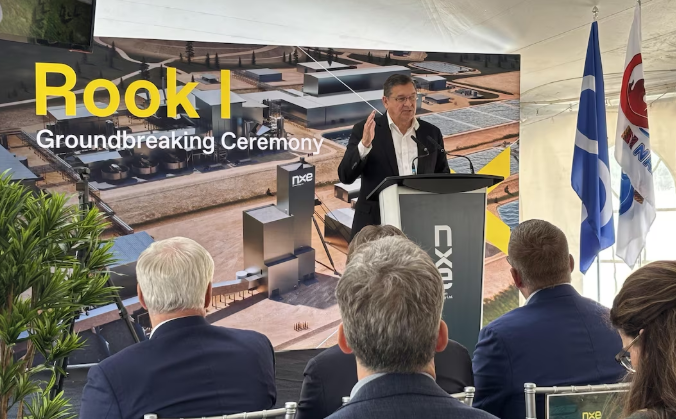
Rook 1 is regarded as one of the world's largest uranium mine projects. NexGen estimates that once operational, the underground mine could produce nearly 13,000 tonnes annually, equivalent to approximately 20% of global uranium output. The deposit was first discovered by NexGen in 2014, and in March of this year, the Canadian Nuclear Safety Commission issued the company a license to begin construction. The company believes that technological developments such as artificial intelligence, data centers, and electrification are driving up demand for reliable baseload power, making nuclear energy a key option in the energy mix once again, and positioning uranium as a strategically significant resource.
From an economic perspective, the project will bring significant employment and investment opportunities to northern Saskatchewan. The construction phase is expected to employ more than 1,400 workers, and once the mine becomes operational, it will create 459 full-time jobs over a 24-year period. NexGen has also signed confidentiality agreements with Dene communities including Clearwater River, Birch Narrows, and Buffalo River, as well as the Métis Nation–Saskatchewan, and is partnering with local stakeholders to build a 59-bed hotel in La Loche. According to data from the Saskatchewan Mining Association, the province's uranium industry currently employs more than 2,300 people, 49% of whom are northern residents.
The resurgence in uranium demand is set against the backdrop of a global reassessment of low-carbon, reliable electricity. Greg Kennedy, a retired nuclear engineering professor, noted that regions including Europe, Asia, Africa, and the Middle East are seeking to reduce greenhouse gas emissions, and that nuclear power is less susceptible to weather fluctuations than wind and solar, providing around-the-clock electricity. Given that large-scale energy storage remains costly, nuclear energy plays a supporting role in low-emission power portfolios. Canada itself is also a nuclear nation, with Ontario and New Brunswick using nuclear power, and its domestic uranium resources and reactor technology give it significant capacity to supply global markets.
For Saskatchewan, Rook 1 is not merely a mining project but also carries a role in energy security and international supply chains. Scott Moe believes the mine is of great importance to Canada's and the world's energy security, and that Saskatchewan should participate in developing the resources needed for global nuclear expansion. As multiple countries revisit the role of nuclear power in emissions reduction and supply reliability, Canada's uranium industry may enter a new growth cycle, and the launch of Rook 1 marks the country's first new uranium mine in nearly two decades entering the substantive construction phase.
Disclaimer: Information republished from partner media, institutions or other websites is provided for reference and communication purposes only. It does not imply endorsement of its views or verification of its accuracy. Please contact us if any content infringes rights or requires correction.