
KHNP Maps Out SMR Security System to Address Drone and Nuclear Material Threats
 Scan to share
Korea Hydro & Nuclear Power (KHNP) is preparing to establish a new security response system for Small Modular Reactors (SMRs) and decommissioned nuclear power plants. Due to their smaller size and more flexible deployment methods, SMRs may be distributed across different regions in the future, and the security risks they face are not entirely identical to those of traditional large-scale nuclear power plants. KHNP plans to launch a research service on “physical protection implementation plans for new nuclear energy projects” in September, focusing on assessing risks such as terrorist attacks, external intrusion, theft of nuclear materials, facility sabotage, and drone attacks.
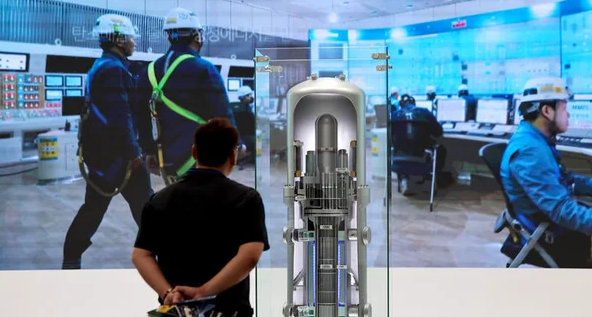
Physical protection refers to a nuclear security system established for nuclear materials and nuclear facilities, encompassing prevention, detection, interdiction, and emergency response. Specific measures include designating protected areas within nuclear power plants, implementing access control, deploying surveillance and intrusion detection equipment, constructing barrier facilities, assigning security personnel, and developing emergency response procedures. The research being advanced by KHNP is not targeted at a single new nuclear power plant, but rather aims to proactively address new regulations being contemplated by regulatory authorities, particularly the new protection requirements arising from SMR and nuclear power plant decommissioning operations.
The Nuclear Safety and Security Commission of Korea is also adjusting its regulatory framework in parallel. Traditional nuclear safety regulation has long centered on large-scale nuclear power plants, but SMRs differ in reactor size, layout configuration, nuclear fuel characteristics, multi-module operation, and remote monitoring and control, thus requiring dedicated physical protection standards. Korean regulatory authorities plan to invest KRW 1.1 billion from 2025 to 2027 to develop physical protection regulatory methods for the full lifecycle of light-water SMRs, covering core area layout, intrusion detection and interdiction, access control, unmanned aerial vehicle response, and nuclear material transport safety assessment.
The timing for initiating related responsibilities will also be moved forward. Under the revised “Act on Physical Protection and Radiological Emergency Preparedness for Nuclear Facilities, etc.,” which takes effect in April next year, entities applying for nuclear power plant construction permits and standard design certifications must also assume physical protection responsibilities. This means that future SMR and new nuclear power projects cannot wait until just before facility operation to deploy security systems; instead, protection systems must be integrated into overall planning during the design and construction phases.
As SMR commercialization accelerates, nuclear facility security is shifting from the traditional “centralized on-site protection” model to a more complex full-lifecycle, distributed protection paradigm. This research by KHNP is expected to review domestic and international cases and regulatory changes, clarify the protection measures to be implemented at different project stages, and propose internal response tasks for the company. While promoting the development of new nuclear energy technologies, Korea is also beginning to incorporate new risks such as drones, remote control, and multi-point deployment into its nuclear security system design.
Disclaimer: Information republished from partner media, institutions or other websites is provided for reference and communication purposes only. It does not imply endorsement of its views or verification of its accuracy. Please contact us if any content infringes rights or requires correction.