
Oak Ridge National Laboratory marks 80 years of isotope research and production, with applications spanning medicine, industry, and scientific research
 Scan to share
On August 2, 1946, the Clinton Laboratories in Oak Ridge, Tennessee, held the first formal ceremony to deliver reactor-produced radioactive isotopes. A shipment of carbon-14 was sent from there to the Barnard Free Skin and Cancer Hospital in St. Louis, Missouri. Over the past 80 years, this event has been regarded as the starting point of Oak Ridge National Laboratory's isotope research and production endeavors, and also marked the beginning of broader civilian applications for reactor-produced radioactive isotopes.
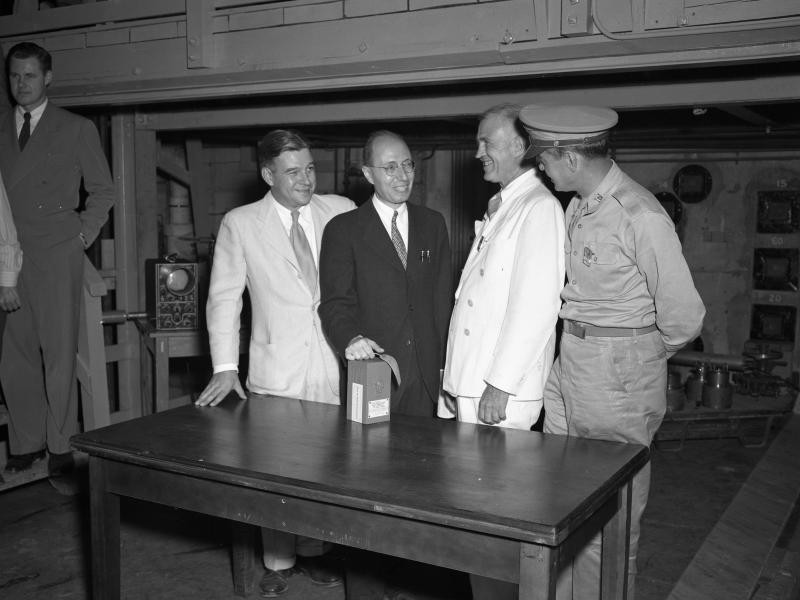
After World War II, the U.S. scientific community began exploring peaceful uses of atomic energy, with radioactive isotopes becoming an important direction. As unstable variants of elements, radioactive isotopes release radiation during decay and can be used in medicine, industry, scientific research, and other fields. Oak Ridge's X-10 graphite reactor, originally built during the Manhattan Project, gradually became a major source of radioactive isotopes for civilian institutions after the war.
Prior to the first formal delivery, Oak Ridge had already published a catalog of available radioactive isotopes. After officially launching supply operations, the laboratory quickly processed backlogged orders and continued to receive new requests. Records show that in the first year, Oak Ridge National Laboratory delivered more than 1,000 batches of isotopes covering 60 different varieties; over the following four years, deliveries increased to approximately 20,000 batches.
As demand expanded, Oak Ridge National Laboratory gradually developed capabilities in isotope production, separation, processing, and packaging. The graphite reactor became one of the world's important sources of radioactive isotopes, supporting research in biology, nuclear energy, radiation safety, and other fields. The laboratory also built hot cell facilities, including the Radiochemical Engineering Development Center, for radioactive isotope processing and production.
Oak Ridge National Laboratory's High Flux Isotope Reactor simultaneously undertakes research and production missions, with strong neutron flux capabilities that enable the production of short-lived or difficult-to-obtain isotopes such as berkelium, californium, einsteinium, and fermium, some of which have limited supply channels worldwide. Meanwhile, the calutron facilities near Oak Ridge, formerly used for uranium isotope separation, were repurposed after the war for stable isotope separation, with related products used in medical, scientific, commercial, and national security applications.
Currently, Oak Ridge National Laboratory offers more than 250 isotopes, including both stable and radioactive isotopes. The laboratory typically completes orders for approximately 80 different isotopes each year through the U.S. Department of Energy's Office of Isotope R&D and Production, serving users including medical institutions, research organizations, and industrial partners. These isotopes are used in cancer treatment, disease diagnosis, discovery of new elements, oil and mineral exploration, weld structural integrity inspection, material chemical composition analysis, and nuclear battery power sources, among other applications.
In terms of specific applications, plutonium-238 produced at Oak Ridge is used in power sources for deep-space spacecraft; californium-252 can be used for nuclear reactor startup; actinium-225 is used in targeted cancer therapy research and supply capability enhancement; nickel-63 is used in airport explosive detection equipment; and promethium-147 is considered to have potential for nuclear battery applications. In 2010, berkelium-249 produced at Oak Ridge also participated in research related to the discovery of new elements.
In response to the continuously growing demand for isotopes, the U.S. Department of Energy is constructing two new nuclear facilities at Oak Ridge National Laboratory: the U.S. Stable Isotope Production and Research Center, and the Radioisotope Processing Facility. The former will employ next-generation technology to enrich a variety of stable isotopes, while the latter will enhance radioactive isotope supply capabilities to support future needs in medical, industrial, and scientific research fields.
Disclaimer: Information republished from partner media, institutions or other websites is provided for reference and communication purposes only. It does not imply endorsement of its views or verification of its accuracy. Please contact us if any content infringes rights or requires correction.