
UK report calls for rebuilding nuclear power construction capability on time and on budget
 Scan to share
The UK think tank Onward recently released a report stating that if the UK hopes to achieve affordable electricity supply and drive deep decarbonization of its energy system, it must rebuild its capability to deliver nuclear power projects on time and on budget.
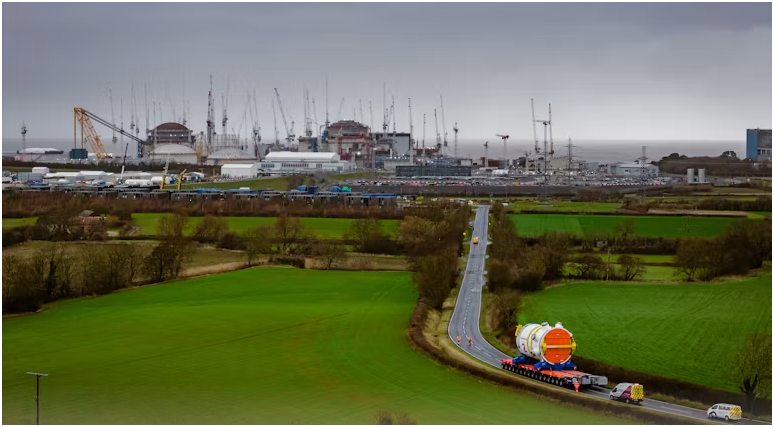
The report, titled "Solid Foundations: The Case for Cheap, Reliable Power," proposes that the UK should adjust its renewable-dominated power system planning and build a diversified electricity mix comprising nuclear power, renewables, and gas generation, enabling consumers to access affordable electricity when needed. The UK Nuclear Industry Association (NIA) welcomed the report, noting that the issues it raises are of practical relevance.
The report argues that stable power sources not dependent on weather conditions can help reduce the cost of the UK's electricity system, particularly in transmission and system balancing. According to the report's calculations, cumulative electricity system costs in the UK could be reduced by £320 billion between 2030 and 2050.
The report notes that the UK's stable capacity—including coal, gas, nuclear, hydro, and biomass generation—has fallen by nearly 40% since peaking in 2010, and this trend is unlikely to reverse in the short term. Approximately 80% of the UK's existing nuclear capacity is scheduled to close by March 2030; meanwhile, 63% of the UK's combined-cycle gas turbine capacity has been in operation for more than 20 years.
Onward's proposed policy pathway suggests that the UK's nuclear capacity should reach 20 GW by 2050, approximately 3.4 times current levels. Relevant projects could be financed through the Regulated Asset Base (RAB) model, where project revenues are determined by pre-agreed returns on capital rather than wholesale electricity market prices.
Under this pathway, reducing nuclear construction costs and shortening construction timelines should become core priorities of UK government energy policy, while also improving site acquisition and grid connection conditions for nuclear plants. The report projects that by 2050, nuclear power's share of the UK's electricity generation mix will rise from approximately 11% today to one-third.
However, the report also warns of cost pressures and policy uncertainties facing nuclear development. It states that, ideally, large-scale nuclear projects would be built in competitive markets, but given the enormous upfront investment, operating lifespans typically of at least 60 years, and risks arising from potential future policy shifts, relying entirely on competitive markets is not realistic.
The report calculates that, at 2025 prices, the generation cost of new large-scale nuclear plants coming online in the 2040s could reach £122 to £138 per MWh. The report argues that to fully realize the benefits of this policy pathway, the UK must reduce nuclear construction costs, fully implement the recommendations of the 2025 Fongleton Review, and improve incentives for delivering projects on time and on budget.
The Fongleton Review previously noted that, due to overly complex environmental, safety, and administrative processes and misinterpretations in their implementation, the UK has become the most expensive country in the world for building nuclear power plants.
The report concludes that reducing nuclear delivery costs is not only relevant to economic growth but will also affect the broader electrification process. If nuclear costs fall more quickly, heat pumps and electric vehicles will become more attractive to consumers, helping to drive decarbonization across more sectors while reducing practical barriers. Accelerating nuclear construction would also replace gas generation faster than the established pathway, further reducing residual emissions from the power sector.
The report also mentions that Sizewell B, the UK's first and currently only operating pressurized water reactor, was completed on time and on budget in 1995. The report states that this nuclear construction capability needs to be rediscovered.
Disclaimer: Information republished from partner media, institutions or other websites is provided for reference and communication purposes only. It does not imply endorsement of its views or verification of its accuracy. Please contact us if any content infringes rights or requires correction.