
Naju City, Korea Proposes Construction of National Fusion Energy Center
 Scan to share
Naju City, Korea recently proposed the concept of building a national-level fusion energy center, planning to use the locally planned artificial sun research facility as a foundation to connect the entire process of fusion energy from basic research, demonstration and validation, to power generation and industrialization.
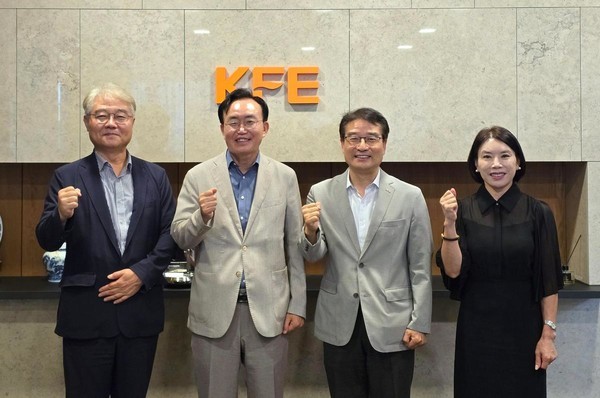
On August 21, Naju City Mayor Yoon Byung-tae visited the Korea Institute of Fusion Energy (KFE) and met with its President Oh Young-kuk. Yoon proposed that Naju City would strive to host the fusion demonstration reactor (DEMO) linked to the artificial sun research facility, while promoting the construction of a government-led comprehensive fusion energy research base and industrial cluster, and applying for the designation of a specialized fusion energy R&D zone.
This proposal is related to the "7 SEED Projects" previously announced by the Ministry of Science and ICT (MSIT). Among them, the fusion demonstration reactor development plan states that the relevant work aims to commence site selection and construction in the mid-2030s, with power generation achieved in the latter half of the same decade. The Fusion Innovation Alliance also expressed support for this direction, stating that it would accelerate the commercialization of fusion energy through public-private cooperation.
Naju City had previously been selected as the site for the artificial sun research facility. The city is home to energy-related public institutions and enterprises such as the Korea Electric Power Corporation (KEPCO), and possesses the conditions to connect research platforms with power generation infrastructure. Naju City believes that if the artificial sun research facility and the fusion demonstration reactor are built adjacent to each other, it will help shorten the research result validation cycle and improve the efficiency of national R&D investment.
Regarding subsequent layout, Naju City is studying the phased introduction of research institutions and enterprises, focusing on key nuclear fusion technology fields such as superconductors, plasma, and high-temperature materials, to build an ecosystem that integrates technology transfer and industrial cultivation functions. The city also proposed building a government-led nuclear fusion research complex and industrial cluster centered on the artificial sun research facility, and on this basis, promoting the establishment of a "specialized nuclear fusion energy R&D zone" to cultivate it into a comprehensive base integrating research and industrial functions.
Yoon Byung-tae stated that Naju City will also promote the relocation of the Korea Institute of Fusion Energy to the city or the establishment of a branch there, and strengthen cooperation among the public sector, enterprises, universities, and research institutions. He emphasized that nuclear fusion is not only a carbon-free energy direction but also involves multiple advanced technologies such as superconductors, plasma, materials, and components. The artificial sun research facility should not be limited to a single scientific research site, but should be developed into a national-level fusion energy center integrating research, demonstration, power generation, and industrialization.
Naju City stated that in the next steps, it will continue to collaborate with relevant institutions, align with the government's fusion demonstration reactor development plan and national R&D policy adjustments, and promote the inclusion of a series of projects centered on the artificial sun research facility into policy planning.
Disclaimer: Information republished from partner media, institutions or other websites is provided for reference and communication purposes only. It does not imply endorsement of its views or verification of its accuracy. Please contact us if any content infringes rights or requires correction.