
Radiant Expands Microreactor Factory: From Transportable Reactors to Batch Delivery, What Links Still Need to Be Connected?
 Scan to share
A reactor with a rated electrical power of about 1,000 kilowatts, if it can be assembled at a factory and provide long-term power after being transported to a user site, could indeed change the way remote facilities are powered. But turning nuclear equipment into a transportable product does not mean nuclear power can already be purchased and used directly like a diesel generator. On November 19, U.S. microreactor company Radiant announced the expansion of its manufacturing footprint in El Segundo, California, and continued construction of its Oak Ridge, Tennessee campus, with the goal of beginning commercial delivery in 2028. What is most worth observing about this expansion is that the company is trying to connect manufacturing, fuel services, and on-site operations into a single chain, and this chain still has key links awaiting testing and licensing verification.
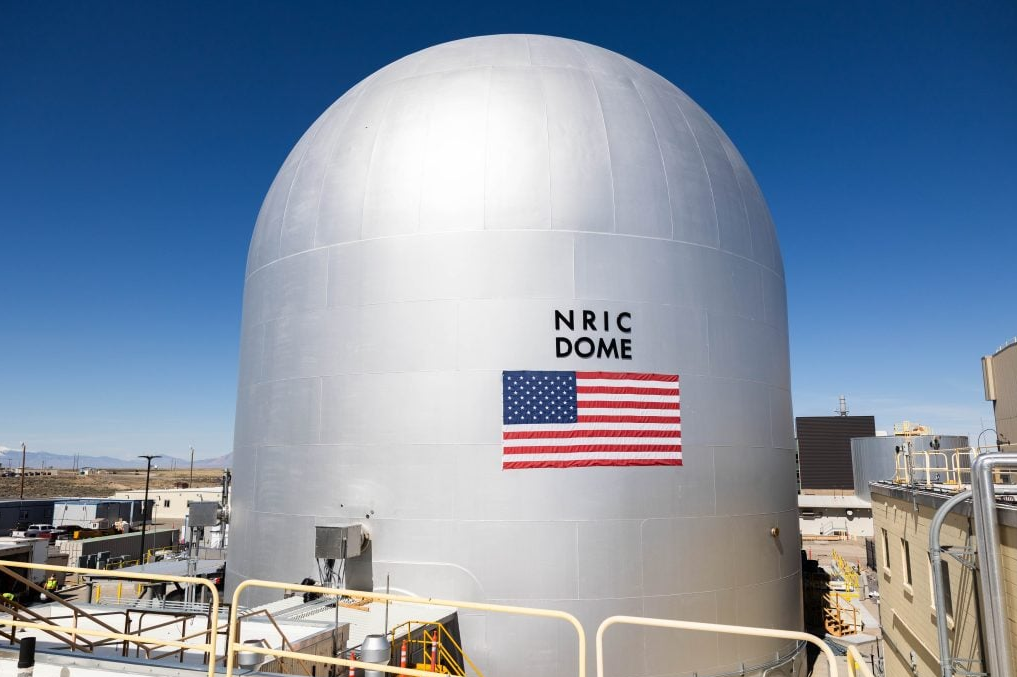
I. Dual-Site Division of Labor: Moving as Much On-Site Engineering Back to the Factory as Possible
Radiant's Kaleidos belongs to the microreactor category. According to the company's current public positioning, it targets users that need stable power but are limited in scale, with a designed electrical power of about 1 megawatt, or 1,000 kilowatts. This refers to electrical power, not the total thermal power generated by the reactor core; from fission heat release to electrical output, there are power conversion losses and the equipment's own electricity consumption, and the two values cannot be conflated.
This expansion places two types of capabilities in different regions. El Segundo focuses on research and development, final assembly, and integration testing, while Oak Ridge is planned to handle fuel-related operations and subsequent high-volume manufacturing. The company disclosed in November that the Los Angeles-area footprint involves more than $100 million in investment, and the Oak Ridge project is planned at about $280 million. These are company-disclosed amounts for U.S. projects, not the sales price of a single reactor, and are insufficient to calculate the levelized cost of electricity already achieved.
This division of labor aims to solve an economic challenge for small nuclear equipment: if every unit requires complex construction and inspection systems to be rebuilt repeatedly at the user site, low power output can easily be overwhelmed by fixed costs. Concentrating processes in a factory allows shared specialized tools, test equipment, and quality management personnel, and also makes it easier for design and manufacturing teams to address problems quickly. But factoryization can reduce on-site work; it cannot eliminate radiation protection, security, electrical interconnection, and emergency arrangements at the user site.
II. Helium Cooling and Coated Particle Fuel: How They Support a Compact Design
The U.S. Nuclear Regulatory Commission's public design description shows that Kaleidos adopts the High-Temperature Gas-Cooled Reactor (HTGR) pathway, using helium cooling, graphite moderation, and Tristructural Isotropic Fuel (TRISO). Helium carries heat away in the core, and the multiple coating layers of the fuel particles perform an important fission product retention function. These technical features provide the basis for a compact design, but each has its own range of applicability that needs verification.
The core of TRISO fuel is not simply putting a shell around uranium particles; rather, carbonaceous layers and silicon carbide layers together handle gas pressure, irradiation, and high-temperature environments. Coating layer quality, the proportion of particle defects, and specific temperature and burnup all affect the release behavior of radioactive materials. Therefore, the fact that a fuel form has a long research history does not mean that fuel manufactured by any vendor under any core conditions is already qualified. Fuel manufacturing records, irradiation tests, and accident-condition tests still need to support the specific design.
Helium also does not make the heat removal task disappear. During operation, heat must be continuously removed, and after shutdown, decay heat must still be handled. In schemes targeting water-scarce or remote areas, even if dependence on cooling water is reduced, a clear ultimate heat sink is still required. If air cooling is used, high ambient temperatures, obstructed air flow, and heat exchanger fouling could affect capability. Between a portable form factor and low temperature rise with reliable heat dissipation, a balance must be achieved through system design.
III. Assembly Licenses and Operating Licenses Are Not Equivalent
The licensing of the Oak Ridge campus is key to judging the company's commercialization progress. The U.S. Nuclear Regulatory Commission has accepted Radiant's special nuclear material license application submitted under Title 10, Part 70 of the U.S. Code of Federal Regulations, but acceptance means entering review, not approval to conduct all nuclear activities. A public document released in July clearly stated that the application covers receipt, storage, processing, and fuel assembly of new fuel, and does not include loading fueled assemblies into the microreactor core, nor fuel particle manufacturing.
The environmental assessment document scheduled for publication on November 23 again explains that this stage mainly handles new fuel and its assembly operations, and that subsequent activities such as reactor loading, testing, and storage require separate licenses and may require supplementary environmental review. The environmental assessment's finding that the proposed activities would not cause significant environmental impacts does not mean the nuclear material license has already been issued. The campus's long-term business plan and the current application boundary must be kept separate, and future fuel service capability cannot be written as already fully licensed.
Clear stage distinctions also exist on the testing side. The company disclosed at the end of October that the U.S. Department of Energy had approved Kaleidos's written safety analysis document, and that a operational readiness review would still be required afterward. Information from November 19 still places full-power, full-temperature testing after the readiness review. The planned 60 equivalent full-power days, and at least 150 hours of continuous operation without operator intervention, are verification targets that need to be completed; even achieving the latter target does not support the inference that commercial operation would require no licensed personnel or remote support.
IV. Whether Batch Delivery Is Possible Ultimately Depends on Whether Service Costs Can Close
The first markets microreactors may enter are not necessarily large grids with the lowest electricity prices, but rather scenarios where fuel transport is expensive, outage losses are high, or there are special requirements for power supply resilience. Comparison with diesel generation should include fuel transport, maintenance, backup equipment, and outage risk; comparison with grid supply must also consider interconnection conditions and the long-term service costs of the nuclear equipment itself. Without data from the same site and the same power supply reliability requirements, one cannot claim that microreactors are generally cheaper.
The contract ceiling of military projects, procurement agreements signed by commercial users, and long-term factory capacity also represent different information. A maximum contract amount does not mean all funds have been received, a procurement agreement does not mean equipment has been accepted, and a planned annual production of hundreds of units certainly does not mean the production line has already achieved that cadence. What truly affects replication speed is how many manufacturing hours each unit requires, how long inspection takes, when fuel is delivered, and whether first-of-a-kind operating data require design adjustments.
Centralized fuel services will also bring responsibility back to the factory. After new fuel can be shipped out, how used fuel is cooled, transported, and received requires corresponding facilities and licensing; supply agreements must also be translated into actual deliveries meeting quality requirements. If final assembly capacity expands faster than fuel and back-end service capability, an increase in factory floor space does not automatically translate into deliverable products.
Radiant's expansion this time shows that microreactor competition is extending into manufacturing organization and fuel services, but industrialized mass production still needs to be confirmed by results. The most convincing next step is to complete integrated nuclear testing, obtain licenses matching actual business operations, and enable the first users to obtain equipment that can operate sustainably. Only when manufacturing cadence, fuel delivery, and full-lifecycle services can all be fulfilled simultaneously will transportable microreactors truly have the commercial basis of a production-line product.
(This article is based on Radiant's manufacturing expansion and testing progress statements, U.S. Nuclear Regulatory Commission licensing and environmental assessment documents, and Idaho National Laboratory fuel technology materials, and was independently written after AI-assisted organization, aiming to explain the technical, economic, and regulatory conditions for factory manufacturing of microreactors. The company's delivery year, long-term capacity, and testing targets are all stated as plans and have not been treated as achieved performance; existing materials are insufficient to confirm its commercial electricity price and are also insufficient to support conclusions such as "world's first" or "already fully entered the era of mass production.")
Disclaimer: Information republished from partner media, institutions or other websites is provided for reference and communication purposes only. It does not imply endorsement of its views or verification of its accuracy. Please contact us if any content infringes rights or requires correction.