
New York Proposes 5 Million Kilowatts of New Nuclear Power: How Does a Master Plan Become Reliable Electricity on the Grid?
 Scan to share
The most visible aspect of nuclear power expansion is an installed capacity target; the least visible is the project screening and cost allocation behind that target. On November 18, New York State released an Advanced Nuclear Master Plan, proposing a development direction of adding 5 million kilowatts of nuclear power, supported by multiple special studies for subsequent arrangements. This scale includes the New York Power Authority's related plan of at least 1 million kilowatts and cannot be added together again. For electricity consumers, the more pertinent question is: how will the plan be transformed into specific projects that obtain licenses, complete financing, and supply power on schedule, and who will bear the uncertainties in this process?
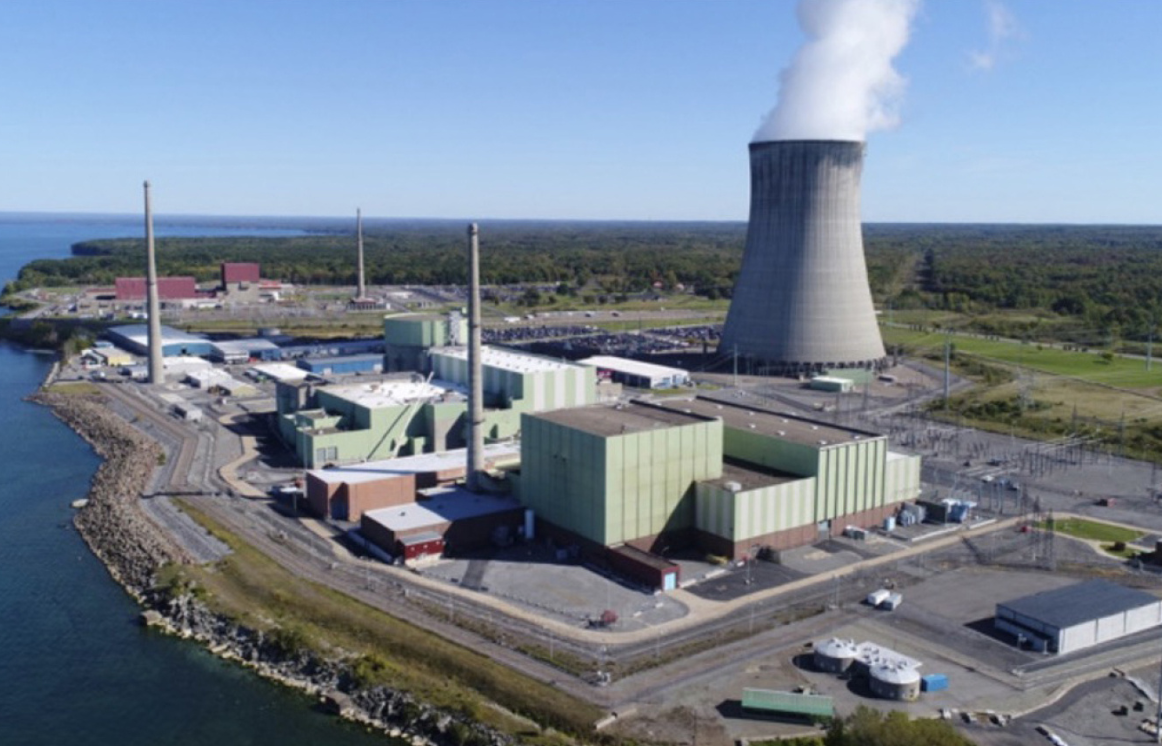
I. Breaking Down One Capacity Figure into Three Different Tasks
The Advanced Nuclear Master Plan was developed with the participation of the New York State Energy Research and Development Authority and the Department of Public Service, covering aspects such as sites, workforce, grid, industrial chain, and public communication. Its role is to bring previously scattered issues into a common agenda and form a working framework needed to advance projects. Publishing a plan does not mean that all sites have been selected, nor does it mean that reactors have obtained construction permits, nor that all investments have completed final decision-making.
Installed capacity, electricity generation, and reliable supply capability also need to be distinguished. Rated capacity indicates how much power a unit can output under specified conditions; annual generation also depends on maintenance, refueling, and other downtime; how much output the system can rely on during the most stressed periods must be evaluated in conjunction with unit status and transmission conditions. The 5-million-kilowatt target cannot be directly converted into the same amount of electricity that can be freely dispatched every hour of the year.
This does not diminish the value of nuclear power as a stable low-carbon source, but requires that planning and system operation adopt the same set of realistic boundaries. Nuclear power can reduce part of the dependence of electricity production on immediate fuel procurement and weather-driven output variations, but maintenance reserves and fault response still need to be arranged. Only when analyzed together with grid dispatch, other power sources, and demand changes does a capacity target have operational significance.
II. Where Plants Are Built Will Change Their Actual Value to the System
A site is not simply a piece of land that can accommodate plant buildings. Cooling conditions, geology and external hazards, population and emergency arrangements, transmission access, and construction transportation can all affect whether a project is viable. Proximity to existing energy facilities may provide some basic conditions, but this cannot substitute for evaluating new reactor types, new capacities, and new operating modes. Existing transmission lines may also need upgrading to withstand added power and fault conditions.
For grids where load growth is concentrated in certain areas, network constraints stand between power commissioning and power delivery. If line expansion lags, new units may not be able to play their full role at the locations where they are most needed; if grid construction significantly leads while plants are delayed, capital costs will be incurred prematurely. Therefore, nuclear construction schedules and transmission projects should be cross-checked against each other, rather than discussing interconnection only after each has completed its paper plan.
Cooling also has long-term economic implications. Units rely on temperature differences to convert heat into electricity, and changes in external cold source conditions can affect heat dissipation and operating boundaries. Site evaluation needs to consider extreme weather in conjunction with applicable water resource and environmental requirements, rather than summarizing nuclear power as completely unaffected by climate. The earlier these constraints are identified in the planning stage, the greater the opportunity to avoid costly retrofits later.
III. Let Technology Options Compete, but Also Ensure Consistent Cost Accounting
The master plan involves multiple categories of advanced nuclear technologies, but their maturity, licensing readiness, and manufacturing bases are not the same. Large units, Small Modular Reactors (SMRs), and earlier-stage pathways cannot be ranked solely by target electricity prices in promotional materials. Smaller unit sizes may lower the upfront investment threshold but may also lose some economies of scale; multi-module phased construction can spread capital investment but needs to demonstrate the benefits of repeat manufacturing and shared facilities.
Levelized Cost of Electricity (LCOE) helps aggregate construction, financing, operation, and decommissioning costs, but comparison results are highly sensitive to construction duration, capital cost, and utilization rate. A quote for a design that has not completed detailed engineering and a project with actual construction records are not at the same level of evidence. The New York plan does not turn each candidate pathway into a fixed-price construction contract, and it cannot be concluded from it that new nuclear power already has a definitive cost advantage.
Whether large electricity customers bear long-term procurement responsibility is also a key variable. Stable power purchase contracts can improve financing conditions, but must clarify how customer exit, unrealized demand, and construction overruns are handled. If benefits mainly serve certain new loads while risks are broadly transferred to ordinary ratepayers, public controversy could in turn affect construction progress. Techno-economic performance and risk allocation in contracts need to be discussed publicly at the same time.
IV. What Should the First Batch of Projects Leave for Subsequent Construction
The industrial opportunities for New York's nuclear power advancement lie not only in reactor equipment procurement but also in engineering services, construction, inspection, operations training, and long-term maintenance. However, local enterprise interest in participation does not mean suppliers already meet nuclear-grade quality requirements. Personnel training, process qualification, inspection capability, and document traceability all take time and must be organized around real procurement needs, rather than training solely based on expected total job numbers.
The first batch of projects also bears the responsibility of building experience. If site evaluation, licensing communication, design changes, and construction issues can be organized into records usable by subsequent projects, replication costs may be reduced. If each plant adopts substantially different designs and procurement approaches, the experience of the previous project will be difficult to fully inherit. Between technological openness and industrial standardization, a balance must be gradually found as projects advance.
To judge whether this plan achieves real results, one should look at whether the capacity target can be progressively realized as projects with clear boundaries: acceptable sites and interconnection plans, reviewed designs, funding and power purchase arrangements that can be honored, and clear responsibility for overruns. New installed capacity figures can chart a direction, but what truly determines benefits for electricity consumers is delivering reliable electricity on agreed schedules and keeping construction risks within an acceptable range.
(This article is based on information released by the New York State Energy Research and Development Authority and the Advanced Nuclear Master Plan, independently written after AI-assisted organization, and aims to explain the engineering, financing, and grid relationships between nuclear capacity targets and project implementation. Planning targets are not equivalent to approved or financed projects; the cost analysis in this article explains comparison methods and does not fabricate costs or electricity prices for projects that have not yet formed contracts.)
Disclaimer: Information republished from partner media, institutions or other websites is provided for reference and communication purposes only. It does not imply endorsement of its views or verification of its accuracy. Please contact us if any content infringes rights or requires correction.