
Using Accelerator-Driven Nuclear Reactions: How Does CiADS Explore a Path for Long-Lived Nuclides in Spent Fuel?
 Scan to share
After spent nuclear fuel is reprocessed, radioactive materials that require long-term management still remain. Whether some of these long-lived nuclides can be converted into components that are easier to dispose of is an important issue in nuclear fuel cycle research. The CiADS construction report published on November 20 once again brought the accelerator-driven transmutation route into public view. This experimental platform under construction connects a high-intensity proton accelerator, a spallation target, and a subcritical reactor. What it aims to verify is not the disappearance of all nuclear waste, but how an external neutron source drives the reaction and whether this system can operate reliably under real engineering conditions.
1. First use protons to produce neutrons, then drive the subcritical system
The basic concept of an Accelerator-Driven System (ADS) is to have high-energy protons strike a heavy-nucleus target, produce neutrons through the spallation process, and then use these neutrons to drive a subcritical core. Subcritical means that, under the set conditions, the core cannot maintain the same level of neutron population solely by its own chain reaction and requires continuous supplementation from an external neutron source. This forms an important difference from the operating mode of conventional power reactors.
The China Initiative Accelerator Driven System (CiADS) is carrying out engineering verification around this chain. It is not a device completed simply by pairing an accelerator with a target; beam transport, target heat removal, core neutronics, and cooling systems must all match one another. A parameter change in one link may simultaneously alter the loads and safety conditions of other links, so operational data must be accumulated through an integrated facility.
The external beam can provide an important means of control, but this cannot be interpreted as meaning that the reactor becomes completely heat-free immediately after the accelerator is shut down. Fission products will still continue to decay and release heat, and cooling, monitoring, and necessary power supplies still have tasks to perform. The subcritical feature improves certain reactivity control conditions, but safety conclusions still need to be based on complete accident analysis and engineering verification.
2. Transmutation deals with specific nuclides, not one-click clearing of waste
Transmutation is the alteration of nuclide composition through nuclear reactions. For certain long-lived actinide nuclides, an appropriate neutron environment can promote fission or conversion, changing the composition and management requirements of subsequent waste. However, different nuclides have different reaction probabilities and products, and the conversion effect for one component cannot be generalized to mean that all radioactive waste receives the same treatment.
The actual fuel cycle also requires chemical separation and remanufacturing. Usable materials, target nuclides, and other wastes in spent fuel must be separated according to process streams, and then suitable substances must be fabricated into fuel or targets that can operate in the target facility. Separation equipment, remote operation, product quality, and material accounting all affect whether the cycle is viable. If only the target nuclides consumed in the reactor are counted while separation losses and secondary waste are ignored, the net benefit of the entire system cannot be evaluated.
Conventional reactors themselves also utilize part of the plutonium produced during operation, so it cannot simply be said that materials other than uranium in spent fuel have never contributed energy. Closed fuel cycles hope to further utilize resources and improve the long-term burden of specific wastes, but reuse and final disposal need to be considered in parallel. Fission products, process residues, and materials that cannot be economically recovered still require appropriate treatment, storage, or disposal pathways.
3. The stronger the accelerator, the more engineering questions must be answered
To provide sufficient neutrons for the target, a stable proton beam with adequate power is required. The beam deposits energy in the target area, and the target material and structural components must continuously remove heat while coping with performance changes caused by irradiation. If liquid-metal-related systems are used, material compatibility, corrosion, and maintenance conditions must also be considered. An increase in the beam power index does not automatically prove that target-area lifetime and maintenance cycles already meet requirements.
Beam interruption is also a key issue. A short beam loss in the accelerator will cause the heat source to change, and restoring the beam will bring a temperature rise again; repeated cycles may cause thermal fatigue in components. Therefore, reliability cannot be judged only by how high a power level can be reached once, but also by how frequently interruptions occur, how long they last, and whether the reactor and target can withstand the corresponding changes. Accelerator engineering and nuclear engineering must adopt mutually compatible operating requirements here.
High-intensity superconducting accelerators also involve cryogenics, radio frequency, power supplies, and control systems, and these devices themselves consume electricity and require maintenance. If power generation economics is discussed in the future, plant auxiliary power consumption and available operating time must be deducted; if the main goal is waste treatment service, it should be clearly stated how much full-process cost is required to treat a certain amount of target nuclides. Power generation benefits and transmutation effects can be evaluated together, but one cannot switch arbitrarily between the two accounting bases.
4. The construction roadmap must be fulfilled step by step through subsystem and coupling tests
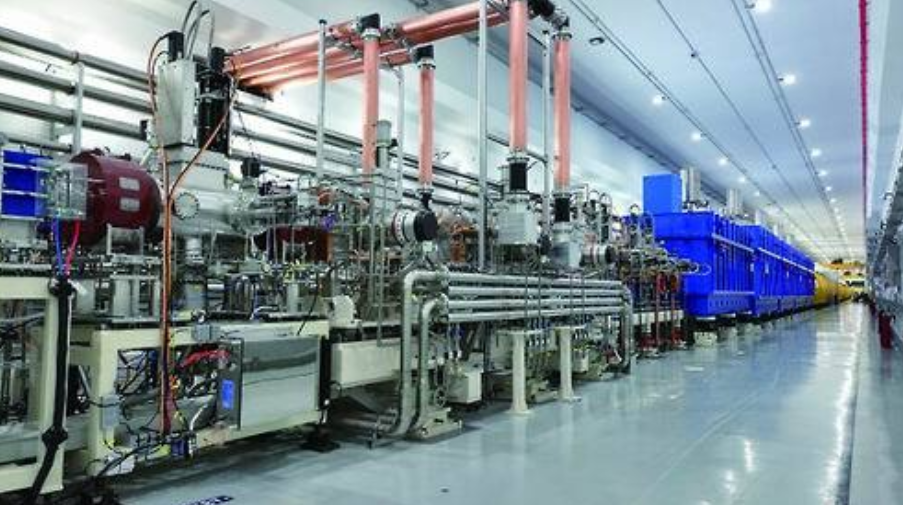
Current public reports give arrangements for subsystem construction and subsequent integrated commissioning, among which equipment installation, full-power operation, and fuel-related tests in future years are project goals. The accelerator equipment in the photos and the construction work already completed are facts at a different level from the entire system reaching design conditions. When assessing progress, delivered hardware, completed acceptance, and coupling tests still to be carried out should be recorded separately.
The long-term value of this facility also lies in providing comparable data for subsequent technology choices. The efficiency of the external neutron source, the response of the subcritical system, material damage, and remote maintenance experience can help determine which designs are worth scaling up and which links need to be redone. An experimental platform allows problems to be exposed before commercial systems are built, and its results may not all appear as higher single-item records; they may also define the applicable boundaries of a certain route.
What CiADS most needs to prove is whether a high-intensity accelerator, a spallation target, and a subcritical reactor can work together with acceptable reliability, and how much practical benefit this synergy actually brings to the treatment of target nuclides. Only by incorporating beam, electricity consumption, material lifetime, separation losses, and final waste into the measurement can the resource and environmental value of the transmutation route have a verifiable basis, rather than remaining a slogan about reducing waste.
(This article is based on the CiADS construction report published by the Chinese Academy of Sciences and technical explanations on accelerator-driven systems from the Karlsruhe Institute of Technology, and was independently written after AI-assisted organization, aiming to explain the engineering relationships among subcritical driving, nuclide transmutation, and the fuel cycle. The article does not treat project construction goals as completed tests, nor does it expand the treatment potential of specific nuclides into eliminating all nuclear waste or canceling final disposal.)
Disclaimer: Information republished from partner media, institutions or other websites is provided for reference and communication purposes only. It does not imply endorsement of its views or verification of its accuracy. Please contact us if any content infringes rights or requires correction.