
Search Results
Keyword:1
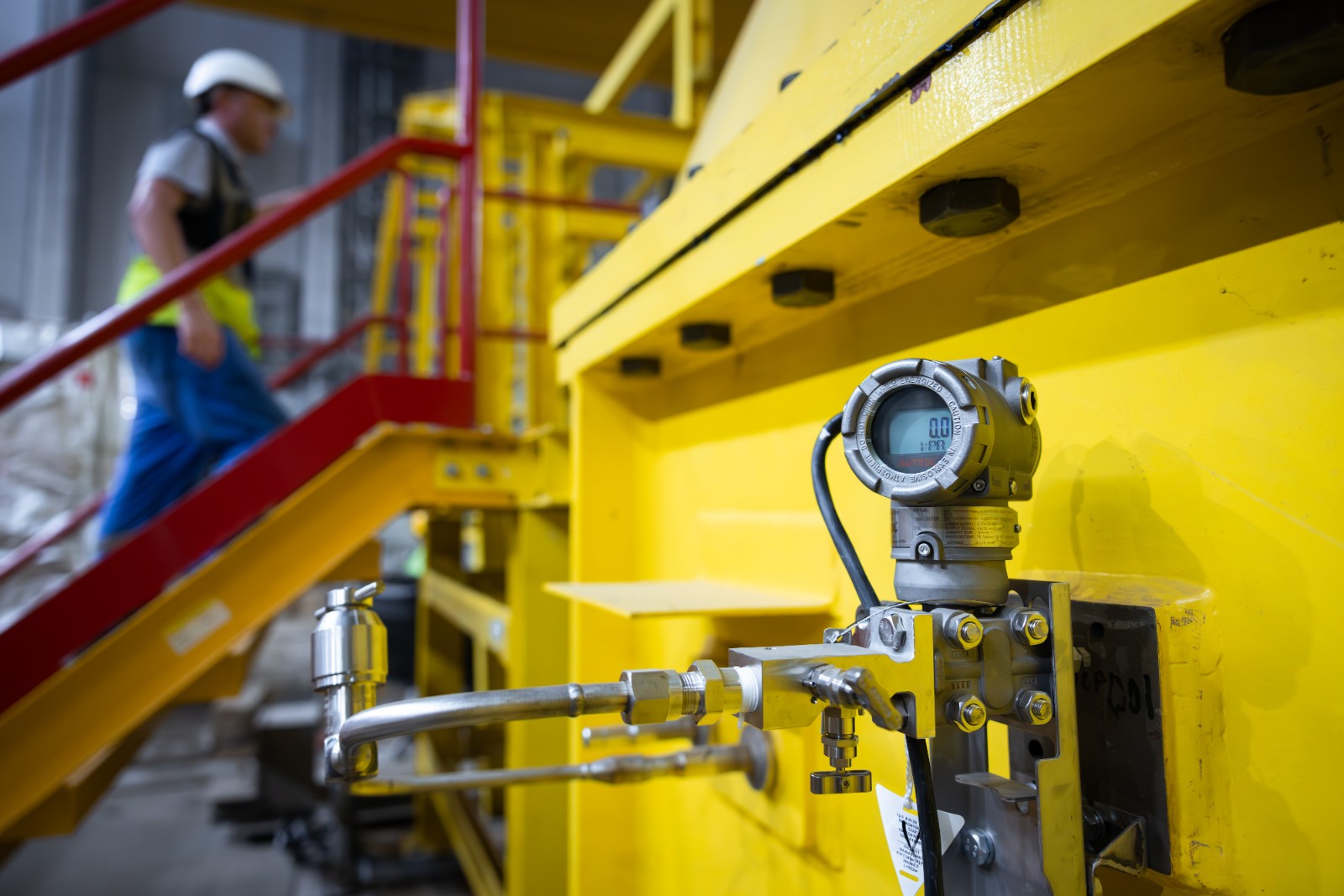
Test vacuum established in turbine condenser of Unit 1 at Turkey's Akkuyu NPP
On August 25, test vacuum was established in the turbine condenser of Unit 1 at Turkey's Akkuyu Nuclear Power Plant. This operation verified the readiness of the main systems of the turbine unit, creating conditions for subsequent commissioning work. Specialists from TITAN-2 Holding (TITAN-2) established the required vacuum in the condenser and checked the tightness of the vacuum system as well as the thermal and mechanical condition of the turbine. During the test, technical personnel continuously monitored key parameters such as steam pressure, bearing temperatures, thermal expansion of cylinders and rotors, and condenser vacuum level. While the turbine was rotated by the turning gear, experts also verified the operational condition of the turbine flow path. This...
2026-08-27

South Korea's Woojin Entech Patents Diagnostic Device for APR1400 Control Rod Position Transmitter
South Korea's Woojin Entech announced on August 27 that it has completed the development of a precision diagnostic device for the Control Rod Position Transmitter (RSPT) applicable to APR1400 units and has completed the relevant patent registration. The Control Rod Position Transmitter is used to measure the position of control rods within the reactor and transmit related signals to the control system, making it a critical component for reactor control and monitoring. The patented diagnostic device is primarily designed to accurately assess the status of the control rod control system and to pre-check multiple types of fault conditions before unit operation. According to the company, existing RSPT precision diagnostic systems require the installation of multiple cables during testing, making preparation work relatively complex...
2026-08-27
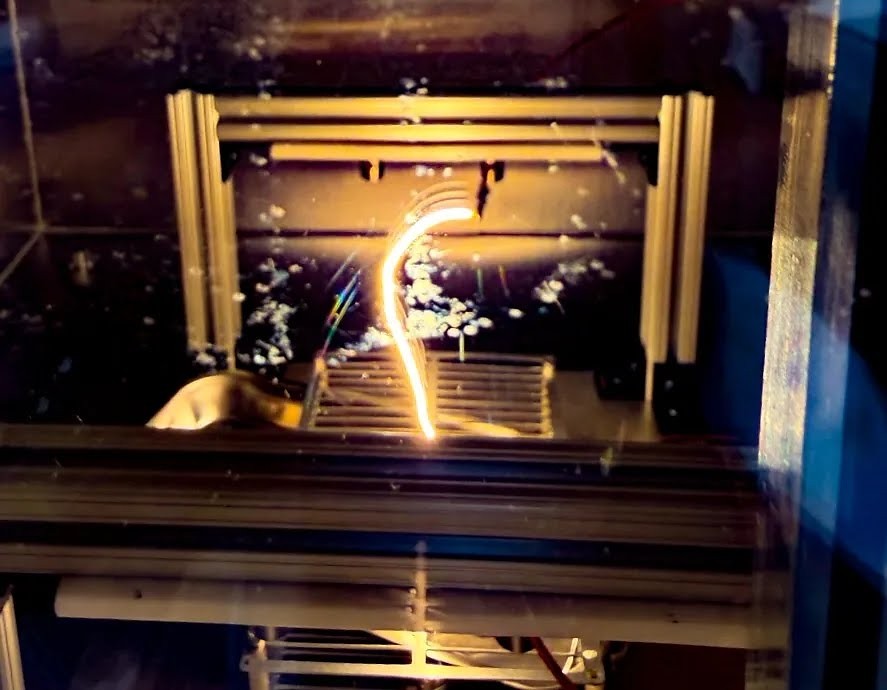
U.S. Interlune injects helium-4 into lunar soil simulant, simulating 15,000 years of solar wind exposure on the Moon in 4 hours
U.S. space infrastructure and resources company Interlune announced on August 26, 2026, that it has successfully injected helium-4 into and released it from simulated lunar soil material, with experimental results consistent with the behavior of real lunar samples collected by the Apollo program. The company stated that this capability can simulate nearly 15,000 years of solar wind exposure on the lunar surface in approximately 4 hours, providing a material basis closer to real conditions for testing lunar resource development equipment on Earth. The experiment focused primarily on ilmenite. According to studies of Apollo mission samples, ilmenite is the main helium-bearing mineral in lunar soil. Interlune formed a plasma by ionizing helium gas in a vacuum environment, then...
2026-08-27
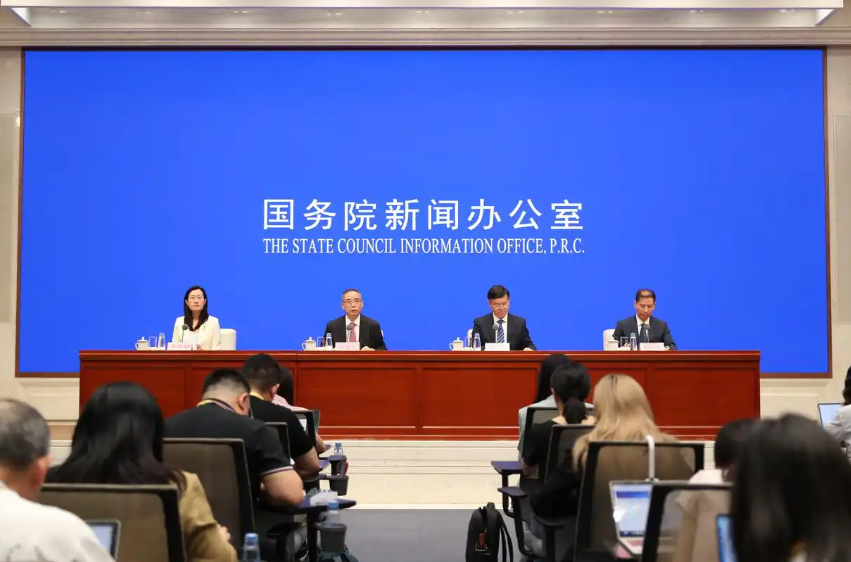
MIIT: Promote Future Industries Including Nuclear Fusion Energy as New Growth Drivers
The State Council Information Office held a press conference on August 26, where the Ministry of Industry and Information Technology (MIIT) briefed on efforts to fully implement the 15th Five-Year Plan and accelerate new industrialization. The MIIT stated that over the next five years, it will focus on optimizing the industrial structure, coordinating the transformation and upgrading of traditional industries, nurturing and strengthening emerging industries, and making forward-looking arrangements for future industries, while maintaining and developing a complete industrial system. In terms of future industry layout, the MIIT proposed promoting quantum technology, biomanufacturing, hydrogen energy and nuclear fusion energy, brain-computer interfaces, embodied intelligence, and sixth-generation mobile communications as new economic growth drivers. The inclusion of nuclear fusion energy in future industry directions reflects its important position in new industrialization and the cultivation of strategic emerging industries.
2026-08-27
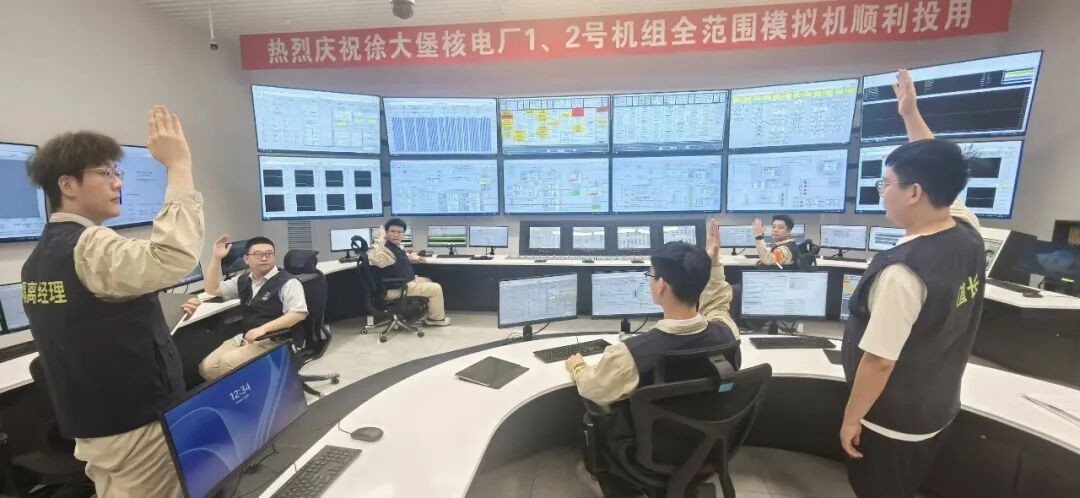
Training Launch for First Batch of Operators for Units 1 and 2 of Xudabao Nuclear Power Plant on Full-Scope Simulator
Recently, the first batch of operator training on the full-scope simulator for Units 1 and 2 of Xudabao Nuclear Power Plant was officially launched. The training program lasts 6 months, with 48 candidate Reactor Operators (ROs) and 24 candidate Senior Reactor Operators (SROs) participating. Centering on the five fundamental operator skills, the training conducts systematic hands-on exercises on the simulator platform, building a reserve of operations personnel for subsequent project construction and safe unit operation. The simulator for Units 1 and 2 can highly replicate the real working environment of the main control room and covers various operating conditions, making it an important platform for operations personnel to enhance their practical capabilities. The training is structured around five fundamental skills—close monitoring, precise control, conservative decision-making, teamwork, and knowledge mastery—integrating job conduct standards and team...
2026-08-27

Four Units of Egypt's Dabaa Nuclear Power Plant Under Simultaneous Construction
Alexey Likhachev, President of Rosatom, and Mahmoud Esmat, Egypt's Minister of Electricity and Renewable Energy, recently discussed the construction progress of the Dabaa Nuclear Power Plant. As Egypt's first nuclear power plant, the Dabaa project is planned to feature four VVER-1200 reactor units, which are expected to provide electricity for approximately 20 million people once completed. Likhachev stated that the project has entered a critical construction phase, with all four units progressing simultaneously. Among them, Unit 1 serves as the pilot unit for the project and is scheduled to be connected to the grid in 2028. To achieve this goal, the project team still needs to complete several tasks, including the delivery of nuclear fuel in 2027.
2026-08-26
U.S. NRIC Selects 13 Nuclear Energy Launch Pad Projects
The U.S. Department of Energy (DOE)'s National Reactor Innovation Center (NRIC) announced on August 24 that 13 new projects have been selected for the Nuclear Energy Launch Pad program. NRIC is based at Idaho National Laboratory (INL). NRIC Director Brad Tomer stated that this round of selections reflects developers' growing commitment to advancing related technologies. The program will provide companies with a priority pathway to DOE authorization, as well as access to expert resources, facility conditions, and targeted regulatory support to adv...
2026-08-26

U.S. Submits Civil Nuclear Agreement with Saudi Arabia to Congress for Review
U.S. government officials said on August 25 that President Donald Trump has submitted a proposed civil nuclear energy agreement with Saudi Arabia to Congress for review. The agreement, reached in July this year, includes provisions allowing U.S. companies to export civil nuclear technology to Saudi Arabia. Under the relevant procedures, Congress will have 90 session days to review the agreement. Two congressional sources said the agreement has been submitted to congressional leadership and is expected to be referred to relevant committees for consideration. If Congress raises no objections within the specified period, the agreement will enter into effect; if Congress rejects the agreement, Trump may still exercise his veto power, and Congress would need a two-thirds majority to override the presidential veto...
2026-08-26
South Korean 3D-Printed Nuclear Power Plant Component Operates Continuously for 18 Months
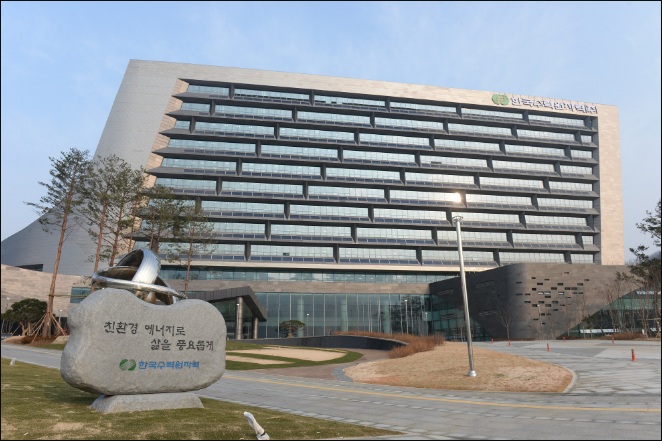
Korea Hydro & Nuclear Power (KHNP) announced on August 26 that a nuclear power plant component manufactured using 3D printing technology has been in continuous operation for 18 months on a reactor unit. This marks the first time South Korea has completed long-term operational validation of a 3D-printed nuclear power plant component in actual service. The component is a multi-blade impeller used to cool the generator circuit breaker of a nuclear power plant. Traditional impellers typically consist of multiple blades mounted on a fixed plate, and the connection points between the fixed plate and blades are at risk of damage during long-term operation. KHNP completed the development of this impeller in 2024, switching to 3D printing to manufacture an integrated one-piece structure, thereby reducing weak connection points and improving component durability. Before being put into service, this 3D-printed impeller underwent...
2026-08-26

US Pacific Fusion Breaks Ground on $1 Billion Fusion Facility in New Mexico
On August 25, local time, Pacific Fusion launched construction of a research and manufacturing campus in Albuquerque, New Mexico, USA. The project involves an investment of approximately $1 billion and will be used to build the company's fusion demonstration system, with goals including achieving net facility gain and producing high-yield fusion energy pulses. The campus is located in the Mesa del Sol area of Albuquerque. According to Pacific Fusion's plan, the demonstration system aims to achieve net energy gain at the facility level by 2030, meaning the fusion device outputs more energy than the total energy initially stored in the equipment. The company stated that if this goal is achieved, it will mark a significant technological milestone in the commercialization of fusion energy...
2026-08-26
Molecular Partners Advances DLL3 Radiopharmaceutical MP0712 to Higher Dose Cohort
Swiss clinical-stage biotechnology company Molecular Partners AG recently announced its business progress and financial results for the first half of 2026. The company stated that its DLL3-targeting radioactive DARPin therapy MP0712 has advanced to the second therapeutic dose level in a U.S. multicenter Phase 1/2a clinical study, and patient enrollment for the new dose cohort is currently underway. MP0712 is a radiopharmaceutical targeting the tumor-associated antigen DLL3, carrying a therapeutic alpha-emitting radionuclide lead-212 (Pb-212) payload, co-developed by Molecular Partners and Orano Med, primarily for small cell lung cancer and other neuroendocrine tumors. According to the company's disclosure, the first dose cohort of MP0712...
2026-08-26
Korea's Shin-Kori Unit 1 Reaches Full Power After Scheduled Maintenance
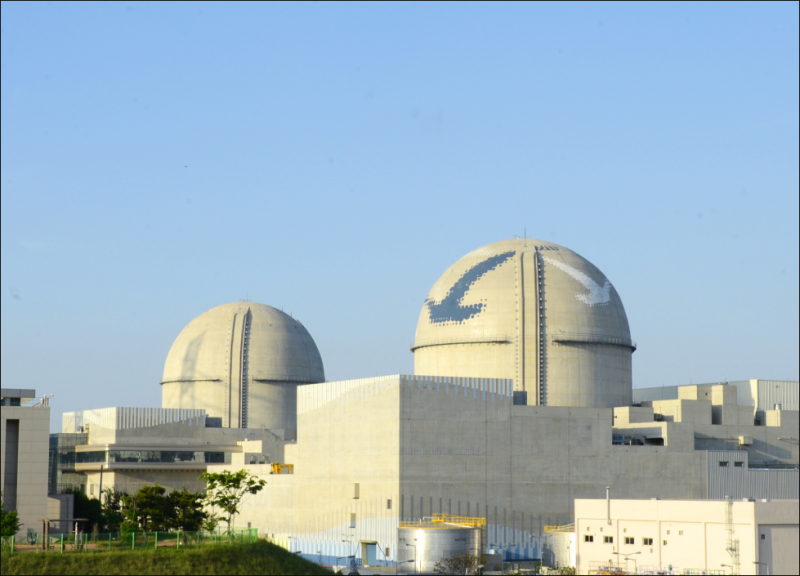
Korea Hydro & Nuclear Power (KHNP) announced that Shin-Kori Unit 1 reached 100% rated power at approximately 3:07 a.m. on the 26th. The unit is a 1,400 MW-class pressurized water reactor. Shin-Kori Unit 1 began its sixth scheduled preventive maintenance on July 2 and resumed power generation on July 23. During the maintenance period, the unit underwent statutory inspections as required by Korea's Nuclear Safety Act. Shin-Kori nuclear power plant stated that this maintenance included nuclear fuel replacement, as well as maintenance and inspection of major equipment and facilities to enhance the safety and reliability of the power generation facility....
2026-08-26
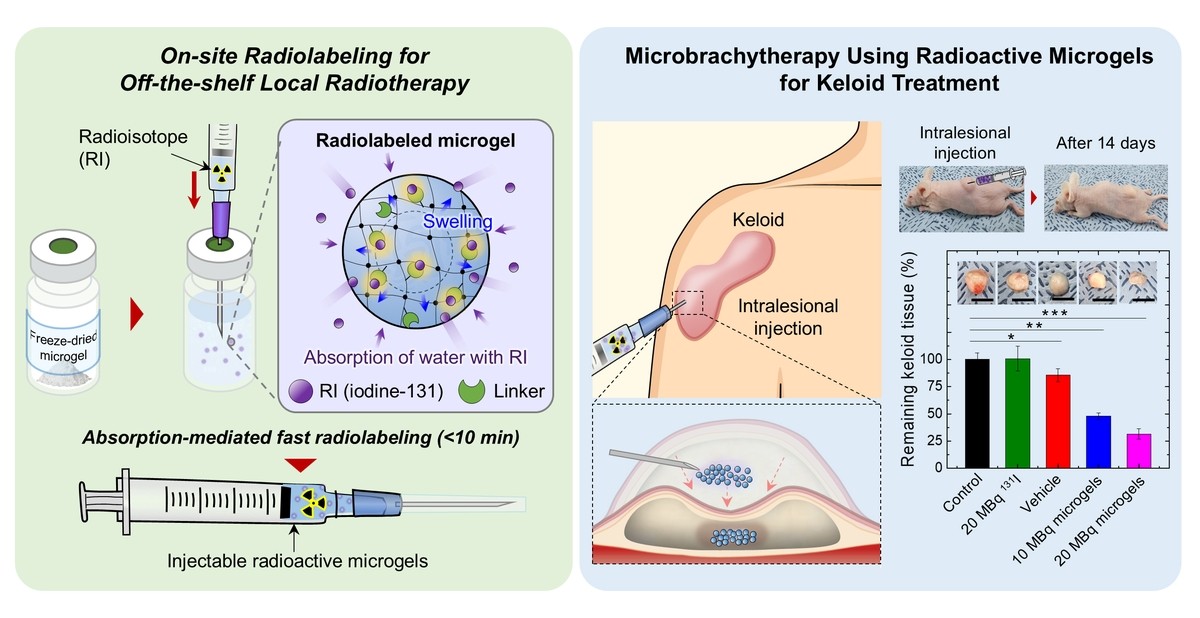
South Korean team develops biodegradable microgel for localized radiation therapy
Pusan National University announced on August 25 that a research team led by Professor Yang Seung-yun from the Department of Biomaterials Science, in collaboration with Professor Kim Hoon-soo from the Department of Dermatology and Professor Kim Geun-young from the Department of Nuclear Medicine at Pusan National University Hospital, as well as SNBIA Co., Ltd., has developed a precision localized radiation therapy technology based on biodegradable radioactive isotope materials for the treatment of refractory keloids that tend to recur after surgery. Conceptual diagram of precision treatment technology for refractory keloids. Provided by Pusan National University. Keloids are caused by abnormal proliferation of fibroblasts and excessive accumulation of collagen after skin injury. Existing treatment methods include surgery, steroid injections, laser therapy, etc., but...
2026-08-25
![Novartis Files Localized Production Application in China for Lutetium [177Lu] Vipivotide Tetraxetan](https://www.cinie.net/uploadfile/2026/0720/20260720045541907.png)
Novartis Files Localized Production Application in China for Lutetium [177Lu] Vipivotide Tetraxetan
On August 24, information on the website of the Center for Drug Evaluation (CDE) of China's National Medical Products Administration showed that Novartis' nuclear medicine product Lutetium [177Lu] Vipivotide Tetraxetan had a localized production application submitted in China. On the same day, two indications for the drug were proposed for priority review, and the relevant review matters may correspond to this localized production application. Lutetium [177Lu] Vipivotide Tetraxetan, namely 177Lu-PSMA-617, is a radioligand therapy (RLT) drug acquired by Novartis following its acquisition of Endocyte. The drug consists of a small-molecule compound targeting prostate-specific membrane antigen (PSMA) conjugated to the therapeutic radionuclide Lutetium-177. Upon entering the bloodstream, the drug binds to prostate cancer cells expressing PSMA, and...
2026-08-25

US Advanced Light Source Upgrade Advances, Soft X-ray Brightness to Increase at Least 100-Fold
Lawrence Berkeley National Laboratory in the US is advancing the Advanced Light Source (ALS) synchrotron upgrade project, planning to enhance soft X-ray experimental capabilities through next-generation light source technology, providing higher-precision data support for quantum materials, microelectronics, energy technologies, biological structure research, and AI-assisted scientific research. The project team is working toward the 2029 target. Since the Advanced Light Source began operation in 1993, it has long served research across soft X-ray, ultraviolet, infrared, and hard X-ray wavelength ranges. Researchers worldwide have used the facility's focused beams to observe molecular and material structures at the atomic scale, with results cited in over 18,000 papers...
2026-08-25