
Search Results
Keyword:1

Manufacturing of Core Components for Egypt's El Dabaa Unit 1 Completed
Recently, all key reactor components for Unit 1 of the El Dabaa Nuclear Power Plant in Egypt have been successfully manufactured in St. Petersburg, Russia, marking a major milestone in the construction of the country's first nuclear power plant. As the general contractor for the project, Rosatom has completed the production of the reactor internals and the VVER-1200 reactor head for the unit at its Izhora manufacturing facility in St. Petersburg. The reactor internals and head, which are about to be shipped to Egypt, have a combined weight of approximately 340 tonnes. Including the reactor pressure vessel that has already been delivered and assembled, the total weight will exceed...
2026-11-07

U.S. Department of Energy Approves Antares Mark-1 Microreactor Nuclear Safety Design Agreement
Recently, the U.S. Department of Energy (DOE) formally approved the Nuclear Safety Design Agreement (NSDA) for the Mark-1 microreactor of nuclear energy startup Antares Nuclear (Antares), establishing official safety standards, design requirements, and regulatory framework for the reactor's subsequent construction and testing phases. It is reported that the Mark-1 is designed to achieve continuous power output, with its design integrating a full-scale core and TRISO fuel, and equipped with a nitrogen closed-cycle Brayton power conversion system. Prior to this, its predecessor Mark-0 achieved zero-power criticality in June 2026, successfully validating the core physics characteristics. With the approval of the NSDA, Antares is expected to...
2026-11-06
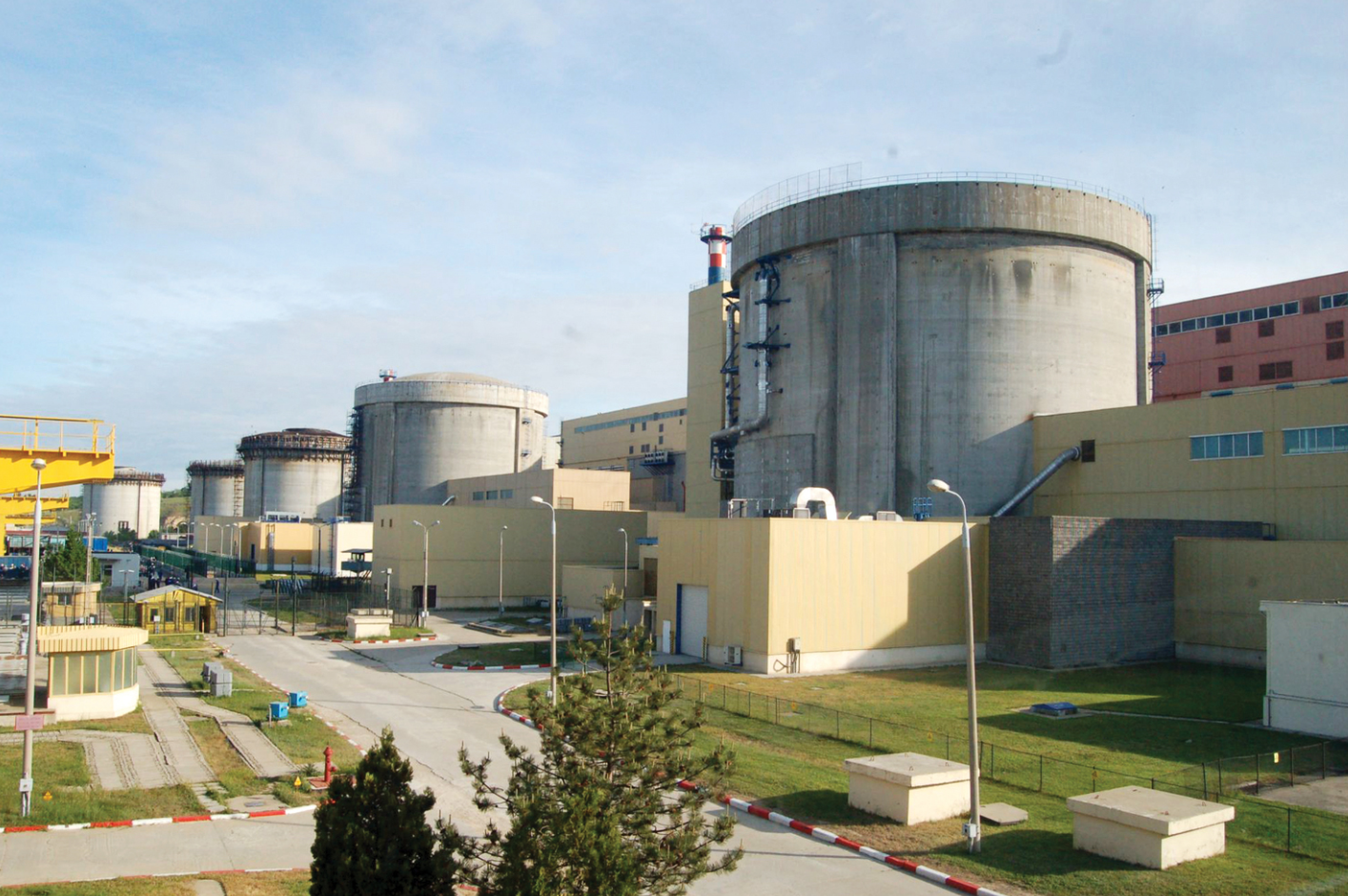
Startup and Grid Connection Procedure for Unit 1 of the Cernavodă Nuclear Power Plant in Romania
Recently, Nuclearelectrica announced that, after meeting the minimum necessary conditions, it has initiated the procedures for reconnecting Unit 1 of the Cernavodă Nuclear Power Plant to the national power grid. This action marks a new implementation phase in the unit's return to operation; actual restoration of power supply still requires the completion of corresponding operations and compliance with nuclear safety requirements. The reconnection of a nuclear power unit to the grid is a complex operation subject to strict regulation. During the outage, the plant's professional team continued to carry out necessary work to maintain the unit in a safe state. Upon entering the grid reconnection preparation phase, all operations must still comply with applicable procedures to ensure that the return-to-service process meets nuclear safety...
2026-11-05
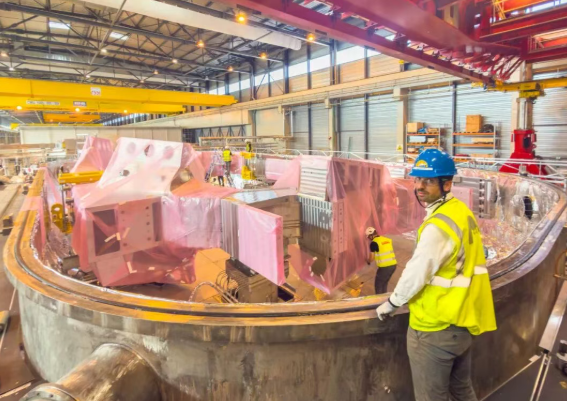
ITER Successfully Completes Half-Rated Current Test of Toroidal Field Coil #17
Recently, ITER's D-shaped superconducting toroidal field coil #17, weighing approximately 330 tonnes, was successfully energized to 34 kA (half of its 68 kA rated operating current) in the Magnet Cold Test Facility and has been smoothly transported out of the facility, ready to enter the tokamak assembly phase. It is reported that during the test, the magnet was cooled to a superconducting operating temperature of 4 K (minus 269 degrees Celsius). ITER Chief Mechanical Engineer Adrien Dedecker stated that reaching 34 kA and verifying that its actual performance is consistent with model predictions is not only a key step in magnet testing, but also accumulated valuable operational experience for subsequent integrated commissioning. The team used this opportunity to fully compare and confirm the coil structural deformation data under electromagnetic loads.
2026-11-04

The National Development and Reform Commission Deploys the 15th Five-Year Plan to Designate Nuclear Fusion as a Future Industry
Recently, the National Development and Reform Commission (NDRC) held the first press conference of the "Striving for the 15th Five-Year Plan" series, systematically introducing the strategic planning and key task deployments for cultivating and strengthening new growth drivers during the 15th Five-Year Plan period, marking the official unveiling of China's macro-level blueprint for emerging and future industries in the next stage. It is reported that Ren Zhongbao, Deputy Director of the Department of Innovation and High-Tech Development, stated at the meeting that the CPC Central Committee and the State Council, after comprehensively assessing technological trends, have explicitly designated fusion energy, together with quantum technology, biomanufacturing, hydrogen energy, brain-computer interfaces, embodied intelligence, and sixth-generation mobile communications, as the main directions for future industry development during the 15th Five-Year Plan period. The state will adhere to a nationwide coordinated approach and support regions with favorable conditions in selecting sub-sectors for development in accordance with local conditions.
2026-11-04
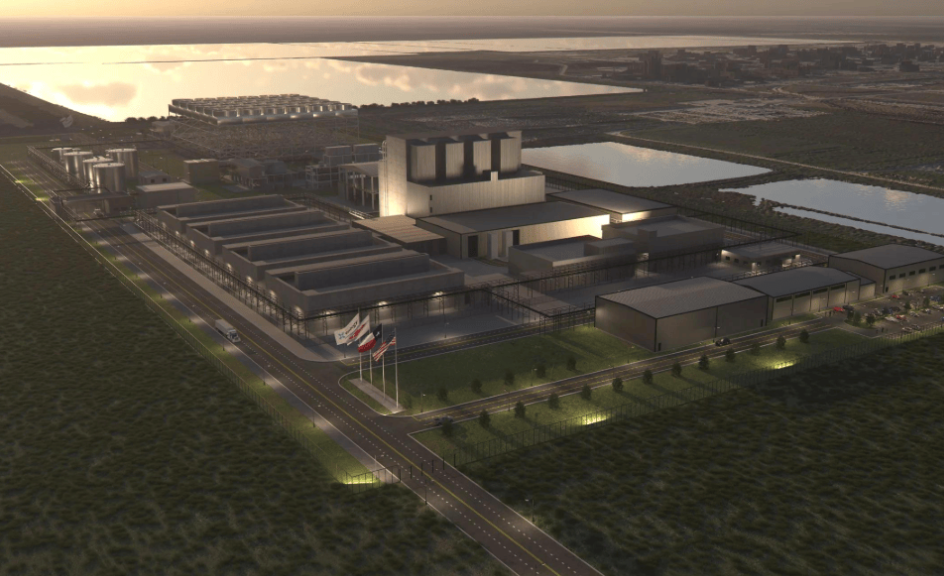
America's First "Large Reactor in a Chemical Plant" Clears the Hurdle: X-energy Xe-100 Ushers in the Conclusion of Safety Review and a Key Springboard to Commercialization
In the global race to industrialize advanced nuclear energy technologies, the high-temperature gas-cooled reactor is reaching a milestone. In late October 2026, the U.S. Nuclear Regulatory Commission (NRC) formally issued the Final Safety Evaluation Report (FSER) for the construction permit application of the Long Mott Generating Station, proposed to be built at Dow Chemical's Seadrift site along the Texas Gulf Coast. This means that the Xe-100 high-temperature gas-cooled reactor, developed by X-energy with an installed capacity of 320 megawatts electric, has successfully passed the most central safety examination at the U.S. nuclear regulatory level, clearing...
2026-11-03

UK Develops Carbon-14 Diamond Battery to Generate Trace Power from Nuclear Waste
Recently, the University of Bristol and the UK Atomic Energy Authority (UKAEA) jointly announced a milestone achievement in the development of diamond micro-batteries (Diamond Battery) using the carbon-14 radioactive isotope. The device can convert nuclear waste into trace amounts of electrical energy, enabling continuous operation for up to 5,700 years without recharging. It is reported that the battery structure embeds a thin carbon-14-containing diamond layer within a non-radioactive carbon-12 diamond barrier. Electrons released during the decay of carbon-14 are captured by the diamond and directly converted into electric current, operating on a principle similar to nuclear-powered solar panels that generate electricity using β radiation, while ensuring...
2026-10-30
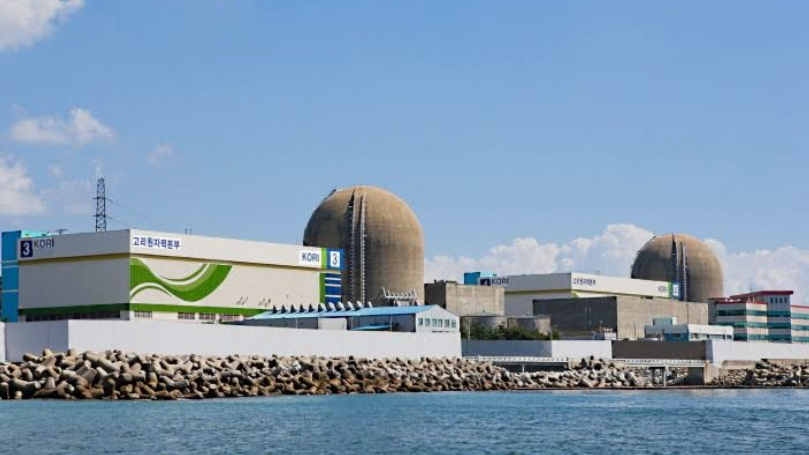
South Korea Officially Approved for 10-Year Life Extension of Kori Nuclear Power Plant Units 3 and 4
Recently, Korea Hydro & Nuclear Power (KHNP) officially received approval from the Nuclear Safety and Security Commission (NSSC) to extend the operating life of Units 3 and 4 of the Kori Nuclear Power Plant near Busan by 10 years. It is reported that both units are Westinghouse pressurized water reactors with a single-unit power output of 1025 MW, and their original 40-year design lifetimes expired in September 2024 and August 2025, respectively, during which both had been in shutdown status. Under this license, Kori Unit 3 may operate until September 2034, and Unit 4 until August 2035...
2026-10-28
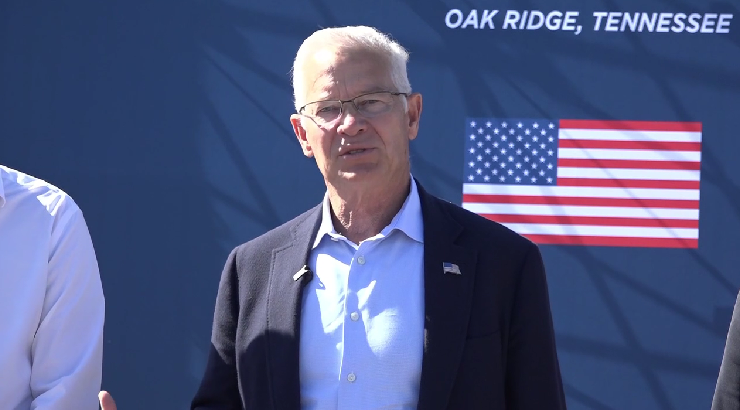
US Plans $15 Billion Nuclear Reactor Manufacturing Hub in Oak Ridge
Recently, the U.S. Department of Energy (DOE) and several nuclear energy companies jointly announced that they will invest a total of $15 billion to build a nationwide advanced nuclear reactor development and equipment manufacturing center in Oak Ridge, Tennessee. It is reported that the project is primarily driven and supported by private capital and is expected to create approximately 10,000 high-paying technical jobs locally over the next five years. The plan aims to completely reshape Oak Ridge's nuclear energy industrial landscape by shutting down legacy gaseous diffusion facilities and building new advanced nuclear fuel fabrication plants, uranium enrichment facilities, and modular reactor production lines, establishing a reactor manufacturing supply...
2026-10-28

U.S. Department of Energy Provides $5 Billion Loan to Support Constellation Energy's 1.1 GW Nuclear Power Uprate
Recently, the U.S. Department of Energy (DOE) announced a conditional loan commitment of up to $5 billion to Constellation Energy, the largest nuclear power operator in the United States, to fund large-scale upgrades and modernization of its 8 nuclear power plants (with a total of 15 operating reactors) located in Illinois, Maryland, and Pennsylvania. It is reported that this massive financing is aimed at improving thermal efficiency and power output through equipment modernization, and is expected to add nearly 1.1 GW (1,100 MW) of clean baseload generation capacity to the existing U.S. nuclear fleet. The affected projects cover 8 nuclear power plants including Braidwood, Byron, Calvert Cliffs, Clinton, Dresden, LaSalle, Quad Cities, and Limerick...
2026-10-28
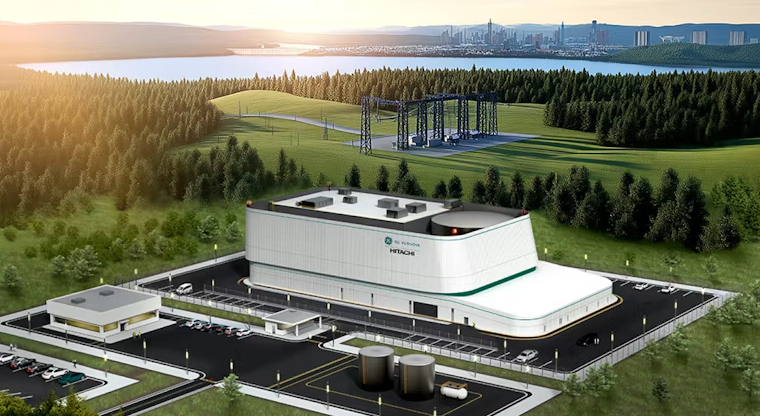
UK-Canada-Poland Tripartite Plan to Deploy 14 Small Reactors in the UK
Recently, SGE SMR UK, the UK subsidiary of SGE, a nuclear developer under Polish industrial giant MS Galleon Group, and Origin Nuclear, a subsidiary of Canada's Ontario Power Generation (OPG), formally signed a letter of intent announcing the establishment of a joint venture to jointly build and operate a nuclear fleet of 14 small modular reactors (SMRs) in the UK, with a total installed capacity of 4.2 gigawatts (GW). It is reported that the project will fully adopt GE Vernova Hitachi (GVH)'s BWRX-300 reactor technology. SGE's UK deployment plan covers three multi-unit sites, with the first selected...
2026-10-27
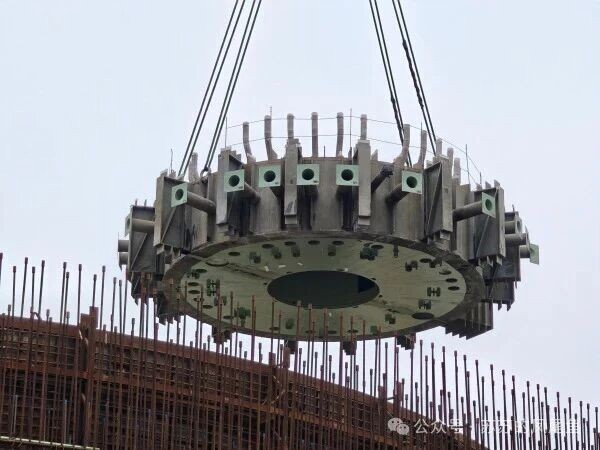
Installation of key components of the core catcher for Unit 4 of Leningrad NPP Phase II completed
The under-construction Unit 4 of Leningrad NPP Phase II has recently reached a key engineering milestone: the engineering team of the general contractor TITAN-2 successfully positioned and secured the maintenance platform and cantilever truss of the core catcher (the core passive safety system molten core retention device) precisely in the reactor shaft. The two large components weigh 78 tonnes and 148 tonnes respectively. Following the installation of the first batch of components (the catcher vessel and internal filler materials) in the summer of this year, another breakthrough has been achieved in the assembly of large structures for this core safety facility. As the core barrier of the defense-in-depth system of the Generation III+ pressurized water reactor (VVER-1200), the core catcher is mainly used under severe accident conditions...
2026-10-25
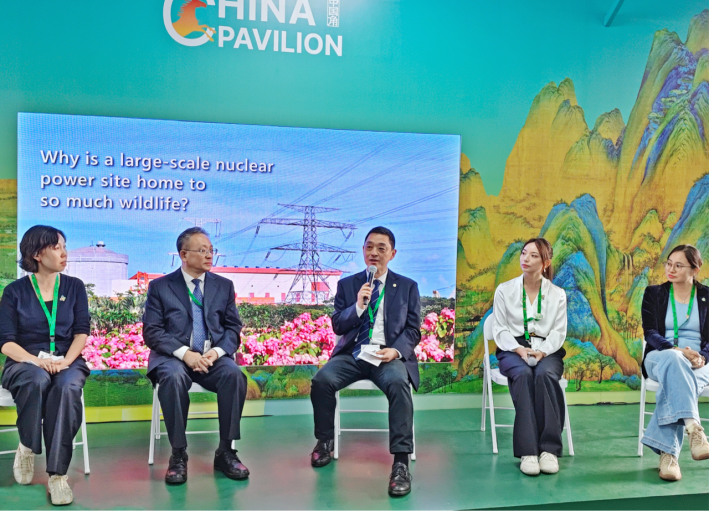
CGN Biodiversity Protection Case Selected for Report of the 17th Conference of the Parties to the United Nations Convention on Biological Diversity: Daya Bay Base Demonstrates Harmonious Coexistence of Nuclear Power and Marine Ecology
At the China Pavilion event of the 17th Conference of the Parties to the United Nations Convention on Biological Diversity, the Ministry of Ecology and Environment of China officially released the "Beauty of Diversity: Nature-Positive Solutions Report of Chinese Enterprises." The typical case submitted by China General Nuclear Power Group (CGN), "Advancing Habitat Protection to the Decision-Making Stage of Clean Energy Development," was successfully selected, systematically presenting on the international multilateral stage the innovative governance achievements of Chinese energy enterprises in coordinating zero-carbon electricity supply with ecological habitat restoration. According to the practical experience disclosed in the report, CGN deeply integrates the concept of nature conservation into the entire lifecycle of corporate investment decisions and production operations, strictly aligning with Targets 1...
2026-10-25
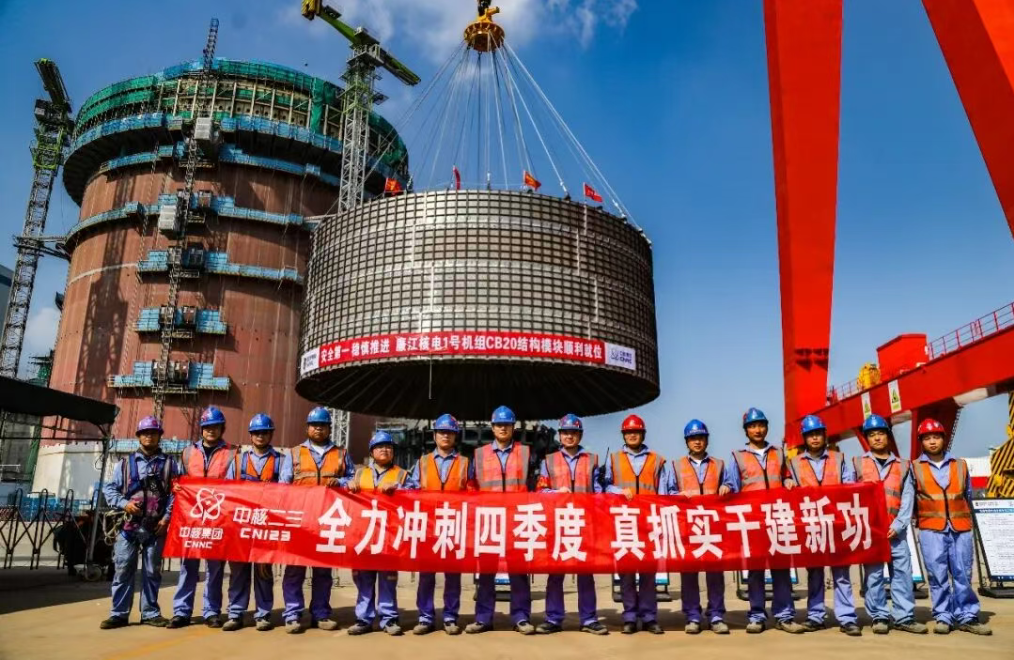
CB20 structural module of Lianjiang Nuclear Power Unit 1 successfully hoisted into place
On October 23, the CB20 structural module of Lianjiang Nuclear Power Unit 1 was successfully hoisted into place, creating favorable conditions for subsequent mainline construction. This marks the completion of all heavy-lift tasks for the unit's main construction, and the project has fully entered the installation and commissioning phase. The CB20 structural module is a core component of the CAP1000 nuclear power passive containment cooling system. It consists of inner and outer cylindrical wall panels, a top plate, and a conical bottom plate, and is located atop the nuclear island shield building. The module is massive in scale and features a thin-walled annular structure, making it prone to deformation from uneven forces during hoisting, with high precision requirements for positioning and alignment. To ensure the successful completion of this milestone, the Lianjiang Project Department adhered to Party building leadership and established a Party member vanguard team for equipment and module installation. With a work attitude of "safety first, quality foremost," they coordinated and planned construction tasks, meticulously organized hoisting work, and through special progress meetings focused on key difficulties such as module deformation control and hazard elimination. They adopted multiple advanced technologies including 3D scanning interference analysis, BIM modeling to avoid conflicts, and wireless force measurement systems for real-time leveling of hoisting slings, ensuring the entire hoisting process was safe, orderly, and controllable.
2026-10-24
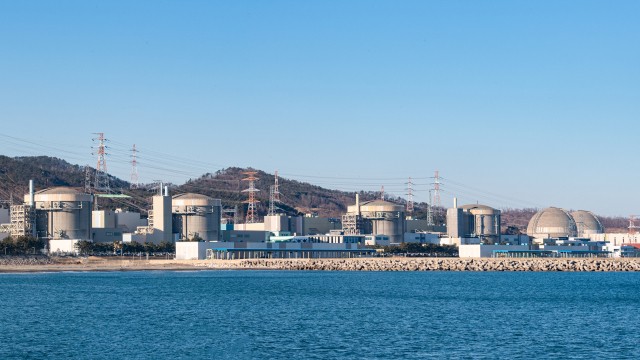
Wolseong NPP Unit 2 in South Korea to Shut Down on November 1
Wolseong NPP Unit 2, located in Gyeongju, Gyeongsangbuk-do, South Korea, will officially reach the end of its 30-year design operating lifetime and cease operation on November 1. Since entering commercial operation in November 1996, the unit has generated approximately 150 million megawatt-hours (MWh) of electricity cumulatively. Subsequently, the design lifetimes of Wolseong Units 3 and 4 will also expire in December next year and February 2029, respectively. South Korea's Nuclear Safety Act stipulates that nuclear power units reaching the end of their design lifetime may, provided they meet statutory safety standards, extend their operating period by 10 years through an operating change license review. However, since Wolseong Units 2 through 4 submitted their Periodic Safety Review (PSR) reports in April 2024 and completed the public comment collection on the draft radiation environmental impact assessment in May last year, two years and six months have passed, yet Korea Hydro & Nuclear Power (KHNP) has still not formally submitted the operating change license applications for these units.
2026-10-24