
South Korea's First Animal Radiopharmaceutical Approved for the Treatment of Feline Hyperthyroidism
 Scan to share
The Korea Atomic Energy Research Institute announced on September 10 that Thyrokitty Injection (I-131), a radiopharmaceutical for the treatment of feline hyperthyroidism developed by the research team led by Dr. Lim Jae-cheong, has obtained an animal drug manufacturing license issued by the Animal and Plant Quarantine Agency of South Korea.
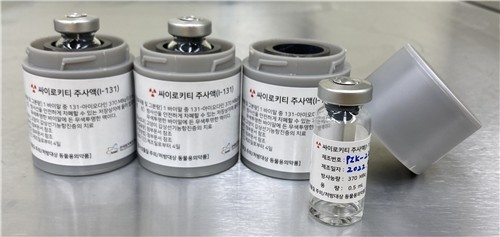
This is South Korea's first animal radiopharmaceutical to receive final product approval, marking the transition of related technologies that had previously been mainly at the R&D stage into clinical therapeutic application for pets.
Feline hyperthyroidism is a relatively common endocrine disease in older cats, mainly characterized by excessive secretion of thyroid hormones. According to reports, approximately 10% of cats aged 10 and above may suffer from this disease. Traditional treatment methods typically require long-term daily oral medication to regulate thyroid hormone levels.
Thyrokitty Injection utilizes the physiological property of the thyroid gland to absorb iodine for treatment. After injection, radioactive iodine-131 accumulates in thyroid tissue and acts on abnormal tissue. Compared with long-term oral administration, this therapy requires only a single dose, reducing the inconvenience caused by continuous medication.
In clinical trials conducted at the Animal Medical Center of Chungbuk National University, the treatment success rate of a single dose of Thyrokitty reached 94.2%, higher than the 56.3% treatment success rate at week 4 of existing oral therapy. The research team also stated that regarding iatrogenic hypothyroidism, a treatment-related side effect, the incidence rate was 43.8% for existing therapies and 5.9% for Thyrokitty; no liver damage or abnormal blood cell production was observed in the trials.
A relevant person in charge of the research team stated that radiation technology has advanced from the R&D stage to practical therapeutic application for pets. The follow-up plan will start with formal commercial supply in South Korea and promote the export of related technologies to animal pharmaceutical markets in Asia, including China and Japan.
Disclaimer: Information republished from partner media, institutions or other websites is provided for reference and communication purposes only. It does not imply endorsement of its views or verification of its accuracy. Please contact us if any content infringes rights or requires correction.