
Search Results
Keyword:Hungary

Low Danube Water Levels Impact Nuclear Power Plant Operations in Romania and Hungary
On August 4, amid persistently low Danube River water levels, Romania was rushing to build temporary dikes to divert more river water toward the Cernavodă Nuclear Power Plant to secure cooling water for its remaining operational reactor. Meanwhile, Hungary stated that the only still-operating turbine unit at the Paks Nuclear Power Plant was running in a safe condition. Both Hungary's Paks Nuclear Power Plant and Romania's Cernavodă Nuclear Power Plant rely on Danube River water for cooling. Recently, the Danube's water level dropped to historic lows, leading to a significant decline in nuclear power output in both countries. Budapest and Bucharest have had to increase electricity imports and call on residents and businesses to reduce consumption to ease grid pressure...
2026-08-05

Hungary's Paks Nuclear Power Plant may fully resume operations in about a week
Hungarian authorities stated that if weather forecasts hold true, rainfall in the Danube basin areas of Austria and Germany on Thursday will raise river water levels, and the Paks Nuclear Power Plant may fully resume operations in about a week. Hungarian Prime Minister Péter Magyar said on social media that if meteorological and hydrological calculations are accurate and significant precipitation occurs in the relevant Danube basin regions, water levels are expected to rise to the level required for plant operation. At that point, the turbines and units at the Paks Nuclear Power Plant can be restarted. Located along the Danube River in Hungary, the plant's unit operations are closely linked to river hydrological conditions...
2026-08-05
Danube at Record Low, Hungary's Paks Nuclear Plant Faces First Full Shutdown in 44 Years
On August 2, Hungarian authorities stated that the Paks Nuclear Power Plant may halt electricity generation due to the Danube River dropping to a historic low. This is the country's only nuclear power plant, with an installed capacity of approximately 2 gigawatts, generating nearly half of Hungary's total electricity output. The Paks Nuclear Power Plant draws water from the Danube for cooling. Due to persistent high temperatures and insufficient rainfall, the Danube's water level has been continuously declining recently. Hungarian water authorities predict that the river, which flows from Germany to the Black Sea, will see further drops in water levels in the coming days. As of 18:37 GMT on August 2, the Paks Nuclear Power Plant's output was only slightly above 10% of its installed capacity. Péter M...
2026-08-03
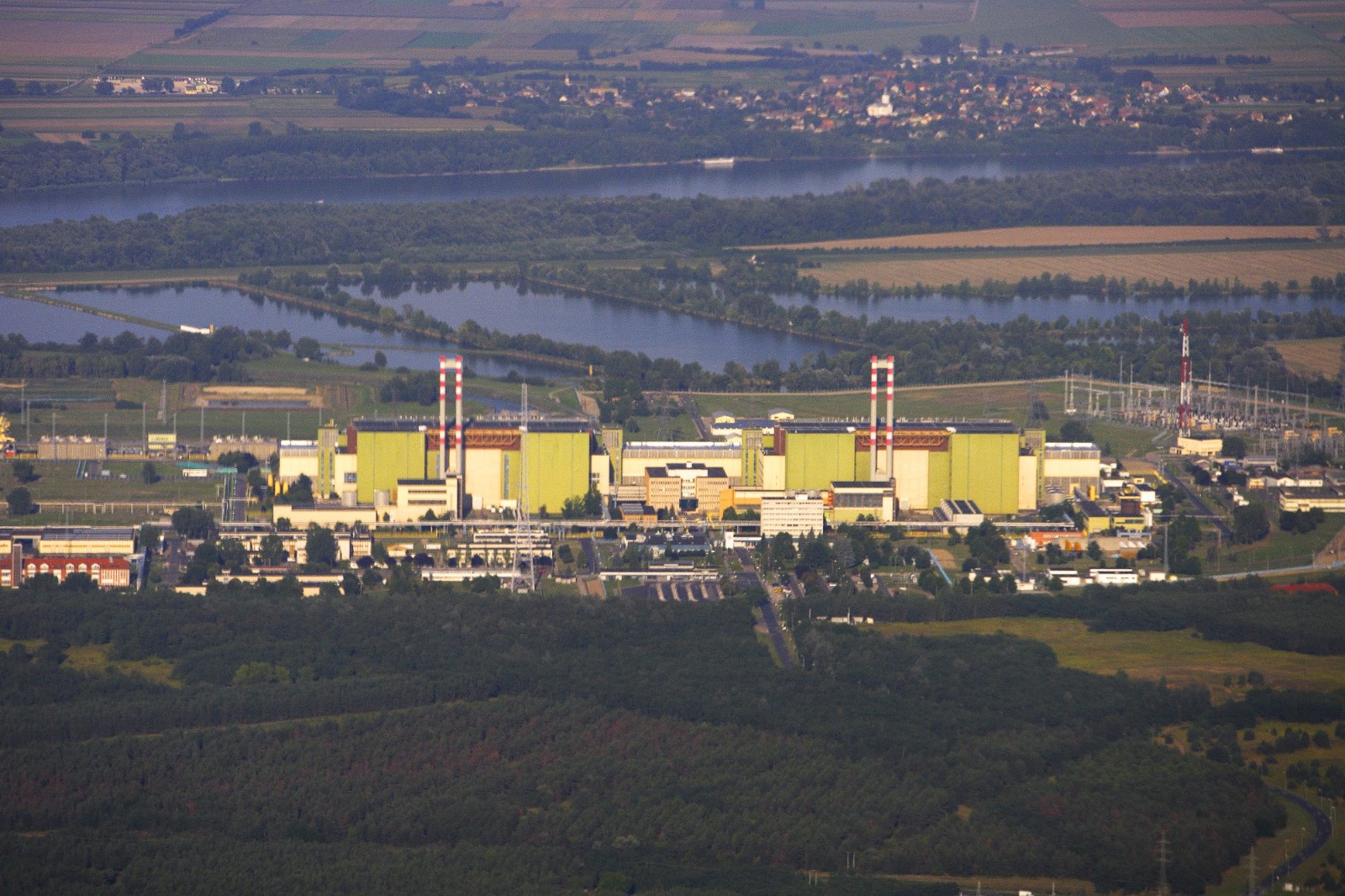
Danube water levels continue to decline, Unit 4 of Hungary's Paks Nuclear Power Plant reduces power output
Affected by persistent drought, water levels of the Danube in Hungary have dropped to low levels, impacting the operation of the Paks Nuclear Power Plant, which relies on Danube water for cooling. The plant's operator announced on July 31 that, due to a further drop in the water level at the Paks section to -126 cm, experts would reduce the power output of Unit 4 by 50% starting from 22:45 local time on July 31. The Paks Nuclear Power Plant is Hungary's only operating nuclear power plant, generating approximately half of the country's total electricity. Earlier announcements had mentioned that, due to the extremely low Danube water level, shutdowns of some units at the plant had become difficult to avoid. Peter Magyar stated on social media on July 30...
2026-08-01
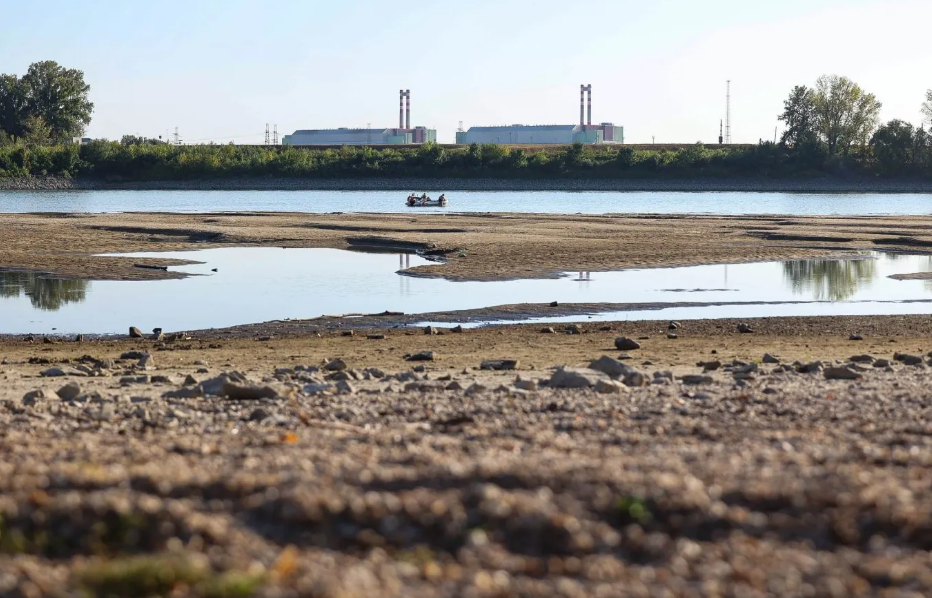
Hungary's Paks Nuclear Power Plant Faces Full Shutdown Due to Record Low Danube Water Level
Affected by persistent drought and high temperatures, the water level of the Danube River at the Budapest section dropped to 23 cm (fixed datum reading, a record low), restricting cooling water intake at the Paks Nuclear Power Plant. Starting Wednesday, July 29, Unit 3 was the first to be shut down; the operator, MVM Paks Nuclear Power Plant Ltd, subsequently stated on its official website that all four units would inevitably be disconnected within the next 24 to 72 hours, with power generation coming to a complete halt. MVM explained that the existing water volume of the Danube is still sufficient to cool the reactors, but the intake pumps can no longer draw water because the riverbed is exposed and the pump inlets are too far from the water surface—an equipment failure rather than an absolute shortfall in cooling water volume. To this end, the Hungarian side deployed 4 pumping barges and 2 floating cranes near the plant as an emergency measure, but with water levels expected to continue falling, a preventive full shutdown remains unavoidable.
2026-07-31

Vietnam-Hungary Industrial Education Cooperation Seminar Held, Vietnam Plans to Send Students to Study Nuclear Energy Technology in Hungary
On July 29, a delegation from the Vietnamese Ministry of Industry and Trade held a seminar with the Hungarian Rectors' Conference and the Budapest University of Technology and Economics (BME), focusing on promoting educational cooperation in the industrial sector, particularly in Hungary's advantageous disciplines such as mechanical engineering, semiconductors, nuclear energy, and information technology. Dr. Nguyen Van Thien, Vice President of Hanoi University of Industry, proposed that BME provide short-term or long-term training courses for lecturers from his university. Associate Professor Nguyen Xuan Hoan, President of Ho Chi Minh City University of Industry and Trade, expressed hope to send 3 to 5 graduate students to study at BME this year or next year through government scholarships, with the expectation that they would return to work in Vietnam after graduation. The Vietnamese delegation also stated that, in preparation for the upcoming nuclear power project, it hopes to send students to Hungary to study nuclear energy technology starting this year.
2026-07-30

Hungary replaces head of Paks II nuclear power project company.
István Kapitány, Hungary’s Minister of Economy and Energy, announced on July 24 the dismissal of Gergely Jákli as CEO of Paks II Nuclear Power Plant Ltd. (Paks II Atomeromu Zrt). The company is responsible for ad
2026-07-27