
Search Results
Keyword:Vacuum Vessel
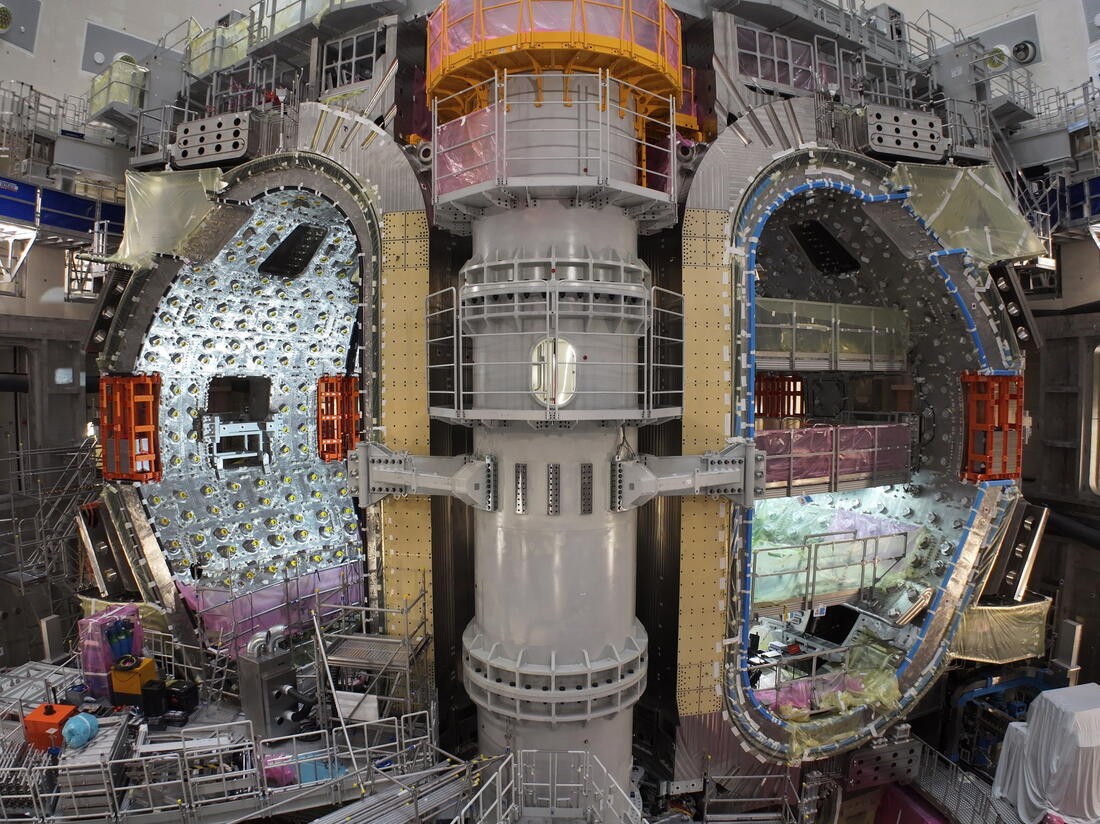
French Nuclear Safety and Radiation Protection Authority Approves Exemption of ITER Vacuum Vessel from Fission Pressurized Equipment Regulation
The French Nuclear Safety and Radiation Protection Authority (ASNR) has formally issued a regulatory ruling, approving the application by the International Thermonuclear Experimental Reactor (ITER) Organization to exclude the Vacuum Vessel, a core component of the ITER tokamak device, from the scope of regulation under the French and European Nuclear Pressure Equipment Directive (ESPN). This breakthrough ruling marks the beginning of key fusion reactor components breaking free from the regulatory framework derived from traditional fission reactors. Prior to this decision, the ITER Vacuum Vessel had long been classified as nuclear pressure equipment. This classification originated from the management practices of traditional light-water fission reactors, whose underlying logic presumes internal pressure as the primary engineering load on the structure. However...
2026-10-11
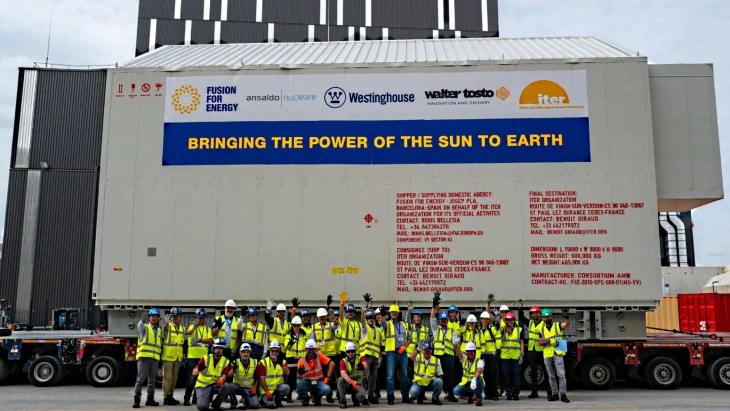
Europe Completes Delivery of Final ITER Vacuum Vessel Sector, Marking Conclusion of 16 Years of Manufacturing
Recently, Fusion for Energy (F4E), in collaboration with Ansaldo Nucleare, Westinghouse, and Walter Tosto, has completed the manufacturing of Europe's final vacuum vessel sector for the International Thermonuclear Experimental Reactor (ITER) and delivered it to the ITER project site at Cadarache in southeastern France. It is understood that the ITER vacuum vessel has an internal volume of 1,400 cubic meters and is composed of nine wedge-shaped steel sectors, each over 14 meters tall and weighing up to 440 tonnes. Once assembled, the vacuum vessel will have an outer diameter of 19.4 meters, a height of 11.4 meters, and weigh approximately 520...
2026-10-06
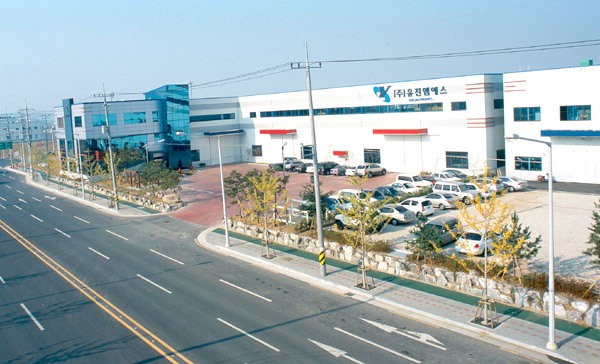
Korea's Eugene MS Wins KRW 11.4 Billion Order for ITER Core Components
Korea's Eugene MS announced on August 31 that it has signed a contract with the Korea Institute of Fusion Energy (KFE) to produce and supply the second batch of vacuum vessel port sealing flanges for the International Thermonuclear Experimental Reactor (ITER). The contract is valued at approximately KRW 11.4 billion, equivalent to about 44% of Eugene MS's 2025 revenue of KRW 25.9 billion. The contract period runs through December 2030. Under the arrangement, the sealing flanges will be delivered to the ITER Organization in three batches, with final inspection and related procedures scheduled for completion by June 30, 2031. The ITER vacuum vessel port sealing flanges consist of large fasteners and other components...
2026-08-31
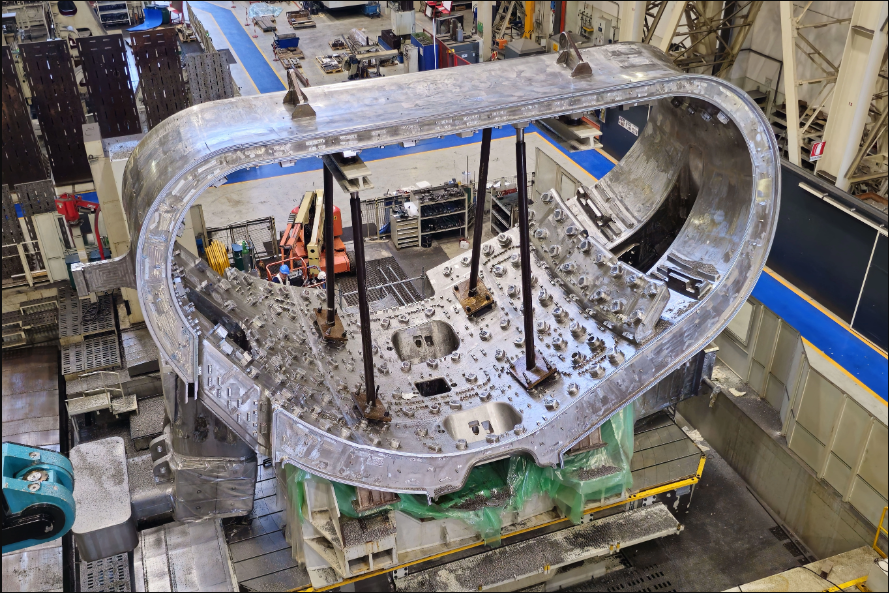
ITER vacuum vessel assembly in France progresses steadily, with five European sectors at different critical stages
The vacuum vessel assembly work for the International Thermonuclear Experimental Reactor (ITER) project in southern France is progressing steadily. As the core component of the ITER tokamak device, the vacuum vessel will contain the plasma confined by superconducting magnets, serving as the critical space where fusion reactions occur. This stainless steel ring-shaped structure weighs approximately 5,200 tonnes in total, measures 19.4 meters in diameter, and consists of nine sectors, five of which are manufactured by Europe. The European Fusion for Energy organization (F4E), together with the AMW consortium comprising Ansaldo Nucleare, Westinghouse Electric Italy, and Walter Tosto Company, is responsible for the related manufacturing work.
2026-08-21