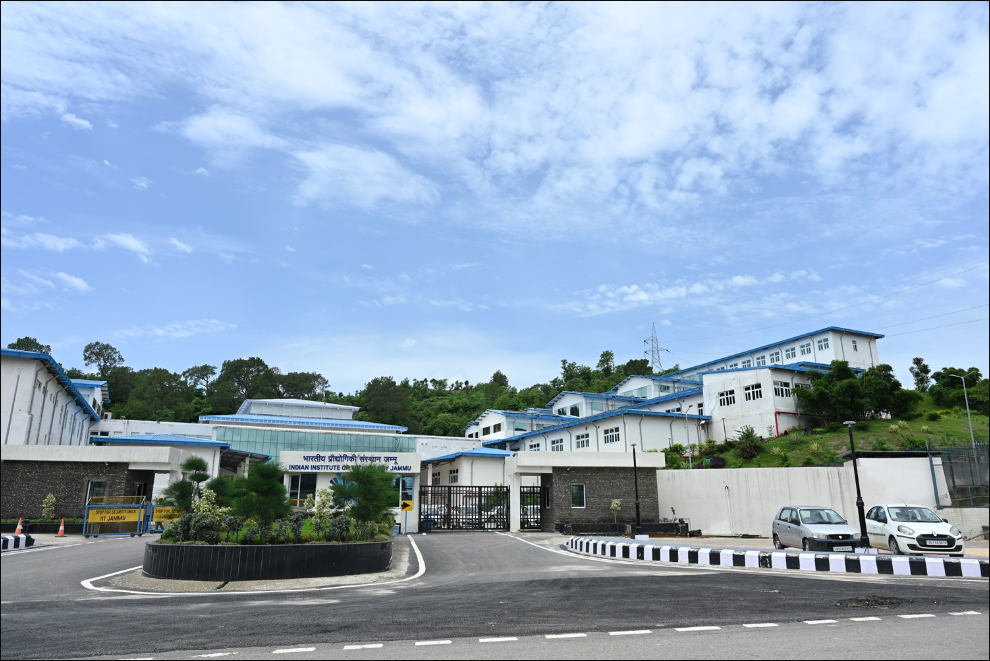
Indian research team uses supercomputer to track microscopic mechanisms of turbulence in dusty plasmas
Researchers at the Indian Institute of Technology Jammu (IIT Jammu), in collaboration with the Indian Institute of Technology Kanpur (IIT Kanpur), used supercomputer simulations to study the origin of chaos in dusty plasmas. By tracking the motion of millions of individual particles, the study revealed how turbulent energy is transferred from large-scale vortices to microscopic thermal motion of particles, providing a new computational perspective for nuclear fusion plasma research and astrophysical process analysis. Plasma is often referred to as the fourth state of matter. Unlike solids, liquids, and gases, atoms in plasma are ionized, forming a system composed of positively charged ions and negatively charged electrons. When tiny solid dust particles enter the plasma, these particles absorb electrons and become negatively charged, subsequently undergoing complex interactions with surrounding particles to form dusty plasma.
2026-08-19