
Kazakhstan advances the use of radiation technology for agricultural preservation and advanced wastewater treatment.
 Scan to share
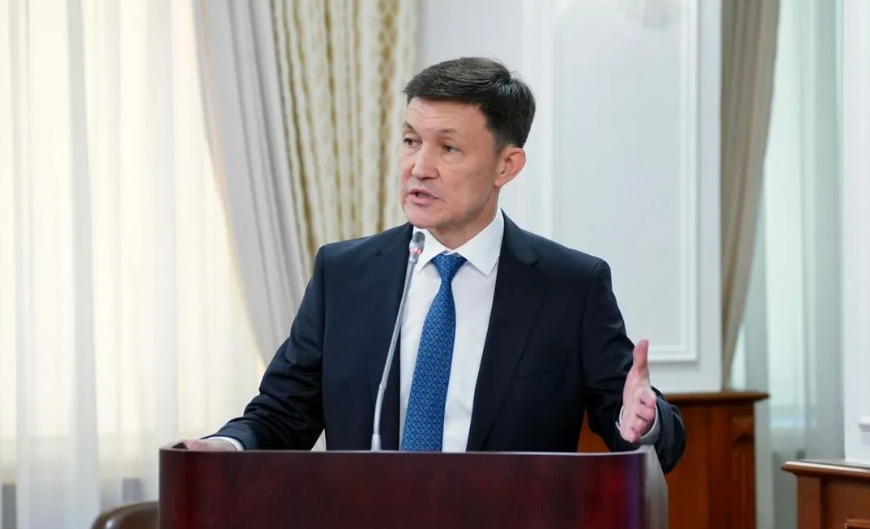
Sayabek Sakhiyev, Director of the Institute of Nuclear Physics of Kazakhstan, recently stated that radiation technology holds promise for helping Kazakhstan reduce post-harvest losses, extend the shelf life of agricultural products, and facilitate advanced wastewater treatment and reuse.
Sakhiyev explained that radiation processing in agriculture is a technique used to eliminate microorganisms and pests, thereby enhancing the safety of agricultural products and prolonging their storage life. During the process, products are exposed to radiation only during the treatment phase; the food itself does not become radioactive. This technology can be used for the phytosanitary treatment of imported fruits and vegetables, reducing the risk of spreading invasive pests and quarantine-relevant microorganisms within Kazakhstan.
Radiation processing technology is widely applied and recognized internationally; organizations such as the World Health Organization (WHO) and the Food and Agriculture Organization of the United Nations (FAO) support its use in ensuring food safety and controlling agricultural pests and diseases. The technology has also been incorporated into the "Atoms4Food" initiative, jointly promoted by the International Atomic Energy Agency (IAEA) and the FAO. During a previous visit to Kazakhstan by IAEA Director General Rafael Grossi, cooperation agreements covering nuclear energy, medicine, and agricultural radiation technologies were signed; one of these agreements involved collaboration with the National Academy of Sciences of Kazakhstan within the framework of this initiative.
Sakhiyev noted that radiation treatment can reduce losses during grain storage by eliminating insects and lowering microbial contamination. Taking wheat and flour as examples, Canada has already approved such treatment methods for pest control. Some experts estimate that crop losses range from 8% to 10% in Canada, whereas in Kazakhstan, they can reach as high as 40%. Consequently, this technology is of practical significance for improving food safety, reducing grain loss, and preventing the spread of invasive pests.
In the environmental sector, Sakhiyev pointed out that electron-beam treatment can serve as an advanced treatment step following conventional sewage treatment. It is used to break down persistent pollutants that are difficult to remove through standard biological processes—such as chemical dyes in textile wastewater, pharmaceutical residues, and other recalcitrant substances. This technology does not replace existing sewage treatment facilities but rather acts as a supplementary measure to enhance the level of wastewater purification. Water that has undergone advanced purification and quality control can be used for technical purposes—such as agricultural irrigation, urban landscaping, road cleaning, construction, and car washing—thereby reducing the consumption of fresh water.
Currently, Kazakhstan has not yet established an operational pilot plant for treating radioactive wastewater. The Institute of Nuclear Physics has begun preparations for practical trials; under a memorandum of understanding signed with six regions of Kazakhstan, the Institute plans to analyze actual wastewater composition, identify key pollutants, and evaluate the effectiveness of electron-beam treatment across different regions. The Institute has also designated the Sorbulak wastewater storage system as a key research site, where it intends to collect water samples, analyze contaminants, and select appropriate treatment solutions. Future steps may include installing a pilot-scale unit on-site to test treatment quality, energy consumption, and the potential for water reuse.
In the fields of scientific research and medicine, the Institute of Nuclear Physics operates 12 core experimental facilities—including a newly installed Cyclone C18/9 medical cyclotron—supporting applications such as radiation sterilization of medical devices, food processing, new material development, and radiopharmaceutical production. The Institute produces radioisotopes such as Iodine-131, Molybdenum-99, Technetium-99m, and Fluorine-18 for disease diagnosis and treatment. Over the years, the Institute has supplied these radiopharmaceuticals to medical facilities across Kazakhstan, serving more than 20,000 patients annually and supporting over 80,000 medical procedures to date.
Sakhiev stated that, with 3 billion tenge in funding provided by the Ministry of Health of Kazakhstan and private enterprises, the Institute plans to launch three new types of radiopharmaceuticals within six months to two years. These will be supplied to medical centers in four regions to expand domestic cancer diagnosis and treatment capabilities and reduce reliance on expensive treatments from abroad.
Additionally, the Institute is developing electron-beam treatment technologies for products such as grains, poultry, dried fruits, and medicinal plants, as well as radiation sterilization technologies for packaging, medical devices, and biotechnology products. The Institute is also conducting research and development on hydrogels and adsorbents designed to absorb and slowly release moisture, helping crops withstand drought conditions. Sakhiev stated that the institute is characterized by its full-cycle capabilities—spanning from scientific research and industrial production to the delivery of finished products—with its achievements already applied in areas such as hydrogel dressings, beauty masks, medical device sterilization, food processing, and the supply of isotope products.
Disclaimer: Information republished from partner media, institutions or other websites is provided for reference and communication purposes only. It does not imply endorsement of its views or verification of its accuracy. Please contact us if any content infringes rights or requires correction.