
ANSTO Australia Develops New Solution for Immobilizing Sulfate-Bearing Radioactive Waste
 Scan to share
The Australian Nuclear Science and Technology Organisation (ANSTO) announced on July 31, 2026, that its researchers have developed a new waste treatment material for immobilizing sulfate-bearing radioactive waste, which is expected to solve the technical challenges in the long-term management of such waste and provide a reference pathway for similar radioactive waste treatment internationally.
The related research has been published in the Journal of the European Ceramic Society. The study demonstrates for the first time the application of Hot Isostatic Pressing (HIP) technology in consolidating a dedicated glass-ceramic waste form for sulfate-rich nuclear waste. The research originated from ANSTO's need to manage waste generated during the production of medical radioisotopes, in which the treatment and immobilization of sulfate-bearing liquid waste has always been highly challenging.
According to the organization, sulfate-rich radioactive waste is not unique to Australia; similar waste may also be generated in several stages of the nuclear fuel cycle, decommissioning of nuclear facilities, and treatment of legacy radioactive waste. Therefore, this research has practical significance for broader international radioactive waste management programs.
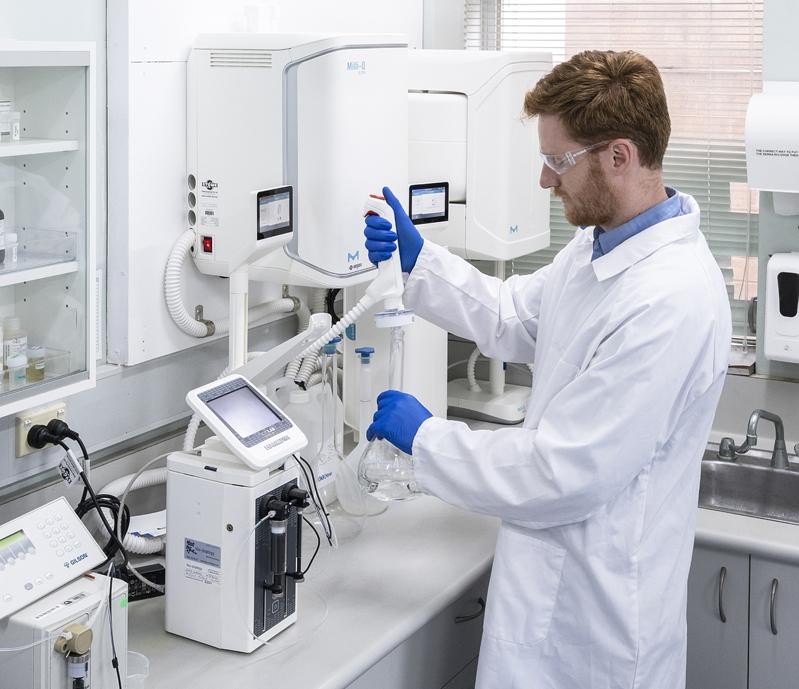
The glass-ceramic composite material developed by the research team can incorporate sulfates into durable crystalline phases distributed within a glass matrix. Test results show that the material exhibits good chemical durability and can form a dense, low-porosity monolithic structure suitable for long-term waste immobilization. A key outcome of the study is that sulfates are effectively retained during processing, avoiding issues commonly associated with sulfur volatilization and off-gas generation.
Further analysis also revealed minimal interaction between the waste form and the stainless steel canister, with no evidence of adverse effects on the performance of the waste form or the integrity of the canister. The study was led by Dr. Rifat Farzana and Dr. Daniel Gregg, with significant contributions from the ANSTO Synroc team and collaboration with the University of New South Wales.
ANSTO stated that this technology builds upon its ANSTO SYNROC® technology and years of experience in radioactive waste immobilization. The research results indicate that this solution offers a viable pathway for the long-term management of sulfate-bearing radioactive waste, while supporting ANSTO's radiopharmaceutical production mission and providing a potential solution to similar problems in international waste management.
ANSTO also stated that future work will focus on further optimization, scale-up, and engineering integration to advance this technology from conceptual research to deployable waste treatment capability. Currently, ANSTO is commissioning its first Synroc waste treatment plant for processing intermediate-level liquid from 99Mo production.
Disclaimer: Information republished from partner media, institutions or other websites is provided for reference and communication purposes only. It does not imply endorsement of its views or verification of its accuracy. Please contact us if any content infringes rights or requires correction.