
Uranium Levels Exceed Standards in Water Supply on Seogyeom Island, Ganghwa County, Incheon; Government Denies Impact from North Korea's Pyongsan Uranium Mine Wastewater
 Scan to share
Uranium levels exceeding standards have been detected in the water supply facilities at the groundwater source on Seogyeom Island, Ganghwa County, Incheon, and the government has stated that this is not attributable to wastewater from North Korea's Pyongsan uranium plant.
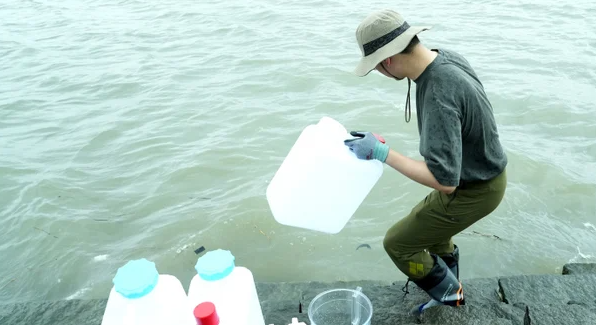
According to the Ministry of Climate and Energy Environment, a recent detection at the Seogyeom Island water supply facility recorded a uranium concentration of 45 micrograms per liter, exceeding the drinking water quality standard of 30 micrograms per liter. The government stated that, following concerns raised over wastewater discharge from the Pyongsan uranium plant, the Nuclear Safety and Security Commission has conducted monthly regular inspections since July 2025, and quarterly inspections starting in 2026. The most recent inspection (June 2026) showed uranium concentrations ranging from 0.133 to 3.025 micrograms per liter at seven points, including the downstream Han River and areas near Ganghwa Island. Regular inspection results over the past year also showed concentrations between 0.054 and 3.237 micrograms per liter, which are at natural background levels.
Given the very low uranium concentrations in the Han River and areas near Ganghwa Island, the government considers the likelihood of impact from Pyongsan uranium plant wastewater on the Seogyeom Island water supply facilities to be low. The Ministry of Climate plans to provide on-site technical support and bottled water assistance through the Han River Basin Environmental Office and the Korea Water Resources Corporation. Additionally, on-site monitoring activities involving the National Institute of Environmental Research, the Korea Water Resources Corporation (K-Water), and external expert organizations will be conducted to analyze the cause of the elevated uranium levels. Based on the results of the detailed cause analysis, if further measures are necessary, such as developing new wells or alternative water sources, the government will cooperate with Incheon City.
Disclaimer: Information republished from partner media, institutions or other websites is provided for reference and communication purposes only. It does not imply endorsement of its views or verification of its accuracy. Please contact us if any content infringes rights or requires correction.