
Carbon isotope analysis reveals: Canadian Arctic seabed sediments can sequester part of permafrost organic carbon
 Scan to share
News dated August 3, 2026: Researchers from the Alfred Wegener Institute and the Center for Marine Environmental Sciences at the University of Bremen conducted a study on permafrost coasts near Herschel Island (Qikiqtaruk) in Canada, finding that not all terrestrial organic carbon released by Arctic permafrost thaw and coastal erosion enters the atmosphere—a significant portion is instead stored in seabed sediments. The findings have been published in the journal *Nature Geoscience*.
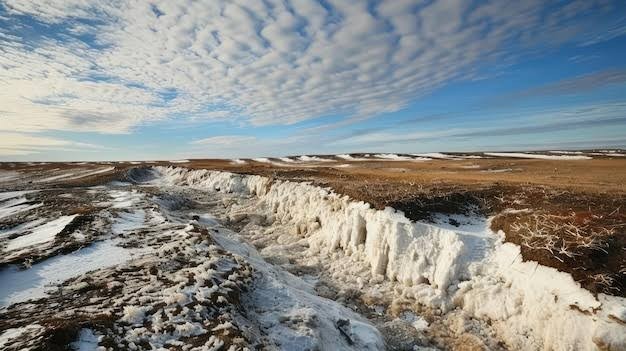
Arctic terrestrial permafrost ecosystems store approximately 130 billion tons of carbon from organic sources such as plant debris, while marine and river delta sediments contain an additional 40 billion tons of carbon. As Arctic warming accelerates, permafrost thaw releases this carbon into the Arctic Ocean via rivers and eroding coasts. Researchers note that currently at most about 0.02 billion tons of carbon flow into the ocean annually, and this flux is projected to increase by 70% to 150% by 2100. Previously, the scientific community lacked a clear understanding of how much of this carbon ultimately reaches the atmosphere versus how much remains on the seafloor.
To trace the fate of this carbon, the research team collected sediment cores at various locations along the coast of Herschel Island, with the cores recording approximately 50 years of deposition history. The analysis shows that although large amounts of organic carbon are carried from the coast into nearshore waters by seawater, the proportion that enters the active marine carbon cycle is relatively low. Researchers estimate that about 10% of the organic carbon in the sediments is converted into gases by microorganisms, which then enter the water column and may be released into the atmosphere; the remainder is largely preserved within the seabed sediments.
The study also used the accumulation of dissolved inorganic carbon in pore water within sediment layers to assess the process of carbon dioxide production from microbial decomposition of organic carbon. Through carbon isotope composition, researchers further distinguished the sources of the decomposed organic matter. Carbon-13 was used to determine whether the carbon source originated from land or marine environments, while carbon-14 helped identify whether microorganisms preferentially utilized ancient permafrost organic carbon or newer marine organic carbon such as algal debris.
The results show that microorganisms in the sediments appear to prefer utilizing fresh marine carbon over the older organic carbon from permafrost. This suggests that the contribution of permafrost organic carbon transported from land to ocean to atmospheric greenhouse gases may be lower than previously estimated. However, the researchers also noted that some permafrost organic carbon may have already decomposed before reaching the seafloor, warranting further investigation.
The research team believes these findings provide a more precise data foundation for assessing the impact of permafrost thaw on global climate. In the future, these complex processes will continue to be studied under the international "Arctic Pulse" project, scheduled to launch in 2027, with a focus on how rapid environmental changes affect Arctic ecosystems and biogeochemical processes in coastal marine areas.
Disclaimer: Information republished from partner media, institutions or other websites is provided for reference and communication purposes only. It does not imply endorsement of its views or verification of its accuracy. Please contact us if any content infringes rights or requires correction.