
US Oak Ridge National Laboratory Advances New Process to Boost Californium-252 Production
 Scan to share
Oak Ridge National Laboratory (ORNL), under the US Department of Energy, is advancing a new Californium-252 (Cf-252) separation process to address growing market demand. The laboratory stated that this process, developed over nearly a decade of research, is expected to shorten the Cf-252 production cycle by about one week, significantly improving processing efficiency without altering product quality.
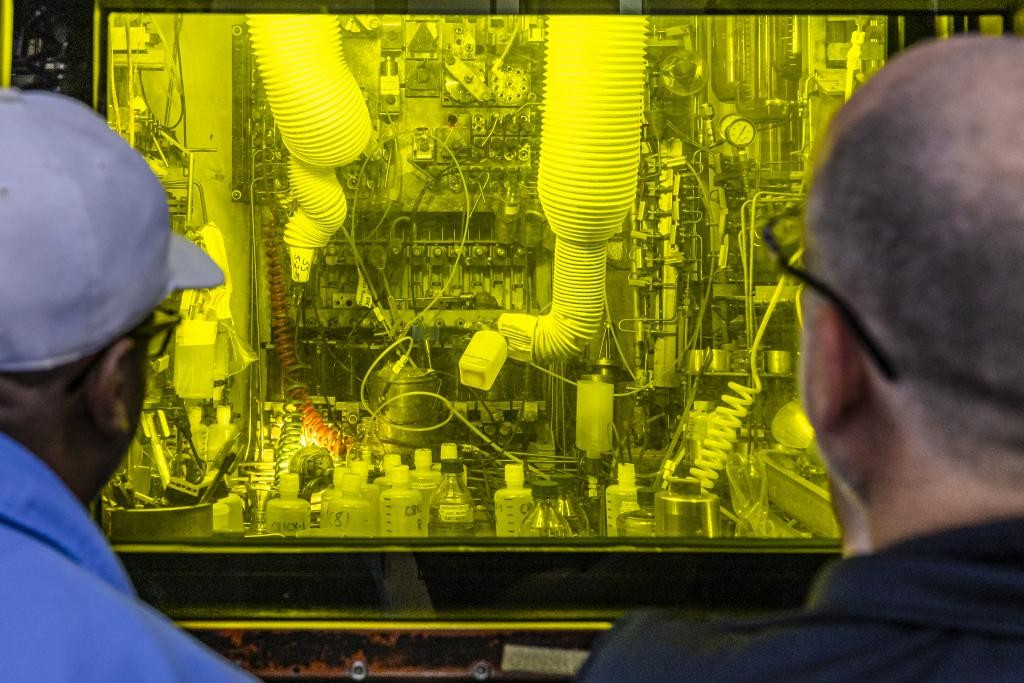
Californium-252 is a neutron-emitting radioisotope used in nuclear reactor startup, fuel testing for new reactors, as well as in oil well logging, coal analysis, port security, fuel rod scanners, and instrument calibration. ORNL stated that it is the only Cf-252 production facility in the Western world. With funding from the US Department of Energy's Office of Isotope R&D and Production, ORNL produces Cf-252 and supplies it to an industrial consortium, which fabricates it into sealed sources for distribution to customers worldwide.
Samantha Schrell, ORNL's Cf-252 program manager, stated that with rising demand related to nuclear energy and increased needs for neutron sources in national security and industrial applications, the laboratory aims to further boost Cf-252 output. She noted that Cf-252 production is entering a new phase, with the laboratory both raising internal standards and expanding heavy-element production capabilities.
Currently, ORNL typically conducts Cf-252 production campaigns every two years. The laboratory evaluated whether to shift to annual production but determined this approach was not suitable given cost considerations, limited hot cell resources, and the approximately 2.6-year half-life of Cf-252. Therefore, efforts to increase output have focused on increasing the number of irradiation cycles for curium targets in the High Flux Isotope Reactor (HFIR) and improving the efficiency of subsequent radiochemical processing.
The core improvement in the new process comes from ORNL radiochemist Leticia Delmau. For decades, ORNL has used bis(2-ethylhexyl) phosphate (HDEHP) to separate trivalent actinides and lanthanides from dissolved target solutions. This method requires first substantially reducing the solution acidity, a step that alone takes approximately one week.
Delmau proposed using neutral molecules to capture target elements in high-acidity solutions, thereby bypassing the time-consuming acid reduction step. Since 2015, she has successively validated the approach using small amounts of waste solution, actual dissolved target solutions, and materials from partial production batches; by the 2025 production campaign, the process underwent full-scale testing.
Test results showed that the improved single-cycle process can remove other isotopes generated during fission, such as americium, curium, and cerium, from the Cf-252 solution at a removal rate of 95%, achieving separation performance comparable to the old process but in significantly less time. ORNL stated that the process will continue to be optimized and deployed in the next production campaign.
Disclaimer: Information republished from partner media, institutions or other websites is provided for reference and communication purposes only. It does not imply endorsement of its views or verification of its accuracy. Please contact us if any content infringes rights or requires correction.