
South Korea to Investigate Seawater Radioactivity Levels Along Maritime Transport Routes for Radioactive Waste
 Scan to share
The Korea Atomic Energy Environment Corporation (KAEEC) will conduct an investigation this year into seawater radioactivity levels along the maritime transport routes for radioactive waste from nuclear power plants, in order to assess the radiological environmental impact during the transport of radioactive waste to the Gyeongju low- and intermediate-level radioactive waste disposal facility.
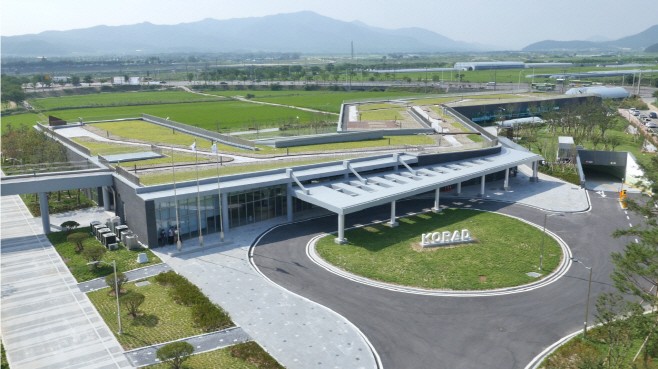
According to information released on August 6 by the Korea National Electronic Procurement System, KAEEC recently published a public notice regarding the "Radiation Analysis Service for Seawater Samples Collected Along Maritime Transport Routes for Low- and Intermediate-Level Radioactive Waste." Once the contractor is selected, the investigation is scheduled to be completed by the end of this year.
Under the arrangement, KAEEC will conduct three maritime transport operations of radioactive waste this year, one each from the Gori, Hanul, and Hanbit nuclear power plants to the Gyeongju disposal facility. The investigation will involve the collection of 15 seawater samples along the relevant routes, with 3 sampling points between Gori and Wolseong, 4 sampling points between Hanul and Wolseong, and 8 sampling points between Hanbit and Wolseong.
The testing will cover 11 gamma-emitting radionuclides, including manganese-54, cobalt-58, cobalt-60, cesium-134, and cesium-137, as well as analysis of tritium and gross beta radioactivity concentrations. Collected seawater samples will be stored at the environmental laboratory of KAEEC's Low- and Intermediate-Level Radioactive Waste Management Division. Upon receiving a request from the corporation, the analysis institution must collect samples within 5 days and conduct pretreatment and radionuclide analysis; results must be submitted within 30 days after the completion of each voyage analysis, and a final report containing analysis results and assessment content must be issued after the service is completed.
If analysis results exceed the normal fluctuation range, the relevant parties will inspect the measurement instruments, sample collection procedures, and measurement errors, and re-analyze the samples. If abnormal values are still confirmed after re-testing, the relevant units of the Low- and Intermediate-Level Radioactive Waste Management Division will be immediately notified, and recommendations for subsequent handling will be proposed.
To strengthen the safety management of radioactive waste, KAEEC completed the construction of a Radioactive Waste Analysis Center at the end of last year, to directly conduct some of the radioactive waste analysis work previously outsourced to external institutions, and to enhance radionuclide analysis capabilities. Previously, some radionuclide samples that were difficult to analyze had been sent to institutions such as the Korea Atomic Energy Research Institute for testing. KAEEC stated that the corporation inspects every year whether radioactivity levels along the maritime transport routes for radioactive waste have changed, and strengthens maritime transport safety management by notifying the Coast Guard of transport plans and conducting at least one safety drill per year.
Disclaimer: Information republished from partner media, institutions or other websites is provided for reference and communication purposes only. It does not imply endorsement of its views or verification of its accuracy. Please contact us if any content infringes rights or requires correction.