
IAEA Launches Global Marine Microplastics Monitoring Platform
 Scan to share
The International Atomic Energy Agency recently launched the "Nuclear Techniques for Controlling Plastic Pollution" global marine monitoring platform, aiming to strengthen cooperation and data sharing among countries on the abundance, distribution, and trends of microplastics in marine and coastal areas. Scientific experts from 65 countries attended the platform launch event.
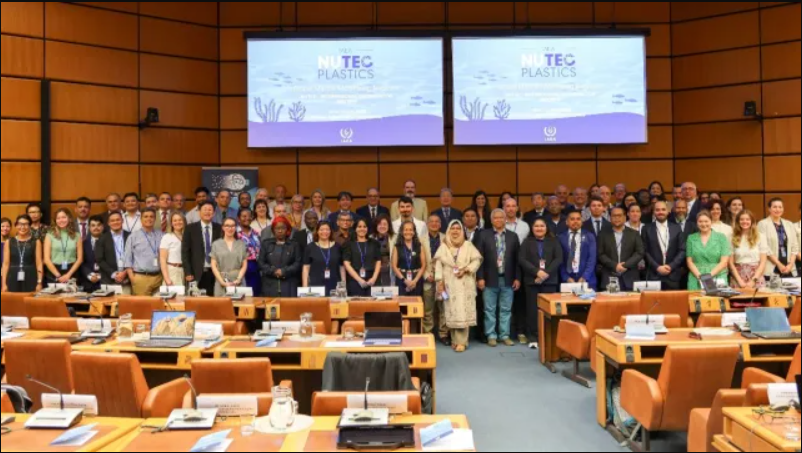
The platform will serve as a repository of results from the network of marine monitoring laboratories supported by the "Nuclear Techniques for Controlling Plastic Pollution" initiative. Participating laboratories can enter monitoring data into the platform to compile global information on marine microplastic pollution; users can access relevant content after creating a free IAEA Nucleus account.
Plastic pollution has become a global environmental issue. According to reports, approximately 19 to 23 million tonnes of plastic waste enter marine ecosystems each year, gradually degrading into microplastics that find their way into water bodies, soil, and organisms. To effectively monitor marine microplastic pollution, the comparability of data across countries and regions is crucial.
Currently, differences among laboratories in sampling protocols, analytical methods, and data collection approaches hinder reliable global comparisons of marine microplastic data. To address this, the "Nuclear Techniques for Controlling Plastic Pollution" global marine monitoring network will bring together specialized laboratories with relevant capabilities to promote the adoption of harmonized protocols for monitoring microplastic concentrations and trends in the oceans.
Through a series of technical cooperation projects, scientific personnel have been coordinating efforts on sampling, separation, and identification protocols for microplastics in beach sand and surface waters. The IAEA stated that over 400 technical experts have been trained in harmonized collection, sampling, and analysis methods for marine microplastics, and more than 80 countries have received sampling and analysis equipment to enhance their capacity for determining microplastic abundance in coastal and marine areas.
In terms of capacity building, the IAEA has provided participating laboratories with advanced analytical equipment and sampling toolkits, including vibrational spectroscopy systems such as Attenuated Total Reflectance—Fourier Transform Infrared Spectroscopy for identifying the chemical composition of plastic particles. These instruments enable laboratories to conduct sample collection, processing, and plastic particle identification locally.
The IAEA stated that with nuclear, isotopic, and related molecular techniques, countries can generate and access the data needed to develop evidence-based mitigation strategies. In the Philippines, for example, with support from the initiative, a functional microplastic research and training facility has been established, and relevant data can be incorporated into decision-making processes, providing a scientific basis for plastic pollution management.
Disclaimer: Information republished from partner media, institutions or other websites is provided for reference and communication purposes only. It does not imply endorsement of its views or verification of its accuracy. Please contact us if any content infringes rights or requires correction.