
German-Grenoble Joint Experiment: Bacteria Immobilize 96% of Uranium in Mine Water, Offering New Insights for Legacy Uranium Mine Remediation
 Scan to share
More than three decades after the closure of the Schlema-Alberoda legacy uranium mine in Saxony, Germany, remediation pressure continues unabated. After the mine workings were flooded, the water still contains approximately 1 milligram of uranium per liter, far exceeding the World Health Organization's provisional guideline value of 0.03 milligrams per liter for drinking water. This means that even though mining has long ceased, contaminated water must still be treated over the long term to prevent radioactive metals from migrating with groundwater into rivers or drinking water sources.
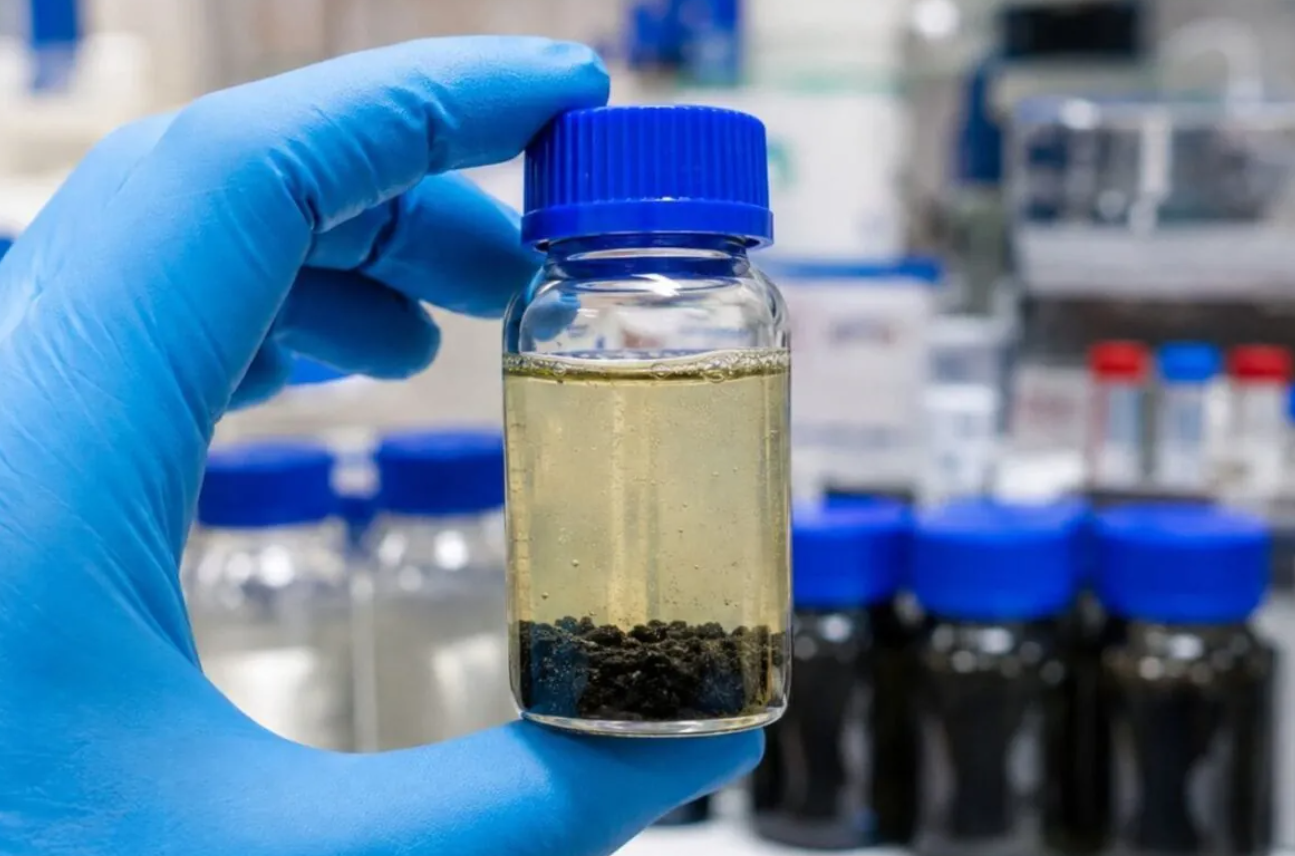
A team involving the Helmholtz-Zentrum Dresden-Rossendorf in Germany, the University of Grenoble, and other institutions conducted experiments directly using real water samples from the mine and achieved noteworthy results: after 130 days of anaerobic, dark incubation, approximately 96% of the dissolved uranium in the water was transferred to solid particles, with the final uranium concentration in the liquid phase dropping to about 0.04 milligrams per liter. It should be emphasized that the bacteria did not make uranium disappear, nor did they eliminate its radioactivity; rather, they immobilized the uranium that was previously more prone to migration with water, reducing its environmental mobility.
The experimental design closely resembled the deep mine environment. Researchers placed two liters of mine water in an oxygen-free system, added glycerol as a carbon source and energy source available to the bacteria, and maintained it in darkness for 130 days. Uranium in water typically exists in a soluble, easily mobile hexavalent form, while bacterial activity prompted a portion of the uranium to transform into lower oxidation states, including the less common pentavalent uranium, which combined with iron and oxygen to form solid mineral phases. In other words, microorganisms participated in the "immobilization" process at the microscopic scale, pulling uranium out of the water and embedding it into precipitates.
However, these results must be interpreted with caution. Control experiments showed that in the absence of glycerol, or under sterilized conditions with glycerol added, uranium also exhibited a certain degree of loss, approximately 25% and 36% respectively, which may be related to adsorption onto particles or container surfaces. Therefore, the 96% immobilization effect cannot be attributed entirely to live bacteria, but the significant gap between the full experiment and the controls indicates that microorganisms indeed played a key role. During the experiment, the water became clearer from its initial yellow color, a black precipitate formed at the bottom, and microscopic observation revealed uranium nanoparticles concentrated near bacterial membranes.
The practical significance of this study lies in providing a gentler bioremediation pathway for long-term remediation scenarios such as legacy uranium mines and contaminated aquifers. Its limitations are also clear: success with real mine water in the laboratory does not mean it can be immediately scaled up into an industrial remediation project; the stability of pentavalent uranium over 130 days in an anaerobic environment, and its persistence at over half of the analyzed uranium after four weeks of exposure to air, only demonstrates a certain tolerance rather than proof of permanent stability. The European Synchrotron Radiation Facility in Grenoble, France, played an important role in identifying uranium's chemical speciation and immobilization mechanisms, making this achievement not only a case study in German legacy mine remediation but also a technical signal worth tracking for the long-term management of nuclear industry legacy contamination.
Disclaimer: Information republished from partner media, institutions or other websites is provided for reference and communication purposes only. It does not imply endorsement of its views or verification of its accuracy. Please contact us if any content infringes rights or requires correction.