
Russia's Atommash Commissions Ultrasonic Weld Inspection Robot to Boost NPP Equipment Testing Efficiency
 Scan to share
Atommash, a plant under the mechanical engineering division of Russia's State Atomic Energy Corporation (Rosatom), has recently commissioned a new ultrasonic inspection robot for welded joints, used for weld quality checks on large nuclear power equipment such as nuclear reactors and steam generators.
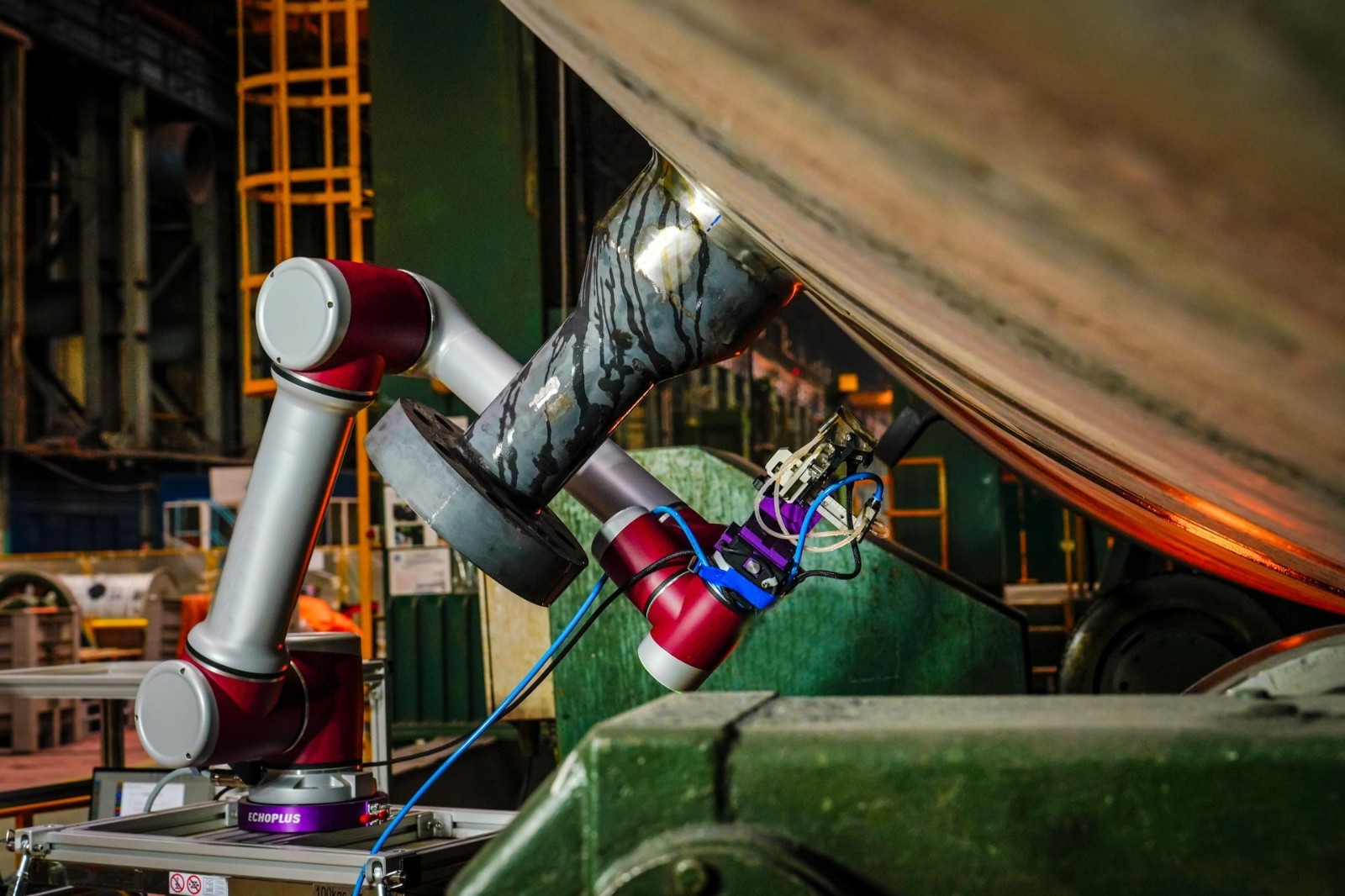
The plant is located in Rostov Oblast, Russia. The new equipment employs two scanning modes and can identify weld defect types and locate defect coordinates. Compared with traditional inspection methods involving manual probe movement, the robot can automatically perform scanning on components with complex geometries, increasing inspection speed by approximately 30% while reducing the need for manual work in hard-to-reach areas.
At present, Atommash operates two robotic systems for non-destructive testing of critical equipment at nuclear power plants. The company states that such systems can reduce manual scanning intensity and save ultrasonic testing consumables.
Maxim Zhidkov, head of Atommash, stated that this project is not a localized process optimization but rather the establishment of new technical standards for industry-wide application. The robotic inspection systems have been certified in accordance with Russian and international standards, positioning them for further expanded application.
Since 2023, Atommash has produced 9 nuclear reactors and 35 steam generators for Rosatom's new nuclear power projects in Russia and abroad. Currently, the plant is manufacturing two latest-generation III+ reactor pressure vessels and 12 steam generators for the El Dabaa Nuclear Power Plant being built by Rosatom in Egypt.
Ultrasonic testing is a commonly used non-destructive testing method that can detect internal or surface defects that are difficult to identify through visual inspection. Weld quality directly affects the structural integrity of nuclear power equipment, making it a key inspection stage in the manufacturing process. Traditional ultrasonic testing typically requires personnel to manually move probes across the workpiece surface; with the commissioning of robotic systems, the scanning device can be driven by a control unit to complete inspections, improving the stability and efficiency of the testing process.
Disclaimer: Information republished from partner media, institutions or other websites is provided for reference and communication purposes only. It does not imply endorsement of its views or verification of its accuracy. Please contact us if any content infringes rights or requires correction.