
Russian Scientists Propose Fast Calculation Method to Simulate Plasma Ion Parameters in Seconds
 Scan to share
Researchers from the HSE University and the Moscow Institute of Physics and Technology (MIPT) have developed an analytical method for calculating the behavior of heavy ions in helium under strong electric fields, which can accelerate the computation of ion mobility and ion–molecule reaction rates by thousands of times. The findings have been published in Physica Scripta.
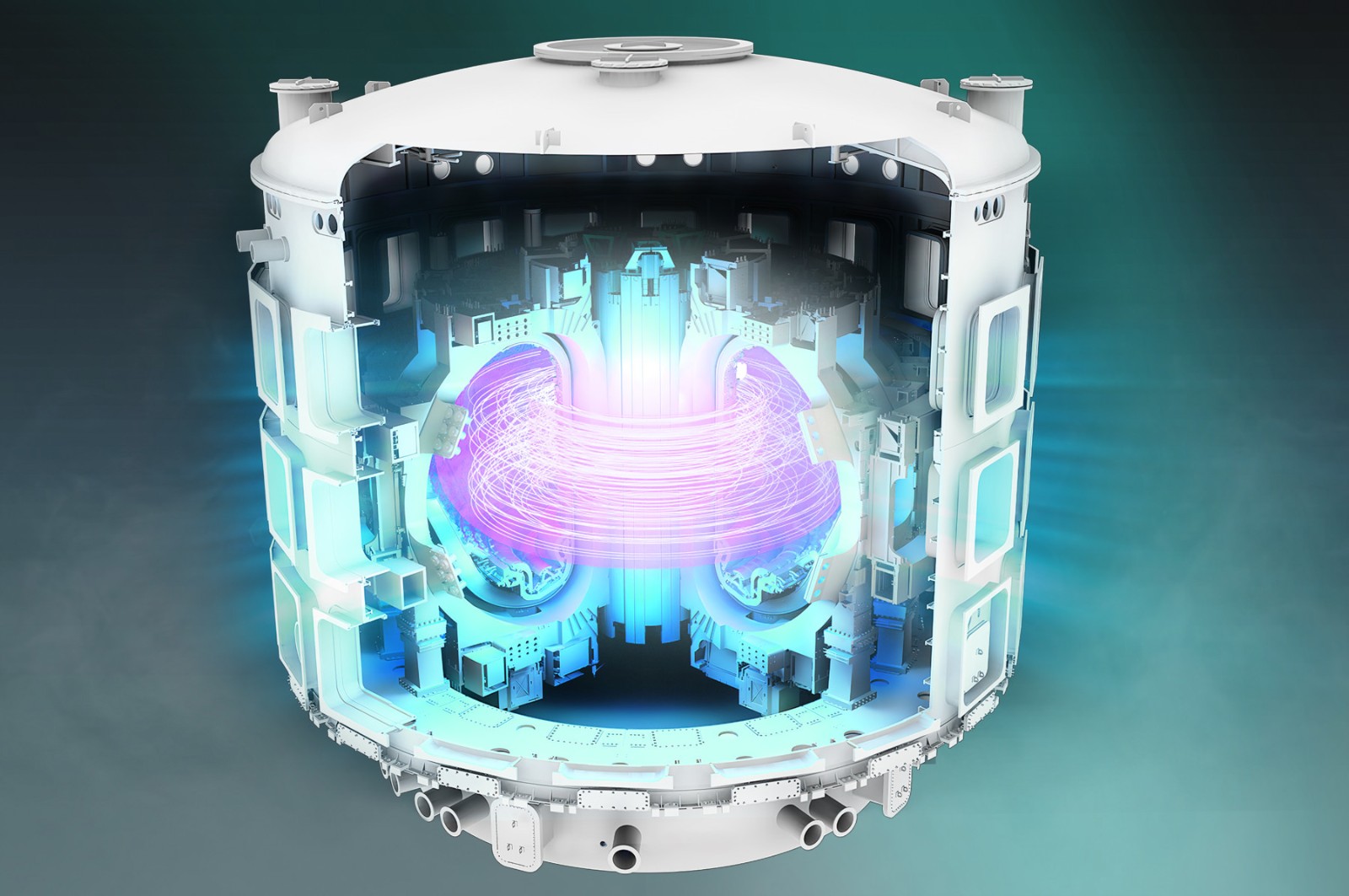
Plasma, composed of charged particles such as electrons, negative ions, and positive ions, is typically quasi-neutral and highly conductive. It exists not only in fluorescent lamps and welding arcs but is also used in controlled nuclear fusion devices such as tokamaks. Atmospheric plasma jets can also be applied to wound disinfection, work surface cleaning, and improving crop seed performance.
In practical applications, researchers first need to determine the composition and parameters of plasma jets through computer modeling. The fundamental data required for modeling include the characteristics of charged particles, mobility, and reaction rate constants, which vary with electric field strength. Previously, such data were typically calculated using the Monte Carlo method. This method offers high accuracy but is computationally expensive: determining the mobility and reaction rate constants of a specific ion under a given electric field strength often takes hours, and in complex cases, even days.
In their study, Alexander Ponomarev, Associate Professor at the HSE Faculty of Physics, and Nikolai Alexandrov, Professor at the Moscow Institute of Physics and Technology, proposed new analytical formulas that can calculate the relevant parameters within seconds. By improving and combining classical methods, the researchers developed multiple calculation schemes. Among them, the simpler approach is applicable to high reduced electric field conditions, i.e., the range exceeding 60 Td; the improved method covers a broader range of electric fields, including low fields.
The researchers noted that the new method can also be used to estimate the rates of negative ion decay and electron detachment, which is important for simulating plasma composition. The team validated the new method using data obtained from the Monte Carlo method, focusing on oxygen, tetraoxygen, and nitric oxide negative ions, which are significant in atmospheric plasma.
The validation results show that in strong electric fields, the deviation of ion mobility calculated by the simplest method is up to about 10%; the improved method yields deviations between 2% and 7%, depending on the ion type. The study also confirmed that the method is applicable to ultra-strong electric fields up to 250 Td. For ion reaction rate constants in plasma, the deviation between the new method and the Monte Carlo method does not exceed a factor of 2.
The researchers believe that since the reaction rate constants of charged particles can change by 2 to 3 orders of magnitude with electric field variations, compressing computation time from hours to seconds holds practical value in plasma jet simulation and related applied research. Alexander Ponomarev stated that this method significantly reduces the computational burden of characterizing ion parameters and is expected to advance research in areas such as the effects of plasma on living tissues and seed treatment.
Disclaimer: Information republished from partner media, institutions or other websites is provided for reference and communication purposes only. It does not imply endorsement of its views or verification of its accuracy. Please contact us if any content infringes rights or requires correction.