
Unanimously Approved! China's First ISO International Standard in the Field of Fusion Fueling Officially Released
 Scan to share
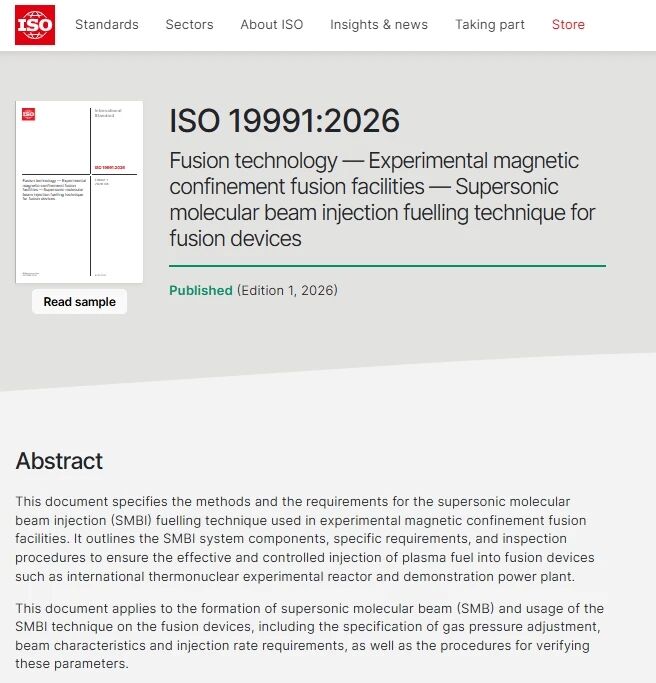
On August 10 local time, the international standard ISO 19991:2026, "Fusion Technology — Experimental Magnetic Confinement Fusion Facilities — Ultrasonic Molecular Beam Injection Fueling Technology for Fusion Devices," formulated by China, was officially released. Earlier, during the final voting process, all 12 countries, including France, Germany, and Russia, cast affirmative votes. This is the first ISO international standard in the field of fusion fueling and the second ISO international standard in the fusion field led by the Southwestern Institute of Physics (SWIP) under the China National Nuclear Corporation (CNNC).
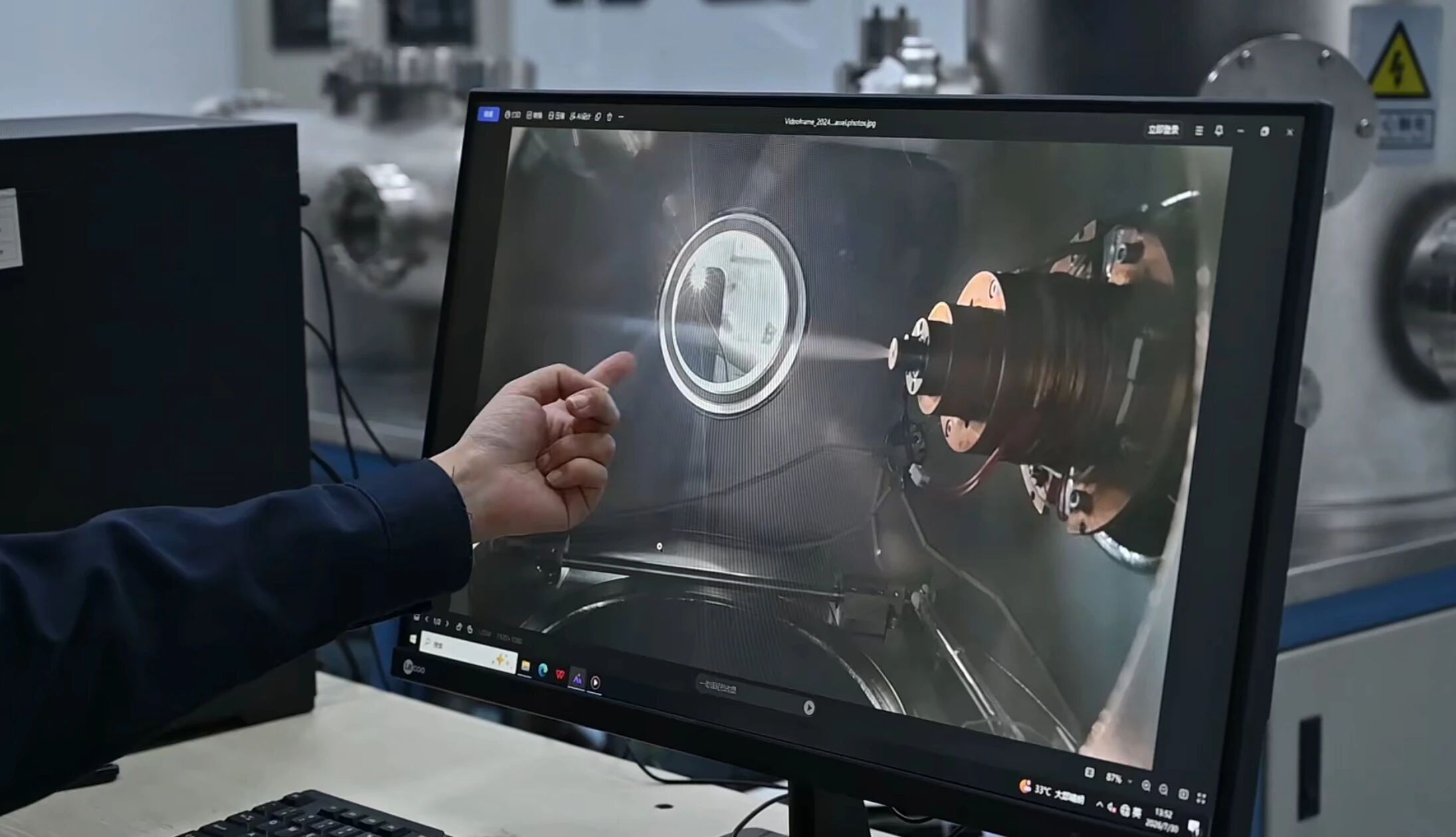
Ultrasonic molecular beam injection fueling technology is a key fuel supply technology for controlled nuclear fusion devices. This technology, an advanced fusion fueling technology originally developed by China, forms high-speed, directional molecular beams through adiabatic gas expansion. It features high speed, strong directionality, relatively high fueling efficiency, and low particle recycling, significantly enhancing the fuel control capability of fusion devices. It has been applied to more than ten magnetic confinement fusion experimental devices both domestically and internationally.
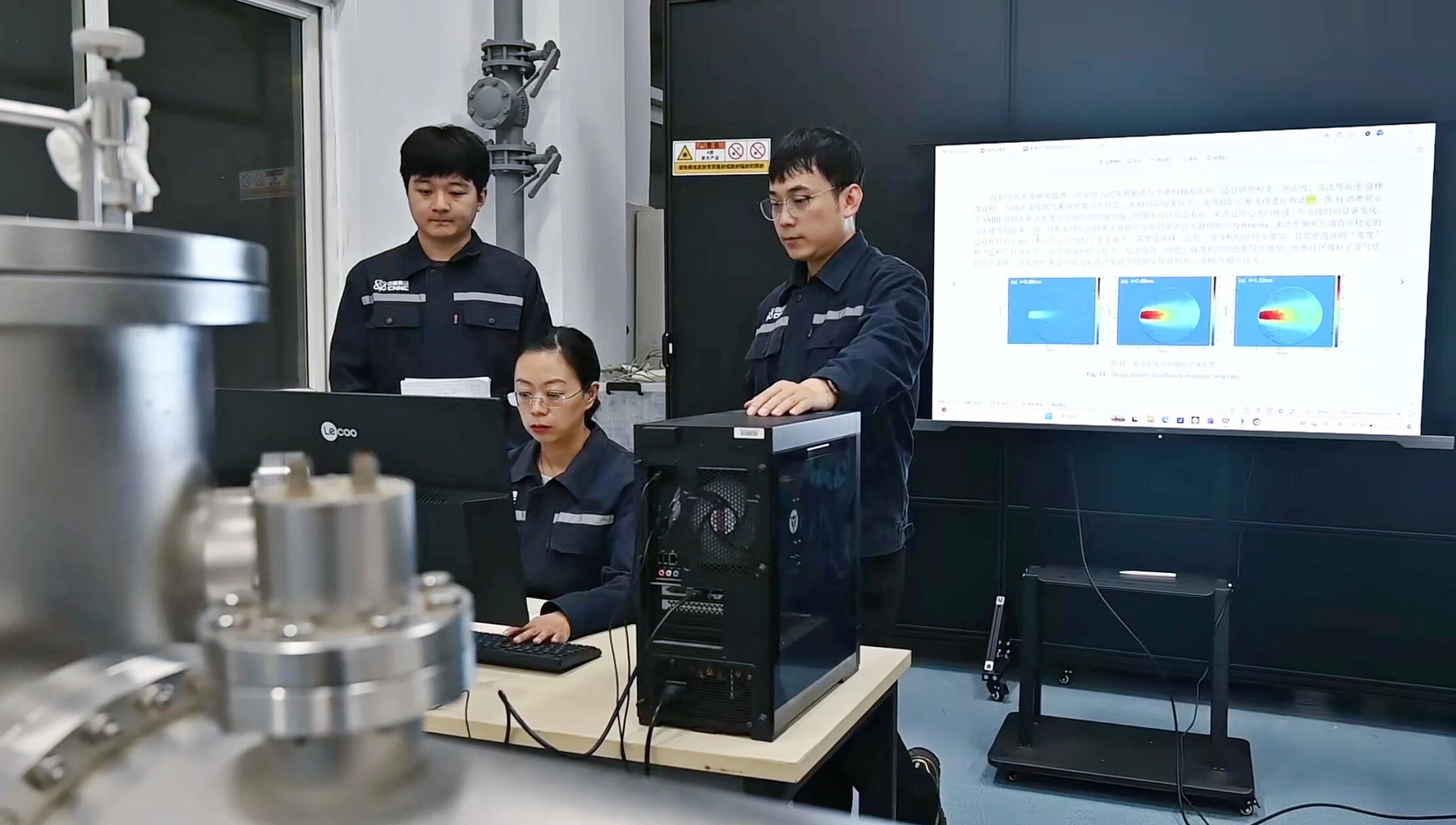
This international standard, targeting magnetic confinement fusion devices, specifies the methods and basic requirements for ultrasonic molecular beam injection fueling technology, covering system component composition, as well as key characteristics and inspection methods. It provides a unified technical basis for the design, testing, acceptance, and application of related systems.
Under the guidance of the China International Nuclear Fusion Energy Program Execution Center, coordinated by CNNC, led by SWIP in drafting, and supported by the Nuclear Industry Standardization Institute of the CNNC Strategic Planning and Research Institute, the project team successively completed project initiation and the stages of working group draft, committee draft, international standard draft, and final international standard draft. Around system boundaries, key parameters, pressure safety, tritium-related requirements, and inspection methods, multiple rounds of international technical review and opinion coordination were organized. After more than two years, the standard was officially released with international consensus. This achievement embodies the research team's years of sustained dedication and iterative innovation in the field of ultrasonic molecular beam technology, representing the culmination of long-term scientific research and engineering practice.
Xiao Guoliang, the technical lead, stated that this international standard transforms China's original technology and cross-device application experience into measurable, verifiable, and reusable international technical rules, marking a significant leap for ultrasonic molecular beam fusion fueling technology from original research and device application to international standardization.
In 2023, ISO 4233:2023, "Reactor Technology — Nuclear Fusion Reactors — Hot Helium Leak Testing Methods for High-Temperature Pressure-Bearing Components of Nuclear Fusion Reactors," led by SWIP under CNNC, was officially released, becoming the first ISO international standard in the field of nuclear fusion. The release of this international standard further demonstrates China's sustained advantages in fusion technology innovation, engineering validation, and international standardization.
The release of this international standard showcases China's active role in nuclear fusion fueling technology and strengthens China's voice in the field of international standardization. In the next steps, SWIP will carry out standard promotion and implementation verification, promote the standardized application of ultrasonic molecular beam technology in relevant fusion devices, and actively participate in the development of the international fusion standard system, contributing more Chinese technologies and standards to global fusion energy research and engineering.
Disclaimer: Information republished from partner media, institutions or other websites is provided for reference and communication purposes only. It does not imply endorsement of its views or verification of its accuracy. Please contact us if any content infringes rights or requires correction.