
Malaysia's Non-Destructive Testing Capabilities Gain International Recognition, Exporting Training and Technical Services to Asia-Pacific Region
 Scan to share
August 7, 2026 - After more than four decades of collaboration with the International Atomic Energy Agency, Malaysia has progressively established a comprehensive non-destructive testing system, evolving from an early reliance on foreign testing services to becoming an influential provider of NDT services and training in the Asia-Pacific region.
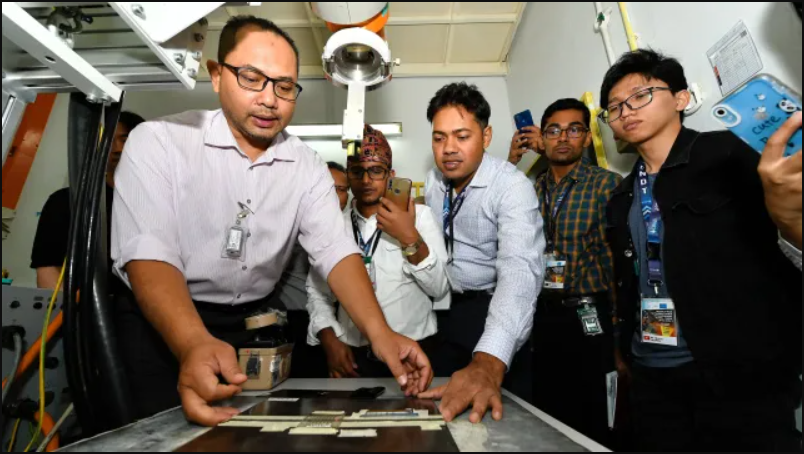
Trainees participate in a trainer training course in Malaysia to obtain certification in non-destructive testing radiography. (Photo: Nuklear Malaysia)
Non-destructive testing is primarily used to assess the integrity of materials and components in industrial facilities and infrastructure, enabling the detection and characterization of defects without damaging the inspected object. This technology is widely applied in industrial quality control and plays an important role in enhancing facility safety, reducing potential hazards, and maintaining industrial competitiveness.
With the support of the International Atomic Energy Agency, Malaysia has trained more than 10,000 NDT personnel, of whom over 5,000 have obtained Level 1, Level 2, and Level 3 certifications in various testing methods. Since the 1980s, IAEA technical cooperation projects, as well as projects under the Regional Cooperative Agreement for Research, Development and Training Related to Nuclear Science and Technology for Asia and the Pacific, have continuously promoted the development of Malaysia's domestic testing capabilities. As industrialization accelerated, Malaysia gradually developed its own NDT workforce and service system. Currently, the country has approximately 150 local NDT companies providing testing services across multiple industries.
Ilham Mukriz Zainal Abidin, Senior Researcher at the Malaysian Nuclear Agency, stated that Malaysia's development in the field of non-destructive testing demonstrates that sustained investment in human capital and international cooperation can transform a country from a recipient of technical assistance into a regional partner and knowledge provider. Malaysia is leveraging the experience accumulated through regional cooperation projects to advance innovative NDT solutions and enhance relevant capabilities in the Asia-Pacific region.
In 2023, Malaysia was designated as a Collaborating Centre for Nuclear Science Applications by the International Atomic Energy Agency. As a collaborating centre, the Malaysian Nuclear Agency supports regional capacity building through research and development and training, covering areas such as advanced non-destructive testing, new technology development, and artificial intelligence applications. Zanka Kocalova Whelton, Director of the IAEA Division of Physical and Chemical Sciences, stated that the collaboration between the two sides has advanced the science of non-destructive testing, including the development of certification standards and applications such as digital radiography, computed tomography, and AI-assisted inspection.
In terms of regional cooperation, Malaysian experts are sharing experience in training and certification system development with Asia-Pacific countries. In 2025, Malaysia hosted a regional training course on digital radiography testing, where trainees from the Asia-Pacific region received theoretical and practical instruction and obtained international certification in digital radiography testing. IAEA fellows and scientific visitors have also undertaken long-term placements at relevant Malaysian institutions to enhance their professional skills.
Disclaimer: Information republished from partner media, institutions or other websites is provided for reference and communication purposes only. It does not imply endorsement of its views or verification of its accuracy. Please contact us if any content infringes rights or requires correction.