
Idaho National Laboratory's Hot Fuel Examination Facility Named U.S. Nuclear Historic Landmark
 Scan to share
The American Nuclear Society (ANS) recently designated the Hot Fuel Examination Facility (HFEF) at Idaho National Laboratory (INL) as a Nuclear Historic Landmark. Since becoming operational in 1975, the facility has conducted post-irradiation examination of nuclear fuel and materials, and continues to support research on advanced reactors, commercial nuclear fuel, and related energy security.
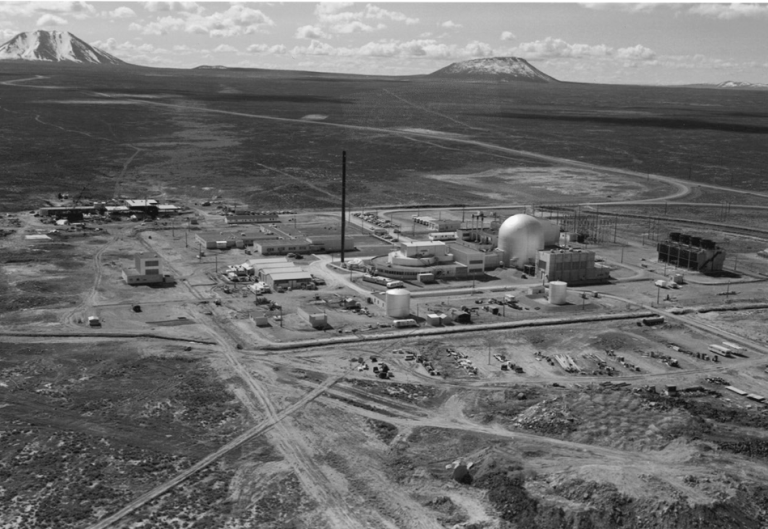
HFEF is located within the Materials and Fuels Complex (MFC) at Idaho National Laboratory and houses the largest inert-atmosphere hot cell in the United States dedicated to nuclear materials research. The hot cell operates in an argon environment and features approximately 4-foot-thick shielding walls, enabling remote, non-destructive, and high-precision examination of highly irradiated fuel and material samples while reducing worker radiation exposure.
HFEF's capabilities are further enhanced by its integration with the Neutron Radiography Reactor (NRAD). Located beneath the main hot cell, NRAD is a 250-kilowatt open-pool Training, Research, Isotope, General Atomics (TRIGA) reactor that has been operating since 1977. It uses neutron beams to image irradiated fuel and materials, providing data that supports research on fuel composition, structure, and in-service behavior. On February 18, 2026, NRAD completed its 5,000th reactor operation and tested a new high-resolution digital neutron imaging system.
In its early operational phase, HFEF focused on studying phenomena such as radiation-induced void swelling and irradiation creep, as well as their effects on the dimensional stability of fuel rods and fuel assemblies. As project demands increased from the Experimental Breeder Reactor II (EBR-II) and the Fast Flux Test Facility (FFTF) in Washington state, HFEF's examination capabilities continued to expand, and its research findings have been significant for reactor safety, reliability, and lifetime assessment.
After EBR-II was shut down in 1994, HFEF added equipment within the hot cell to support research and development efforts such as pyroprocessing of irradiated fuel and solidification of fuel treatment wastes. Subsequently, the facility underwent modifications and equipment upgrades to enable examination of long fuel rods from commercial light-water reactors, tristructural isotropic (TRISO) particle fuel, and plate-type research reactor fuel.
Doug Crawford, Chief Reactor Technology Officer at MFC, stated that HFEF's flexibility over the past 50 years and its ability to adapt to evolving research needs remain defining characteristics of the facility. The HFEF main hot cell measures approximately 30 feet wide, 70 feet long, and 25 feet high, with galvanized carbon steel lining, concrete shielding walls, specialized lead-glass windows, and 15 workstations that enable precise remote handling of highly radioactive materials. Adjacent to the main hot cell is an air-atmosphere decontamination room used for the safe removal and disposal of radioactive materials.
In recent years, NRAD's applications have also expanded. In addition to its long-standing neutron radiography mission, researchers have utilized its north radiography station to conduct zero-power criticality testing on the "Unity" demonstration reactor from Deployable Energy, verifying the core physics characteristics of this 1-megawatt battery reactor.
To accommodate new research missions, HFEF continues to clear and free up nuclear facility space. In the summer of 2024, MFC engineers began cleaning out an area of HFEF known as the 9M window, removing more than 10,000 pounds of equipment, including jack plates and support assemblies, material baskets, heating devices, and extensive wiring and cables. All equipment required decontamination before disposal. The area is now ready to support work related to a new sodium test loop for the Transient Reactor Test Facility (TREAT), used to study and validate fuel behavior under advanced reactor accident conditions.
The American Nuclear Society's Nuclear Historic Landmark Award was established in 1985 to recognize sites or facilities that have advanced nuclear science and engineering. HFEF is expected to hold its formal designation ceremony later this year, becoming the tenth location at Idaho National Laboratory to receive this recognition, joining other still-operating facilities such as the Advanced Test Reactor, fuel cycle facilities, and TREAT.
Leon Walters, retired engineering manager at Argonne National Laboratory, stated in a letter supporting the nomination that HFEF can both examine the effects of irradiation on large components and process samples down to scales suitable for microscopic analysis; as the facility's capabilities have expanded, the professional expertise of its technical staff has advanced accordingly. He believes that designating HFEF as a Nuclear Historic Landmark is not only recognition of the facility itself, but also an acknowledgment of the generations of engineers and technicians who have contributed to fuel and materials research.
Disclaimer: Information republished from partner media, institutions or other websites is provided for reference and communication purposes only. It does not imply endorsement of its views or verification of its accuracy. Please contact us if any content infringes rights or requires correction.