
Chinese Team Achieves Full Technical Chain Integration in Wall Treatment for the World's Largest "Artificial Sun"
 Scan to share
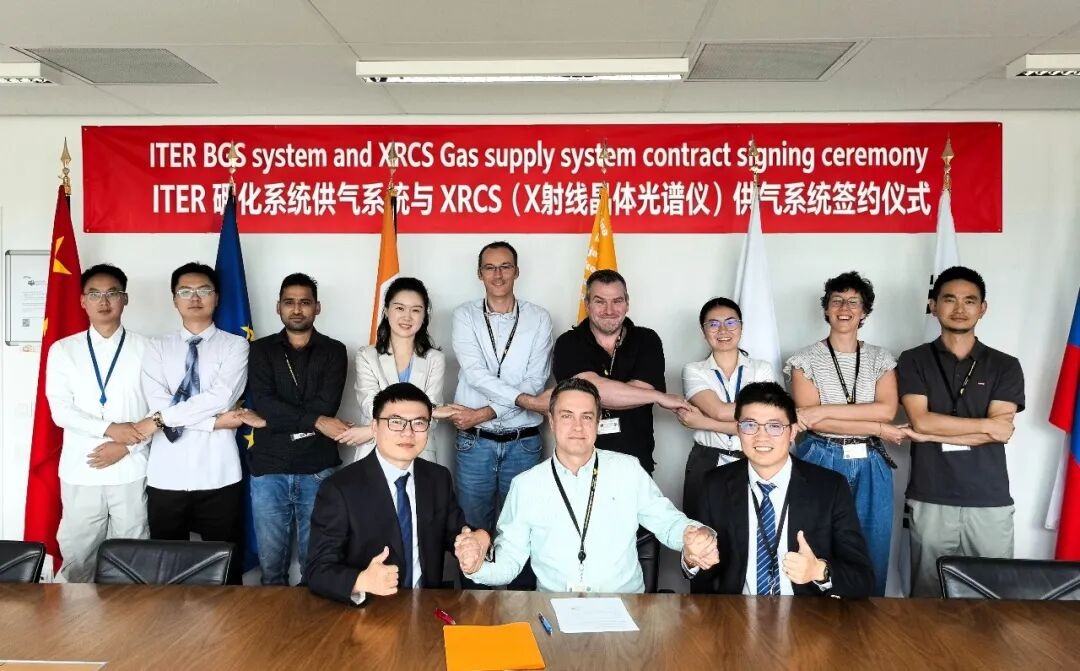
Recently, the team from the Southwestern Institute of Physics under the China National Nuclear Corporation (CNNC) has made significant progress in the wall treatment technology of the International Thermonuclear Experimental Reactor (ITER): not only successfully passing the Delta Final Design Review (Delta FDR) for the supplementary design of the Glow Discharge Cleaning (GDC) system permanent electrode project, but also, leading and jointly with CNI23, winning the bid and signing contracts in France for the design and manufacture of the boronization system and the X-ray Crystal Spectrometer (XRCS) gas supply system. This marks a new expansion of the Chinese team's core technology in ITER wall treatment, extending the scope from the original glow discharge cleaning to boronization wall treatment, achieving a full technical chain from impurity removal to surface pre-treatment, which will provide critical support for the operation of ITER's full-tungsten first wall.
These two tasks are directly related to ITER's strategic design change made in 2023 to replace the first wall material from beryllium to tungsten. Although tungsten can withstand high temperatures, the impurities it releases can seriously contaminate the plasma, especially during the sensitive discharge start-up phase, where even trace amounts of impurities can lead to uncontrolled energy radiation. Acting as a "powerful vacuum cleaner" inside the ITER vacuum vessel, the GDC system under the Chinese team's responsibility generates cold plasma through glow discharge to bombard and remove residual gases and impurities adsorbed on the wall. This Delta FDR special review overcame the manufacturing feasibility challenges of electrodes in complex spatial configurations, clearing the final obstacle for the entire GDC system to move from design drawings to engineering manufacturing.
Meanwhile, the newly awarded boronization system plays the role of a precision "surface coating specialist." Targeting the impurity risks posed by the full-tungsten wall, this system deposits a boron film of only 10-100 nanometers thick on all plasma-facing surfaces through glow discharge-assisted deposition. This low-atomic-number boron film serves as a physical barrier on one hand, effectively suppressing the sputtering release of high-atomic-number tungsten impurities, and on the other hand, acts like a sponge to efficiently capture and "absorb" impurities such as oxygen and carbon escaping from the wall, preventing them from entering the plasma core and causing radiation cooling. It is worth noting that the design of this boronization system will incorporate test experience from multiple existing tokamaks, applying it for the first time to a large-scale ITER device, while remaining compatible with future tritium-containing operating environments, providing assurance for ITER experimental operations.
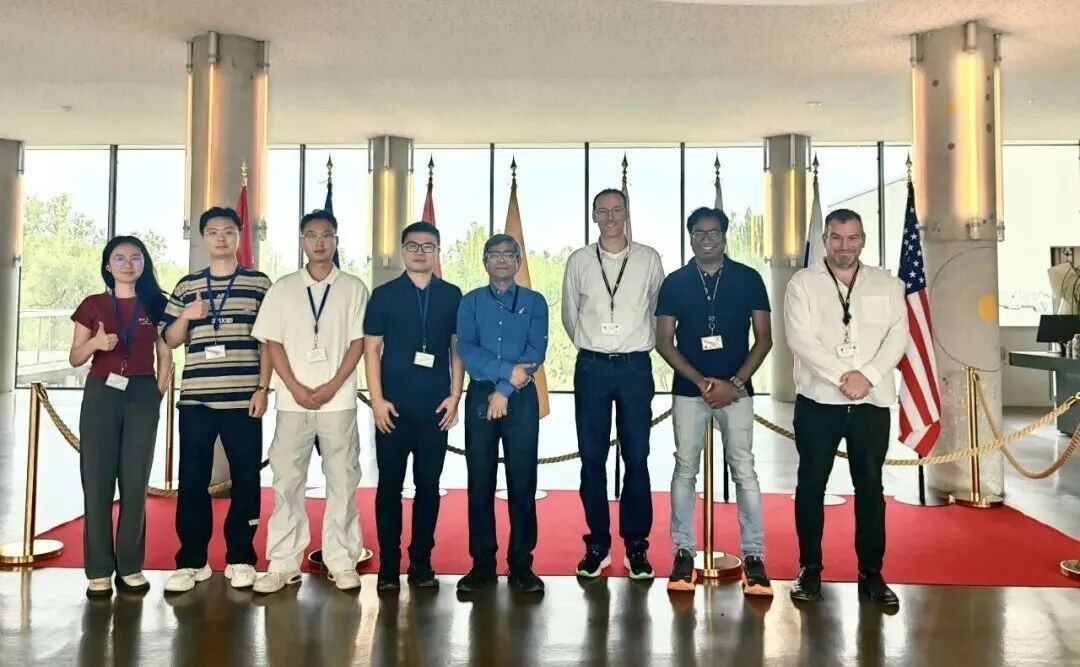
According to the contract terms, the consortium will undertake the full-cycle tasks from detailed design, equipment manufacturing, to on-site installation, fully demonstrating the comprehensive capability of the Chinese team in the integration of complex fusion engineering systems.
Rodolphe Louison, Deputy Director-General of the ITER Organization, highly praised the coordinated advancement of the GDC and boronization projects during exchanges with the Chinese team. In the next steps, the Chinese team will strictly follow the ITER overall plan, deliver high-quality GDC electrode manufacturing and meet the new contract milestones, and continue to contribute Chinese wisdom and strength to the international development of fusion energy with solid technical strength and excellent engineering practice.
Disclaimer: Information republished from partner media, institutions or other websites is provided for reference and communication purposes only. It does not imply endorsement of its views or verification of its accuracy. Please contact us if any content infringes rights or requires correction.