
Global nuclear power generation hits record high in 2025
 Scan to share
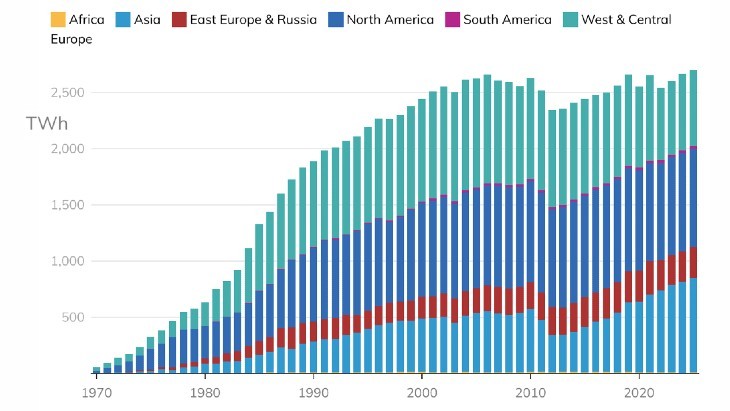
According to the World Nuclear Outlook Report released by the World Nuclear Association (WNA), global electricity generation from nuclear reactors reached 2,702 TWh in 2025, up from 2,667 TWh in 2024, setting a new historical record. The report estimates that if all countries' stated nuclear energy targets are fully achieved, global nuclear installed capacity could more than triple current levels by 2050.
The report assesses the progress made by 38 countries toward the goal of "tripling global nuclear capacity by 2050," and puts forward policy recommendations for governments, industry, financial institutions, and regulators.
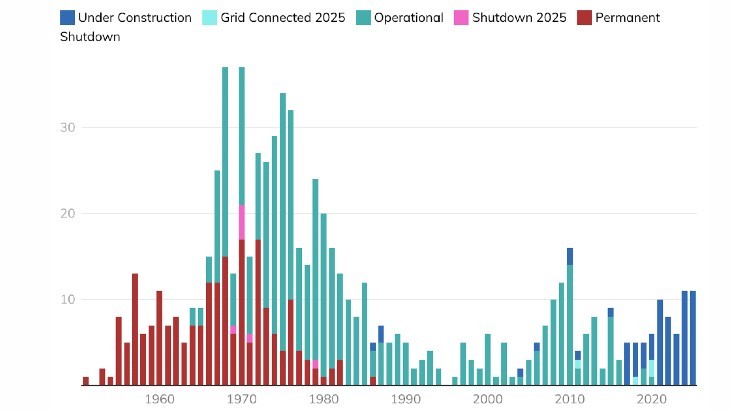
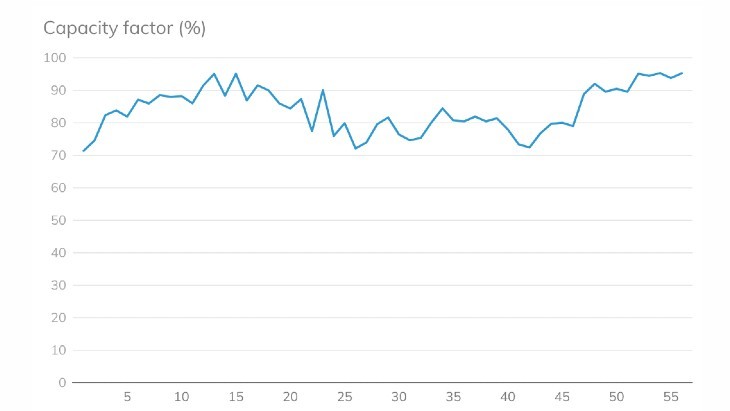
In terms of operating nuclear units, the report finds that despite the increasing service life of individual units, the overall operational reliability of global nuclear power plants remains at a relatively high level. In 2025, the average capacity factor of global nuclear units stood at 83.7%. A capacity factor of 100% means a unit operates continuously at full power 24 hours a day, 365 days a year. The report also notes that some reactors operating for more than 50 years continue to deliver strong performance.
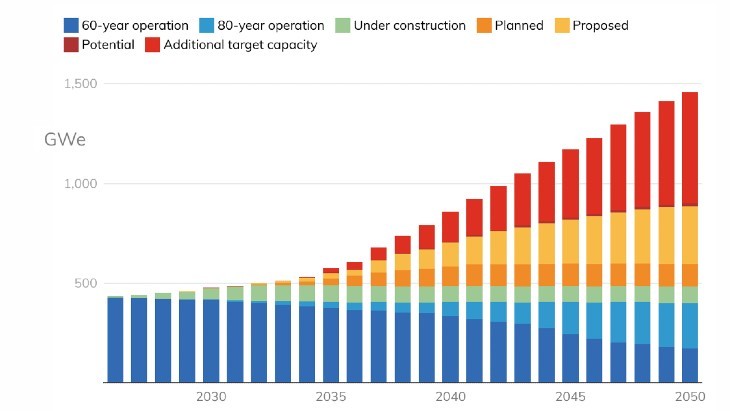
Regarding new installed capacity, the report states that current global operating nuclear installed capacity stands at 423 GW. If all national targets and indicators are met and existing nuclear plants continue to operate, global nuclear installed capacity could reach 1,457 GW by 2050—nearly 200 GW more than triple the current scale.
The report shows that global nuclear capacity under construction has risen to 82 GW, with 11 reactors breaking ground in 2025. Planned, proposed, and potential nuclear installed capacity has grown to a combined 416 GW, narrowing the gap between actual projects and government targets. However, approximately 550 GW of targeted capacity still remains to be translated into concrete projects by 2050.
In terms of regional and country distribution, the report projects that the majority of new nuclear installed capacity will continue to come from existing nuclear energy countries, including the United States, China, France, Russia, and India.
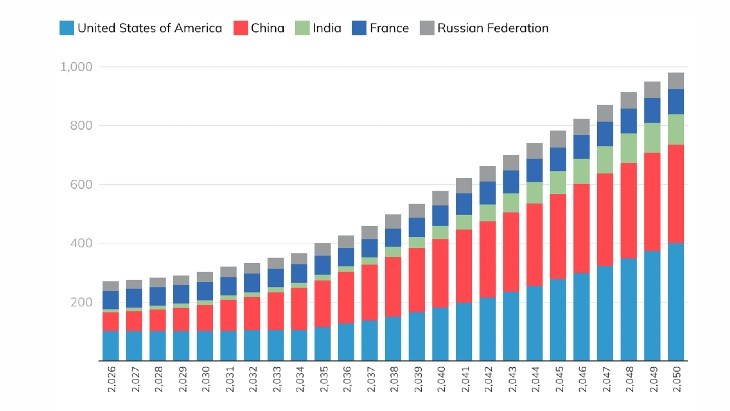
Sama Bilbao y León, Director General of the World Nuclear Association, stated that nuclear energy is at a critical stage of development. Governments are re-evaluating the role of nuclear energy from the perspectives of energy security, energy affordability, industrial competitiveness, and climate goals. She also emphasized that targets alone are not sufficient to deliver stable, clean electricity—it is essential to make full use of existing nuclear plants, complete reactors under construction, and shift from building individual projects to sustained, large-scale deployment of nuclear power.
The report recommends that stakeholders establish long-term, stable policy and investment frameworks, streamline regulatory processes, strengthen supply chain capacity and workforce development, support the deployment of mature reactor technologies, and develop delivery models suited to project implementation. The report also states that maintaining and expanding the operating capacity of existing reactors is one of the fastest and most cost-effective pathways to securing low-carbon electricity supply.
Disclaimer: Information republished from partner media, institutions or other websites is provided for reference and communication purposes only. It does not imply endorsement of its views or verification of its accuracy. Please contact us if any content infringes rights or requires correction.