
Search Results
Keyword:CA

CCTE Commissions Kinectrics for Independent Review of ANEEL Fuel Qualification Program
Clean Core Thorium Energy (CCTE) has commissioned Kinectrics Inc. (Kinectrics) to conduct an independent technical review of its ANEEL fuel qualification program, advancing the fuel's technical and regulatory qualification preparations ahead of demonstration in commercial reactors. Kinectrics is a subsidiary of BWX Technologies Inc. (BWXT). Photo: Front row, left to right: John D'Angelo, President of Kinectrics, and Milan Shah, Chief Operating Officer of CCTE; Back row, left to right: Sean Donnelly, Vice President of New Nuclear Construction, Paul...
2026-08-19

Kansai Electric says Rokkasho reprocessing plant delay does not change target of starting operation in fiscal 2027
On August 18, officials from Japan's Agency for Natural Resources and Energy (ANRE) and Kansai Electric Power Company (KEPCO) visited the Aomori Prefectural Government to explain the construction and operation schedule of the spent fuel reprocessing plant under construction in Rokkasho Village, Aomori Prefecture. The facility is a key project in Japan's nuclear fuel cycle system and is also listed as one of the receiving sites for spent fuel transported from nuclear power plants in Fukui Prefecture. Kansai Electric reiterated that even if the completion of the Rokkasho reprocessing plant is delayed from its original schedule within the current fiscal year, the target of starting operation within fiscal 2027 remains unchanged. The company stated that under the current spent fuel transport roadmap, the transport volume from fiscal 2028 onward is not expected to be significantly affected; if construction...
2026-08-19

Hungary's Paks Nuclear Power Plant expected to resume full generating capacity from August 23
Hungarian Prime Minister Magyar stated that as the Danube water level is expected to recover, the remaining 6 turbines at Hungary's Paks Nuclear Power Plant are planned to restart from August 23, which is expected to fully restore the plant's original generating capacity. Due to recent high temperatures and Danube water levels, the Paks Nuclear Power Plant had previously been unable to maintain full-load operation as originally planned. On the evening of August 10, the second of the plant's 8 turbines was started, and the current generating power is approximately 480 megawatts, lower than the originally planned 2,000 megawatts. Magyar stated that once the relevant water-retention facilities are completed and the river water level rises as expected, the nuclear power plant will have the conditions to restart the remaining turbines...
2026-08-19
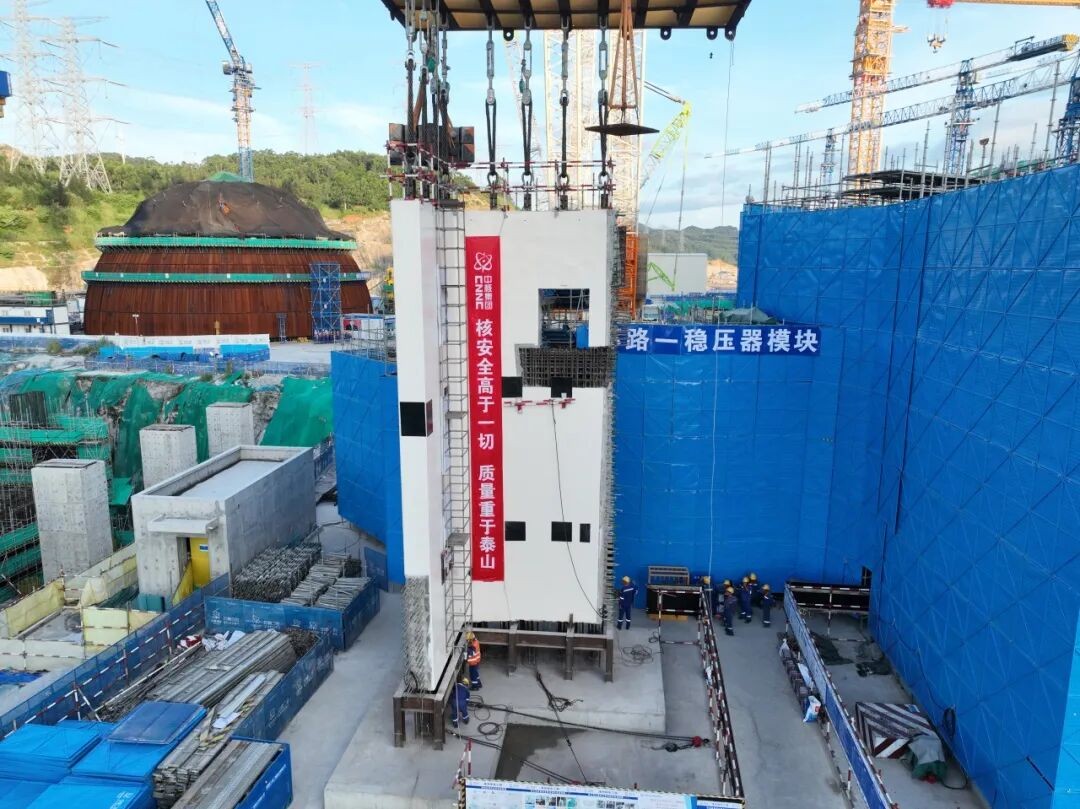
Prefabricated Module for Evaporator Compartment of Loop 3 in Internal Structure of Unit 4 at Zhangzhou Nuclear Power Plant Successfully Hoisted
At 10:18 on August 18, the prefabricated module for the evaporator compartment of Loop 3 in the internal structure of the reactor building of Unit 4 at Zhangzhou Nuclear Power Plant was hoisted into place, with safety and quality under control throughout the entire process. The structures above elevation 16.5 meters in the internal structure of the reactor building of Unit 4 at Zhangzhou Nuclear Power Plant, including the evaporator compartments, pressurizer compartment, and the roof slab of the passive reactor cavity injection tank, adopt a modular construction process featuring off-site prefabrication, integral hoisting, and precise positioning, divided into five concrete modules. The evaporator compartment module of Loop 3 hoisted this time is the first module to be lifted for Unit 4, weighing 454.289 tons, with an overall special L-shaped structure, lifted using a 3200-ton crawler crane. The hoisting operation lasted 3 hours, and Zhangzhou Nuclear Power...
2026-08-19

2026 Systematic Training Course on Radiation Safety Management Capability for the Irradiation Industry Successfully Held in Lanzhou
To thoroughly implement the Ecological Environment Code and continuously improve the standardized radiation safety management level of the irradiation industry, the 2026 Systematic Training Course on Radiation Safety Management Capability for the Irradiation Industry, hosted by the Nuclear and Radiation Safety Center of the Ministry of Ecology and Environment (hereinafter referred to as "the Center"), was successfully held in Lanzhou, Gansu Province, from August 11 to 13. More than 80 trainees from over 60 irradiation operation, design and manufacturing, and regulatory departments across the country gathered together to study laws, regulations, and standards and share safety experience. This training closely focused on the new regulatory situation of the irradiation industry and industrial development needs, emphasizing both professionalism and practicality. The courses systematically covered the development status and trends of industrial irradiation facilities,...
2026-08-18

US OSI Systems Secures Approximately $200 Million Contract for Mobile Vehicle Inspection Systems
On August 17, 2026, OSI Systems, Inc. announced that its Security division has been awarded a five-year Indefinite Delivery/Indefinite Quantity (IDIQ) contract by U.S. Customs and Border Protection (CBP), with a ceiling value of approximately $200 million. Under the contract, OSI Systems will provide CBP with mobile Rapiscan® passenger vehicle inspection systems. The company stated that the initial task orders under the contract include the first batch of systems, along with related services and training content. Ajay Mehra, President and Chief Executive Officer of OSI Systems, stated that this contract will enable the company to continue supporting CBP in deploying vehicle security inspection systems. The Rapiscan mobile inspection systems help users flexibly allocate resources in response to changing on-site requirements, supporting border security and critical infrastructure protection efforts.
2026-08-18

U.S. FRIB Secures Contract from Naval Nuclear Laboratory to Develop Quantum-Classical Hybrid Nuclear Reaction Calculation Methods
A research project at the Facility for Rare Isotope Beams (FRIB) at Michigan State University, led by Dean Lee, Professor of Physics at FRIB, Professor in the Department of Physics and Astronomy at Michigan State University, and Head of the Theoretical Nuclear Science Department at FRIB, has received one-year contract support from the Naval Nuclear Laboratory. The laboratory is managed by Fluor Marine Propulsion. The project will study how to combine quantum computers with classical computers to improve the accuracy of predictions for neutron interactions with matter. This also represents the first phase of a five-year plan aimed at developing and evaluating new computational tools for nuclear science. In nuclear physics research, accurately predicting how neutrons interact with atomic nuclei...
2026-08-18
Argonne National Laboratory Launches Diamond Quantum Sensor Project to Serve High-Energy Physics Electromagnetic Field Measurements
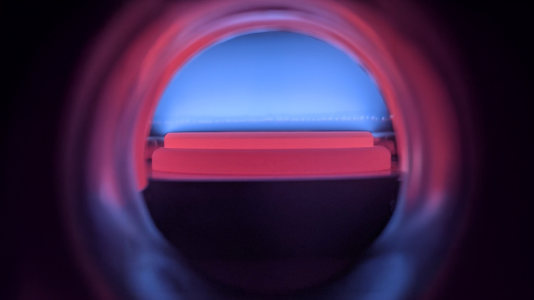
The U.S. Department of Energy's Argonne National Laboratory recently launched a new three-year, $1 million research project that plans to combine quantum information science with high-energy physics research to develop a new generation of quantum sensors based on diamond materials for higher-precision measurement and mapping of electromagnetic fields. Inside this plasma-filled vacuum chamber is the diamond substrate used to fabricate the diamond thin film (not shown in the image), within which the nitrogen-vacancy qubits are located. (Image courtesy of Nazar Delegan/Argonne National Laboratory.) In high-energy physics experiments, the precision of electromagnetic field measurements directly affects the reliability of experimental results. Whether analyzing the momentum of debris produced after particle collisions...
2026-08-18

Dongcheng Pharmaceutical Adds New Radiopharmaceutical Production Center in Jinzhong, Shanxi
Recently, Shanxi Andike, a subsidiary of Dongcheng Andike, which is a wholly-owned subsidiary of Dongcheng Pharmaceutical, received the "Radiopharmaceutical Production License" issued by the Shanxi Provincial Drug Administration. This marks that the Jinzhong Radiopharmaceutical Production Center in Shanxi has met the requirements for commissioning, adding a new facility to Dongcheng Pharmaceutical's radiopharmaceutical production network. As one of China's leading nuclear medicine companies, the group adheres to a layout strategy of "networked short half-life and base-based long half-life" production, and has established a domestically leading radiopharmaceutical production and distribution network. To date, the group has put 33 radiopharmaceutical production centers into operation. As a heparin expert and radiopharmaceutical pioneer, Dongcheng Pharmaceutical will continue to deepen its presence in the nuclear medicine field, striving to build a comprehensive Dongcheng nuclear medicine ecosystem...
2026-08-18
Kazakhstan Signs Memorandum of Cooperation on Atomic Industry Development
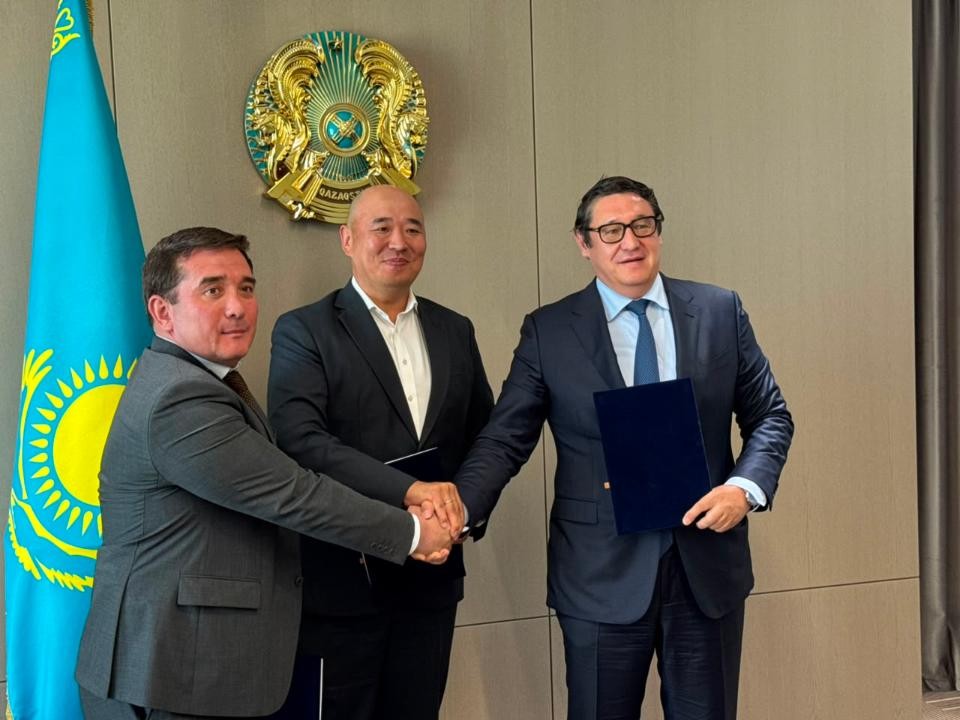
The Atomic Energy Agency of the Republic of Kazakhstan, Atameken National Chamber of Entrepreneurs of Kazakhstan, and the Atomic Industry Development Association (AIDA) have signed a Memorandum of Understanding and Cooperation, planning to jointly promote the development of the national atomic energy industry, expand industrial collaboration, and attract local enterprises to participate in major infrastructure projects. The memorandum was signed by Almasadam Satkaliyev, Chairman of the Atomic Energy Agency of the Republic of Kazakhstan, and the Chairman of the Presidium of the Atameken National Chamber of Entrepreneurs...
2026-08-18

Bylor JV completes fire safety rectification at Hinkley Point C nuclear power station
On August 17, the UK Office for Nuclear Regulation (ONR) confirmed that the project team operating under the name Bylor JV, comprising Laing O'Rourke and Bouygues Travaux Publics, has completed the requirements of two enforcement notices previously issued regarding fire safety deficiencies at the Hinkley Point C nuclear power station construction site. Bylor JV is responsible for the main civil works at Hinkley Point C. ONR had previously identified significant fire safety management deficiencies at the construction site and subsequently took enforcement action. ONR stated that Bylor JV has now demonstrated that it has established appropriate systems to effectively manage fire risk on site.
2026-08-18

Kazakhstan's Institute of Nuclear Physics Plans to Expand Medical Radioisotope Production and Export
The Institute of Nuclear Physics (INP) of Kazakhstan is progressively expanding the applications of radioisotopes and radiation technologies, with related products already used in cancer diagnosis and treatment, industrial production, and scientific research. Institute Director Sayabek Sakhiyev stated that radioisotope and radiopharmaceutical production is one of the institute's key applied activities, covering the full chain from scientific research and research reactor operation to radiochemical technology development and medical applications. Currently, INP produces three main categories of radiopharmaceuticals: sodium iodide I-131 for thyroid disease treatment, Mo-99/Tc-99m related products for radionuclide diagnostics, and...
2026-08-18
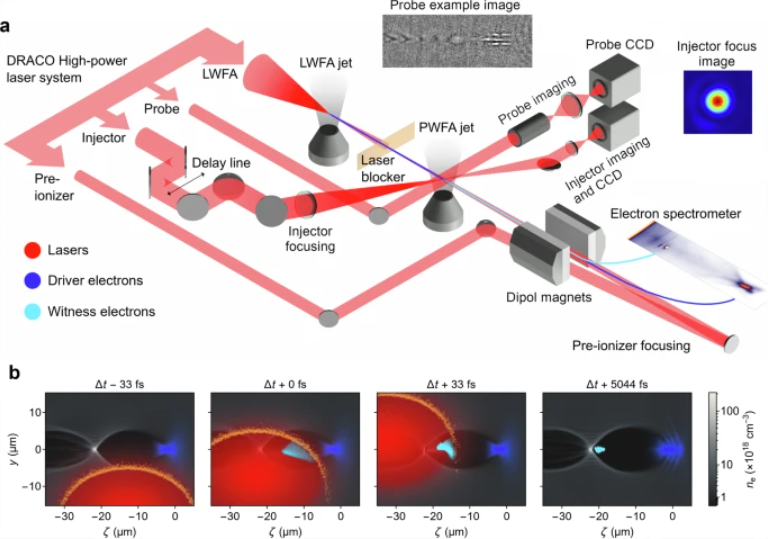
German research team achieves ultra-compact plasma photocathode injection
A research team from institutions including the Helmholtz-Zentrum Dresden-Rossendorf in Germany has demonstrated an ultra-compact plasma photocathode injection scheme integrated into a hybrid plasma wakefield accelerator on the DRACO laser facility. The study utilized a 150 TW-class laser system to drive a laser wakefield accelerator (LWFA), generating high-peak-current electron beams, which in turn drove a subsequent particle beam wakefield accelerator (PWFA), completing the generation and acceleration of witness electron beams within millimeter-scale plasma structures. Plasma wakefield accelerators can produce accelerating fields far exceeding those of conventional radiofrequency linear accelerators, but how to obtain high-quality, high-brightness electron beams in compact devices...
2026-08-18

Korea's COSMAX Partners with Pohang Accelerator Laboratory to Use Synchrotron Radiation Accelerator for Cosmetics R&D
COSMAX, a global cosmetics ODM company, announced on the 18th that it has signed a memorandum of understanding with the Pohang Accelerator Laboratory (PAL) in Korea to conduct cosmetics R&D using advanced scientific and technological infrastructure such as the synchrotron radiation accelerator. At the MOU signing ceremony held at the Pohang Accelerator Laboratory, COSMAX Group Chairman Lee Kyung-soo (left) poses with PAL Director Kim Jae-young. / Photo provided by COSMAX. According to reports, the Pohang Synchrotron Radiation Accelerator (PLS-II) operated by the Pohang Accelerator Laboratory generates light more than 10 billion times brighter than sunlight, enabling atomic-scale analysis of nanoscale material structures. Currently, the facility has been used for microstructural research across multiple industrial fields, including new drugs, semiconductors, and new materials.
2026-08-18

Decoding the Clinical-Radiological Paradox: Brain Network Mechanisms in Spinocerebellar Ataxia Type 3 Revealed
On August 17, the team of Professor Liu Chen and Professor Wang Jian from the Department of Radiology at Southwest Hospital of Army Medical University, in collaboration with Professor Long Zhiliang's team from the Faculty of Psychology at Southwest University, systematically revealed for the first time the micro-level molecular pathological mechanisms underlying macroscopic brain network decoupling in patients with spinocerebellar ataxia type 3 (SCA3) by integrating multimodal magnetic resonance imaging technology with high-resolution micro-biological atlases. This provides a novel perspective and objective imaging targets for resolving the clinical-radiological dissociation challenge in clinical diagnosis and treatment. The findings were published in the internationally leading journal in the field of movement disorders under the title "Putaminal Structure-Function Decoupling as an Early Candidate Imaging Biomarker for Motor Severity in Spinocerebellar Ataxia Type 3."
2026-08-18