
Search Results
Keyword:CT
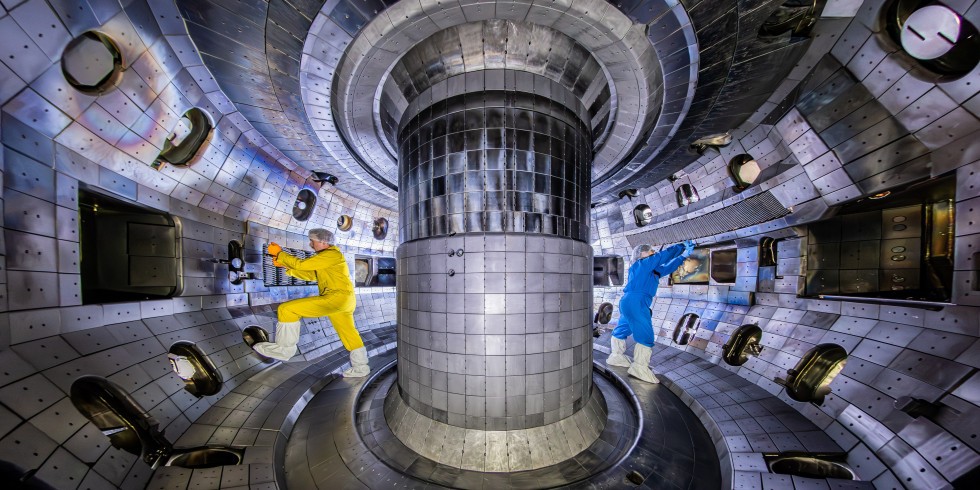
Machine learning framework predicts micro-displacements of DIII-D fusion device coils
Researchers at the U.S. Department of Energy's (DOE) Thomas Jefferson National Accelerator Facility (Jefferson Lab) and collaborating teams have developed a machine learning framework that can predict subtle changes in critical fusion device hardware before the next experiment begins. The method targets the DIII-D National Fusion Facility in San Diego, and the findings have been published in the journal Machine Learning with Applications. Interior of the DIII-D National Fusion Facility tokamak. (Image courtesy of General Atomics) DIII-D is a tokam...
2026-08-17
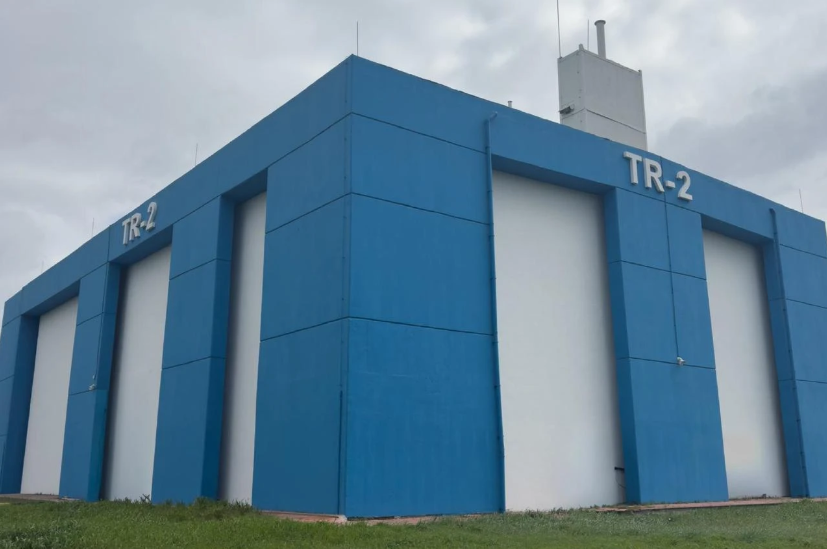
Turkey's TR-2 Research Reactor Receives Operating License
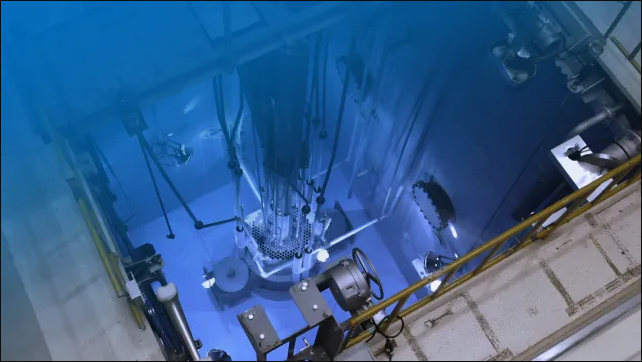
The Turkish Nuclear Regulatory Authority has issued an operating license for the TR-2 research reactor at the Istanbul campus of the Nuclear Energy Institute under the Turkish Energy, Nuclear and Mineral Research Agency (TENMAK). The license was issued pursuant to the Authority's Decision No. 2026-34/3 dated August 6, 2026. Following the review and evaluation of TENMAK's application documents, the Turkish Nuclear Regulatory Authority authorized the agency to carry out the activities required for the transition of the TR-2 research reactor from its current status to the operational phase. TR-2 is located at the Istanbul campus of TENMAK's Nuclear Energy Institute, with an approved thermal power of 5 megawatts. The facility is a research reactor and is not a nuclear facility primarily intended for power generation. According to...
2026-08-17
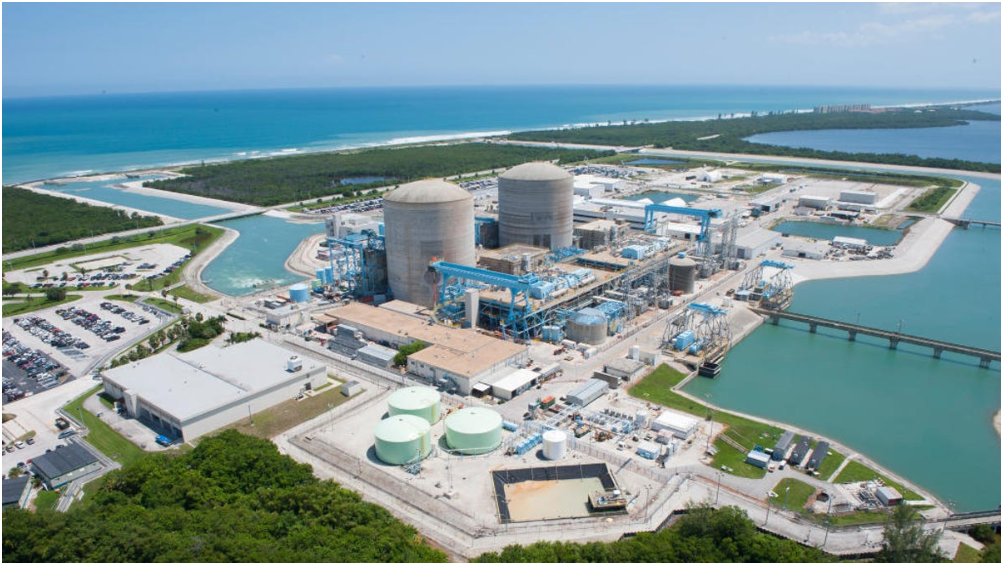
St. Lucie Nuclear Power Plant Unit 1 Manually Shut Down After Three Control Rods Dropped into the Core
According to an event notification submitted to the U.S. Nuclear Regulatory Commission (NRC), Unit 1 of the St. Lucie Nuclear Power Plant, located on Hutchinson Island, Florida, USA, experienced a manual reactor shutdown at 9:47 a.m. Eastern Time on August 13, 2026. At the time of the event, the unit was in Mode 1 and operating at 100% power. The shutdown was caused by three control rods dropping into the reactor core. The U.S. Nuclear Regulatory Commission classified the event as a non-emergency. The licensee stated that the shutdown was completed in accordance with procedures, all systems responded normally after the shutdown, and operators subsequently stabilized the unit in Mode 3, i.e., hot standby condition. Decay heat was removed by diverting steam to the main condenser via turbine bypass valves and the main feedwater system...
2026-08-17
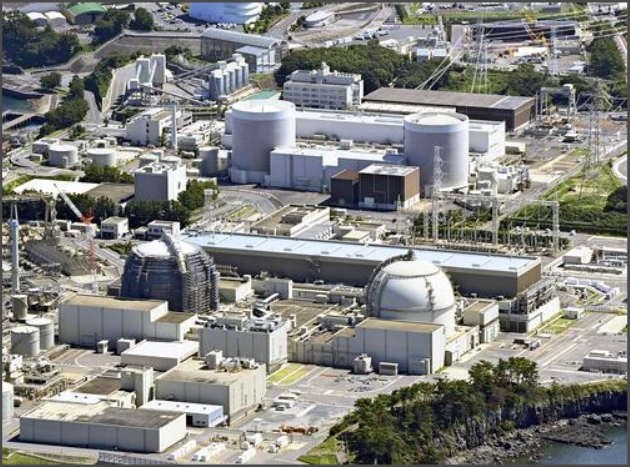
4.4-Magnitude Earthquake Hits Fukuoka Area; Kyushu Electric Says No Abnormalities at Genkai and Sendai Nuclear Plants
At around 6:37 a.m. on August 17, an earthquake struck the Fukuoka area of Fukuoka Prefecture, Japan, with a maximum seismic intensity of 4, a focal depth of approximately 10 kilometers, and a magnitude of 4.4. Kyushu Electric Power Co. (KEPCO) subsequently announced that the operational status of its Genkai and Sendai nuclear power plants was unaffected, with no abnormalities detected in the relevant units. According to Kyushu Electric Power, Unit 4 of the Genkai Nuclear Power Plant in Saga Prefecture continued normal operation, while Unit 3 was undergoing periodic inspection; Units 1 and 2 of the Sendai Nuclear Power Plant in Kagoshima Prefecture continued normal operation. The company stated that no impact on power supply had been confirmed. During the earthquake, Itoshima City in Fukuoka Prefecture...
2026-08-17
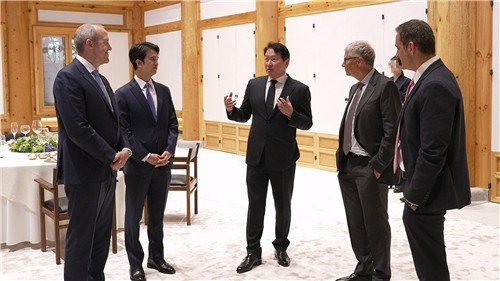
SK Deepens Cooperation with TerraPower, Targeting Nuclear Power Supply for AI Data Centers
According to industry sources, SK Group Chairman Chey Tae-won recently met with TerraPower Board Chairman Bill Gates in Seoul. The two sides exchanged views on next-generation nuclear power technology, electricity demand from AI data centers, and global energy cooperation. (From left to right) TerraPower CEO Chris Leveque, SK Innovation CEO Choo Hyung-wook, SK Group Chairman Chey Tae-won, TerraPower Board Chairman Bill Gates, and TerraPower Senior Vice President of Business Development Jeff Miller at a meeting before a dinner at Seonhyewon restaurant in Jongno-gu, Seoul, on August 14, 2026...
2026-08-17
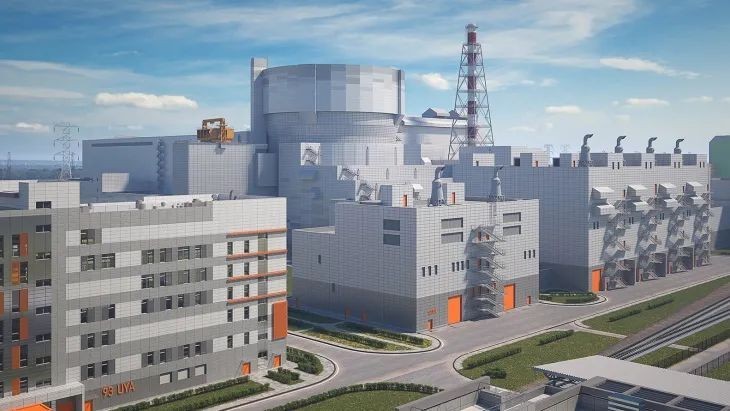
Danube Water Levels Continue to Drop, Hungary's Paks Nuclear Power Plant May Reduce Output Again
Hungary's Paks Nuclear Power Plant may reduce its power generation output again early next week due to the continued decline in Danube water levels. Péter Magyar stated on social platform X that Tuesday and Wednesday will be critical periods, with the Danube water level expected to drop by another 14 to 15 centimeters, while the current level is only 9 centimeters away from the threshold that would force the shutdown of the second-to-last turbine at the Paks plant. Magyar noted that this critical phase is expected to end on August 20, when the water level in the Hungarian section of the Danube is expected to recover, influenced by inflows from the Austrian catchment area. Previously, on August 12, Magyar stated that the Hungarian government had decided to build temporary water-retention structures near the Paks Nuclear Power Plant and sink two barges to raise local water levels and ensure the plant's water intake conditions.
2026-08-17
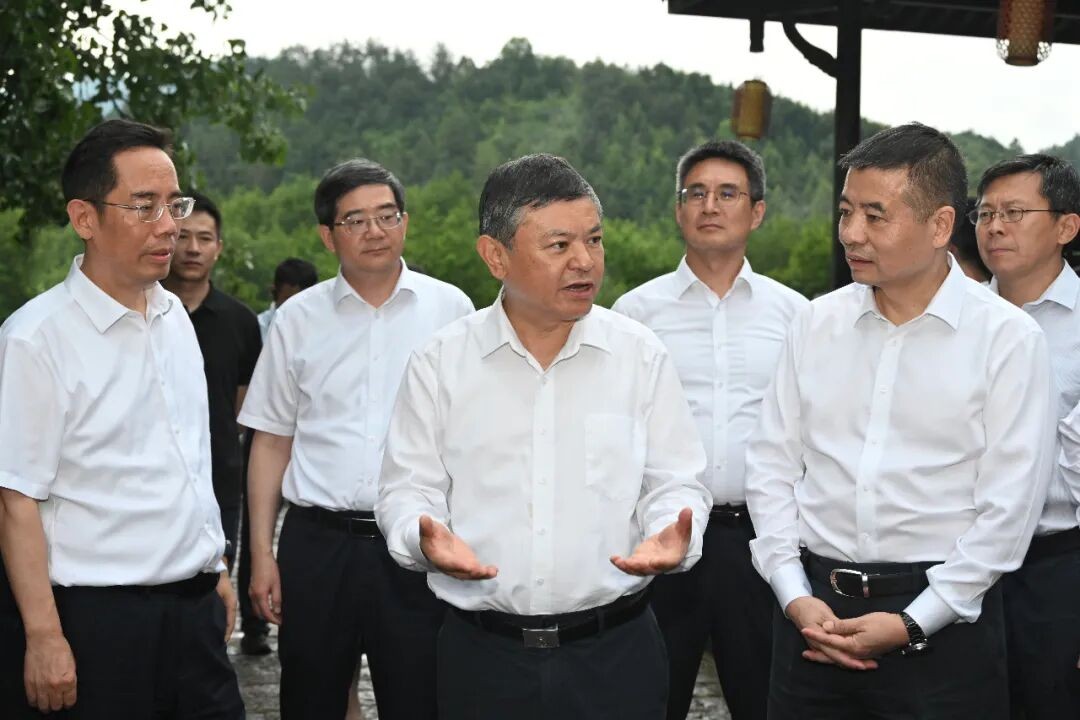
Minister of Ecology and Environment Huang Runqiu Visits Zhejiang to Survey Ecological Environmental Protection and Nuclear Power Safety Regulation
From August 14 to 15, Minister of Ecology and Environment Huang Runqiu visited Lishui, Taizhou, and Ningbo in Zhejiang Province to survey ecological environmental protection efforts. During his tenure in Zhejiang, General Secretary Xi Jinping visited Lishui multiple times and expressed high expectations for strengthening ecological environmental protection. Huang Runqiu visited Liandu District in Lishui to inspect on-site the outcomes of Oujiang River ecological environment governance, rural living environment improvement, and ecological protection efforts, and also toured the Ecological Product Value Realization Mechanism (Lishui) Exhibition Hall to gain in-depth understanding of local practical experience in advancing ecological product value accounting and exploring the "Two Mountains" transformation pathway. He stated that it is essential to thoroughly study and implement Xi Jinping Thought on Ecological Civilization, firmly establish and practice the concept that lucid waters and lush mountains are invaluable assets, adhere to ecological priority and green development, and effectively protect this beautiful landscape. It is necessary to fully leverage the role of demonstration models, deepen the application of the "Thousand Villages Demonstration, Ten Thousand Villages Improvement" experience, continuously improve the rural living environment, develop distinctive industries such as "ecology + cultural tourism" tailored to local conditions, and support rural ecological revitalization. It is also important to summarize and promote the "Two Mountains" transformation model, actively expand channels for realizing ecological product value, and continuously convert ecological advantages into development advantages. Actively, safely, and in an orderly manner developing nuclear power is an important measure for building a clean, low-carbon, safe, and efficient energy system and for achieving carbon peak and carbon neutrality. Huang Runqiu visited the Sanmen Nuclear Power Plant in Taizhou, going deep into the main control room of the operating unit and the nuclear island building of the unit under construction to learn in detail about the operation status and construction progress of the nuclear power units, and to express condolences to and meet with the on-site supervision personnel of the East China Regional Office of Nuclear and Radiation Safety Supervision. He emphasized the need to uphold the rational, coordinated, and balanced nuclear safety philosophy, place the assurance of nuclear safety at the highest priority, strengthen whole-process supervision of nuclear power plants, and consolidate the primary responsibility for nuclear safety. It is necessary to urge enterprises to strictly implement the requirements of nuclear safety regulations and standards, effectively ensure the safe operation of nuclear power units and controlled construction quality, enhance equipment stability and reliability, strengthen radiation environment monitoring at nuclear power plants, and safeguard the high-quality development of the nuclear power industry with high-level safety. Ensuring the construction quality of nuclear power units is crucial to improving the safety level of nuclear power plants. Huang Runqiu visited the nuclear island foundation area of the Jinqimen Nuclear Power Plant in Ningbo to survey the construction progress and engaged in on-site exchanges with nuclear safety supervision personnel. He emphasized the need to implement the spirit of General Secretary Xi Jinping's important speeches and instructions on nuclear safety work, always adhere to the principles of safety first and quality first, effectively operate the nuclear safety responsibility system and quality management system, and continuously strengthen experience feedback and safety improvements. It is necessary to continuously advance the development of nuclear safety culture, strengthen bottom-line thinking and extreme-scenario thinking, enhance natural disaster monitoring, early warning, and preventive response, and effectively build premium and safe projects to strongly support the sustainable development of China's nuclear power industry and its "going global" strategy. Relevant officials from Zhejiang Province participated in the survey. Principal officials from relevant departments and bureaus of the Ministry of Ecology and Environment participated in the survey. Officials from the Department of Ecology and Environment of Zhejiang Province and others participated in the survey.
2026-08-17
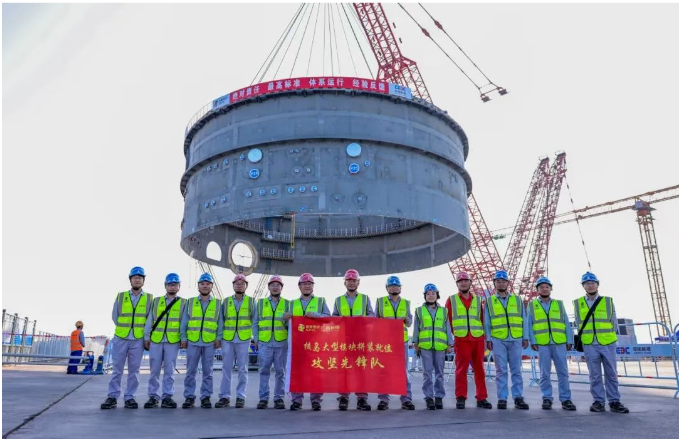
Steel Containment Vessel Ring 1 of Unit 1 at Guangxi Bailong Nuclear Power Plant Successfully Hoisted into Place
At 11:38 on August 16, after 4 hours and 01 minutes of continuous and stable operation, the steel containment vessel ring 1 (CV1R) of the nuclear island of Unit 1 at Guangxi Bailong Nuclear Power Plant was successfully hoisted into place. This hoisting marks another successful installation of a key module following the CVBH and CA20 modules for Unit 1 of Bailong Nuclear Power Plant, signifying a critical breakthrough in the construction of the main structure of the nuclear island of Unit 1. The steel containment vessel consists of five major modules: the bottom head, the intermediate cylindrical shell (rings 1 to 3), and the top head, serving as the third physical safety barrier of the reactor. The CV1R hoisted this time is the core component with the largest volume and heaviest weight among the five major components of the steel containment vessel, measuring approximately 15.5 meters in height and up to 39.6 meters in maximum inner diameter, integrating equipment...
2026-08-17
Public Announcement of Winning Bidder Candidates for the Civil Construction Project of the Huludao Research Reactor Project
Recently, the public announcement of winning bidder candidates for the civil construction project of the Huludao Research Reactor Project of the China Institute of Atomic Energy was released. The announcement shows that China Nuclear Industry 24 Construction Co., Ltd. ranks as the first winning bidder candidate with a bid price of RMB 1,109,080,000.00; China Nuclear Industry Huaxing Construction Co., Ltd. ranks as the second winning bidder candidate with a bid price of RMB 1,109,100,279.50. The tendered project is the research reactor project of the China Institute of Atomic Energy, with the scope of tender covering the civil construction works of the research reactor project, and the construction site located in Xingcheng City, Huludao City, Liaoning Province. The maximum bid limit for the project is RMB 1,109,550,000.00, and the maximum bid limit for daywork is RMB 320 per workday, excluding tax. According to...
2026-08-17
Successful Hoisting of Module 3 of the Passive Containment Cooling Water Tank for Unit 4 of Zhangzhou Nuclear Power Plant
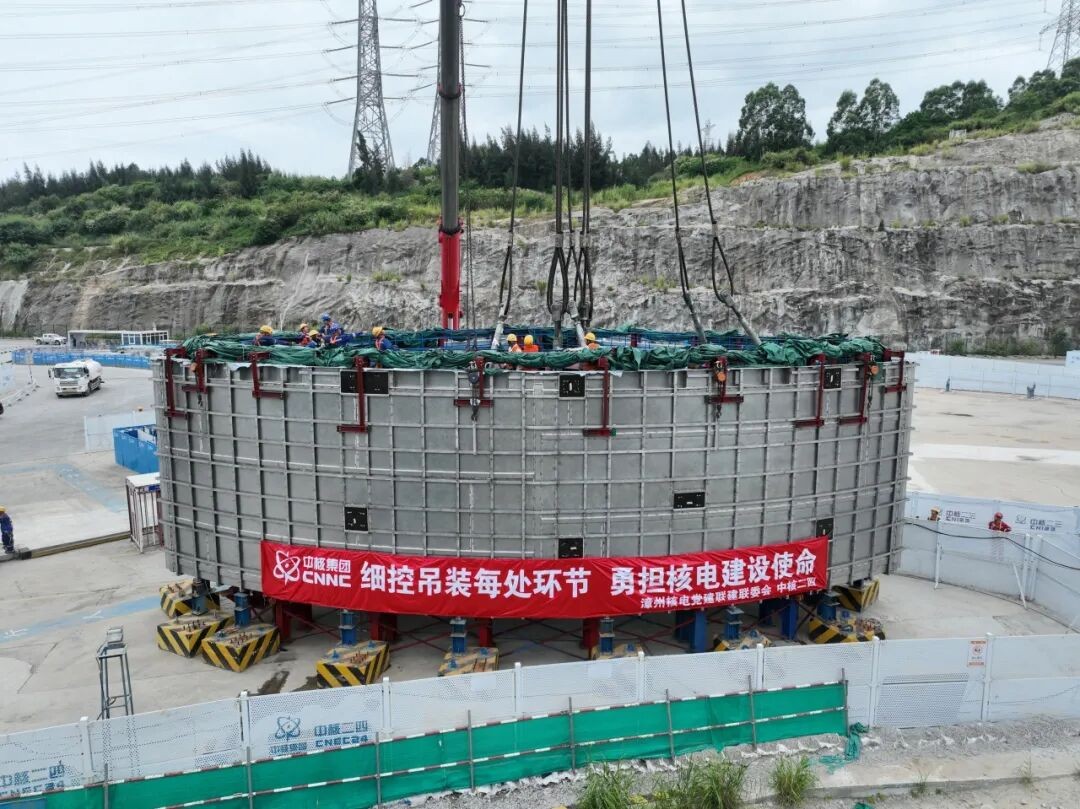
On August 15, the hoisting of Module 3 of the passive containment cooling water tank in the reactor building of the nuclear island of Unit 4 at Zhangzhou Nuclear Power Plant was successfully completed, with the entire hoisting process being safe and quality-controlled. The passive containment cooling water tank is an important component of the passive part of the containment cooling water injection system. With a total height of 22.02 meters, it features a non-uniform cross-section in an approximately fan-shaped structure and is planned as three integral modules. Module 3, hoisted this time, had a total lifting weight of approximately 132.8 tons and a height of 5.84 meters, and was positioned using a 2000-ton-class crawler crane. As the crane slowly lifted the module, through a series of precise operations including hook lifting, boom slewing, crane traveling, and luffing, Module 3 was smoothly placed onto Module 2 of the passive containment cooling water tank, with the entire process proceeding seamlessly...
2026-08-17

Energoatom and the E.O. Paton Electric Welding Institute of the National Academy of Sciences of Ukraine Sign Scientific and Technical Cooperation Agreement
On August 13, Pavlo Kovtoniuk, head of Ukraine's national nuclear energy company Energoatom, and Ihor Kryvtsun, director of the E.O. Paton Electric Welding Institute of the National Academy of Sciences of Ukraine, signed a scientific and technical cooperation agreement. Under the agreement, the two parties will integrate scientific research and engineering technical resources to provide technical support for the safe operation of nuclear power units and other nuclear energy facilities, and will cooperate in areas such as extending the service life of reactor installations and the feasibility study and implementation of new nuclear power unit projects...
2026-08-15
UK National Nuclear Laboratory Secures Nuclear Safeguards Programme Contract
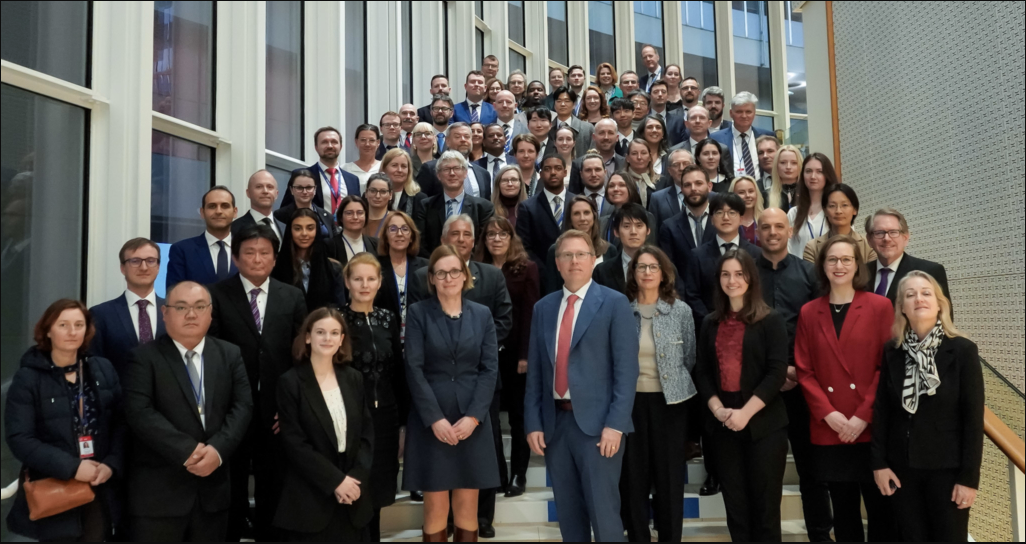
The UK National Nuclear Laboratory (UKNNL) has been awarded the Nuclear Safeguards Programme (NSP) contract by the UK Department for Energy Security and Net Zero (DESNZ). The contract has an initial term of 3.5 years with committed funding of £10.5 million, with the possibility of further extensions. This contract continues the UK's 45 years of support for the global nuclear safeguards system, as well as the UK National Nuclear Laboratory's nearly 20 years of core work within that system. The UK National Nuclear Laboratory's responsibilities include providing technical support to the UK government in the nuclear field and driving the development of the UK's nuclear energy industry. The Nuclear Safeguards Programme is an important platform for fulfilling this responsibility, primarily providing nuclear safeguards and non-proliferation expertise to UK government departments and international partners...
2026-08-16

Kazakhstan's National Nuclear Center Introduces Computer Modeling Methods for Reactor Safety
The National Nuclear Center of the Republic of Kazakhstan (NNC RK) recently presented its modern computer modeling methods used in the safety justification of reactor facilities. Arthur Suraev, a leading researcher at the laboratory of the branch Institute of Atomic Energy, stated that high-precision computational models have become an important tool for assessing reactor normal operation, design-basis accidents, and beyond-design-basis accident conditions. Suraev noted that computer modeling enables preliminary evaluation of neutron physics, thermal-hydraulic, and structural response processes inside a reactor before conducting complex and expensive experiments. By analyzing interrelated physical processes,...
2026-08-16
Oak Ridge National Laboratory marks 80 years of isotope research and production, with applications spanning medicine, industry, and scientific research
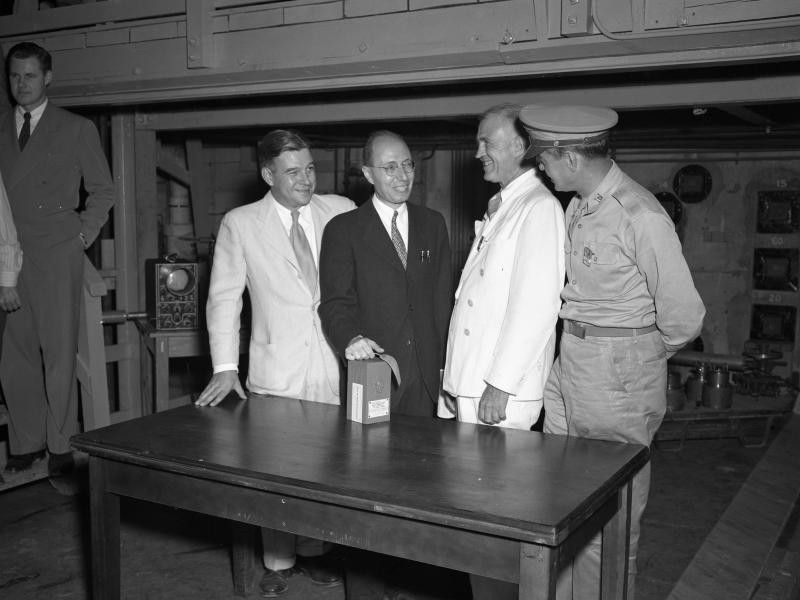
On August 2, 1946, the Clinton Laboratories in Oak Ridge, Tennessee, held the first formal ceremony to deliver reactor-produced radioactive isotopes. A shipment of carbon-14 was sent from there to the Barnard Free Skin and Cancer Hospital in St. Louis, Missouri. Over the past 80 years, this event has been regarded as the starting point of Oak Ridge National Laboratory's isotope research and production endeavors, and also marked the beginning of broader civilian applications for reactor-produced radioactive isotopes. After World War II, the U.S. scientific community began exploring peaceful uses of atomic energy, with radioactive isotopes becoming an important direction. As unstable variants of elements, radioactive isotopes release radiation during decay and can be used...
2026-08-15
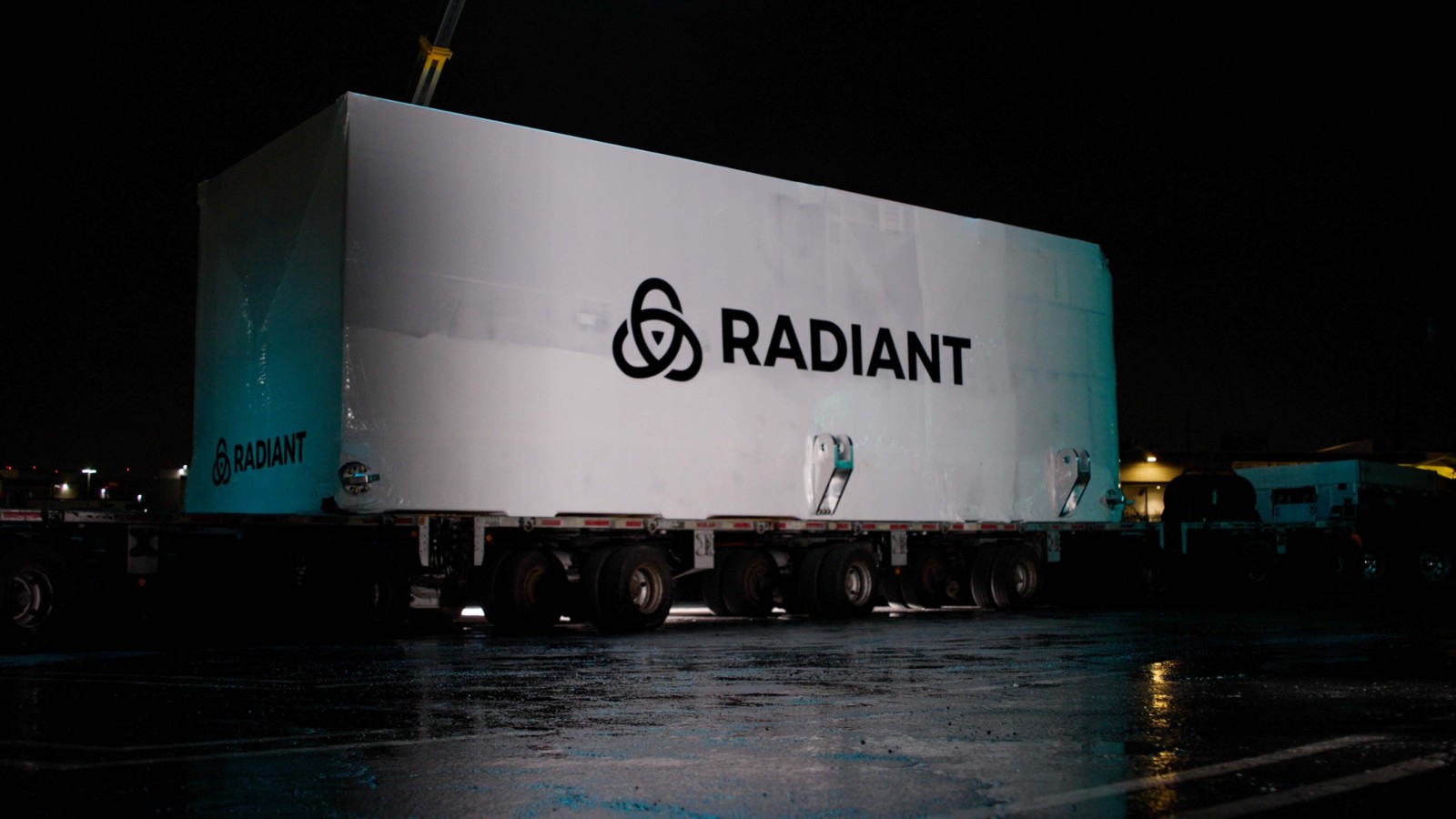
Radiant's Kaleidos Microreactor Shipped to Idaho National Laboratory for Testing
On August 13, Radiant announced that its 1-MW-class portable microreactor Kaleidos has departed its facility in El Segundo, California, and is being transported by trailer to Idaho National Laboratory (INL). The unit will undergo testing at INL's Microreactor Experimental Demonstration Facility (DOME). According to Radiant, the Kaleidos transport distance exceeds 1,000 miles. The company stated that the unit shipped to INL is not a scaled test article, but rather a reactor model consistent in design, dimensions, and commercial fuel loading with the units planned for delivery to customers. The DOME facility has completed modifications for microreactor testing. According to...
2026-08-15