
Search Results
Keyword:CT

South Korea Advances First Domestic Commercial Production of Lu-177 Using Wolsong Heavy Water Reactors
Korea Hydro & Nuclear Power (KHNP) plans to use the heavy water reactors at the Wolsong Nuclear Power Plant to produce, for the first time domestically, the radioisotope lutetium-177 (Lu-177) for cancer treatment. Currently, South Korea relies entirely on imports for this material, which imposes cost pressures and supply instability on local radiopharmaceutical companies such as Cellbion and FutureChem. Industry experts generally believe that domestic production will help build a diversified supply chain and shorten transportation times. The primary goal of this plan is to achieve commercial production of Lu-177, with pilot production expected in 2028 and full-scale production commencing in 2031. Subsequently, KHNP will expand production to include cobalt...
2026-08-06
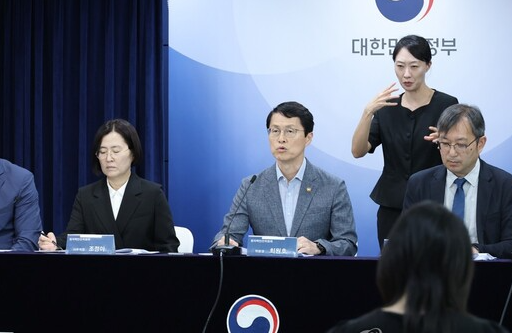
Korea's Nuclear Safety and Security Commission Conducts Safety Inspection at Hanul Nuclear Power Plant
Amid the ongoing heatwave, Korea's Nuclear Safety and Security Commission is closely monitoring safety inspections at domestic nuclear power plants. On August 6, Commission Chairman Choi Won-ho visited the Hanul Nuclear Power Plant in Uljin, North Gyeongsang Province, for an on-site inspection. The primary purpose of this inspection was to verify whether the plant's safety systems can operate properly under continuously rising seawater temperatures. As rising seawater temperature is a factor that directly affects the cooling system, the Hanul plant conducted detailed checks on heat exchanger performance and thermometer conditions. Chairman Choi also held prior discussions via video conference with relevant nuclear agencies on response measures to high temperatures. During the subsequent on-site inspection, he reviewed...
2026-08-06

Clobot Signs MOU with Korea Atomic Energy Environment Corporation and Others to Demonstrate Multi-Robot System for Safe Radioactive Waste Management
Clobot, a specialized enterprise in intelligent robot services and integrated control of heterogeneous robots, announced on August 6 that it will apply its multi-robot integrated control system to radioactive waste safety management sites. On August 3, the company signed a business agreement at the headquarters of the Korea Atomic Energy Environment Corporation, with partners including T-Robotics, the Gyeongbuk ICT Convergence Industry Promotion Association, and the Korea Atomic Energy Environment Corporation, under the project name "Demonstration Project for Multi-Robot Operation in High-Risk Radioactive Waste Safety Management." The collaboration is based on the selection through the public call for proposals for the "Large-Scale Converged Robot Demonstration Project: Social Problem-Solving Type" hosted by the Korea Institute for Robot Industry Advancement in 2026, with Clobot serving as the lead organization.
2026-08-06
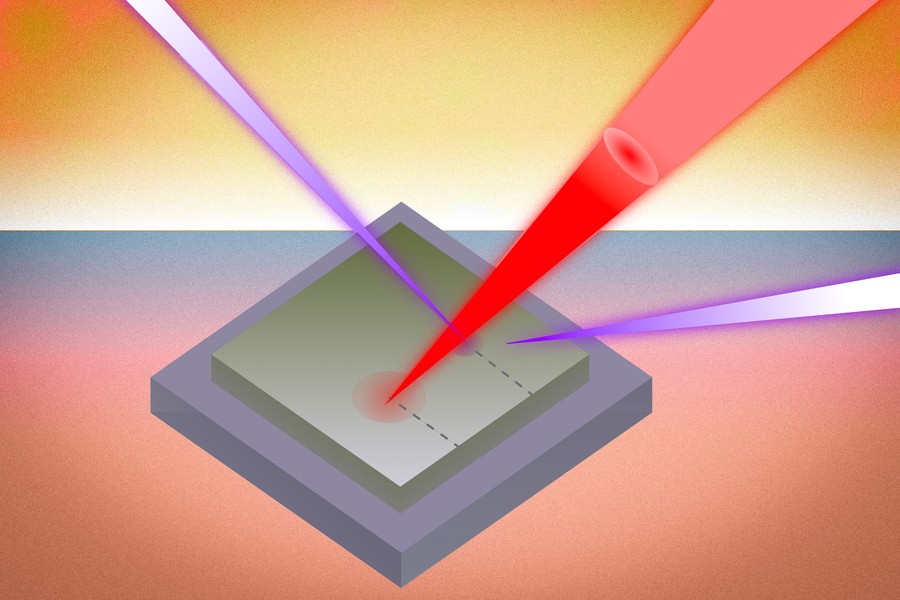
MIT Develops Ultrafast X-ray Thermometry Method to Observe Heat Transfer in Multilayer Chip Structures
Researchers at the Massachusetts Institute of Technology (MIT) have developed a new method for observing how heat transfers through multilayer materials, which can be used to precisely measure heat flow variations inside electronic devices such as computer chips. The findings have been published in Nature Communications. As computer chips continue to shrink in size and power density keeps rising, device overheating has become a major factor limiting performance improvements. Traditional heat flow measurement methods face limitations when dealing with the multilayer structures of real electronic devices—for example, the commonly used time-domain thermoreflectance method struggles to distinguish heat transport in different material layers, while infrared imaging and other approaches also fail to capture rapid changes at microscopic scales. To address this issue...
2026-08-06

U.S. Laboratories Plan "Materials Discovery Cloud" to Use AI to Predict Impact of Defects in Microelectronic Devices
Researchers at the U.S. Department of Energy's Argonne National Laboratory, Lawrence Berkeley National Laboratory, Oak Ridge National Laboratory, and Northwestern University are planning to develop a Materials Discovery Cloud platform that leverages a physics-based artificial intelligence framework to predict how tiny defects affect the performance and lifespan of microelectronic devices. Visualization of the Materials Discovery Cloud, a physics-based AI framework that integrates experimental data, simulations, and high-performance computing to predict how tiny defects affect the performance and lifespan of microelectronic devices. (Image provided by ChatGPT.) Microelectronic devices are widely used in smartphones, laptops, secure communications, and artificial intelligence hardware. As device dimensions continue to shrink and operating speeds increase, tiny defects within materials and at interfaces have a more pronounced impact on device stability. These defects can cause overheating, leakage current, switching instability, and other issues, or in certain conditions, improve electrical or thermal performance. Identifying critical defects and understanding their evolution under real-world operating conditions has become a key challenge in the design of next-generation microelectronic materials.
2026-08-06

Final Voyage Completed for Rebar Cage Sea Transport to Hinkley Point C Nuclear Power Station
This summer, the cargo vessel Anfield Peak departed from the Port of Bristol in the UK, heading to Hinkley Point C Nuclear Power Station in Somerset. This marked the vessel's final voyage for the related transport mission. Previously, it had made over 100 round trips between the two locations, delivering factory-prefabricated rebar cages to the nuclear construction site. These rebar cages are large in volume and high in density, serving as critical foundational components in civil engineering construction. Under traditional practices, such rebar cages are typically prefabricated on-site before concrete pouring. The Hinkley Point C project, however, has shifted part of the rebar cage prefabrication process to a factory in Bristol, with the cages then transported by sea to the site for installation...
2026-08-06

United States to Host IAEA ATLAS Initiative Ministerial Launch
The United States will host the ministerial launch of the International Atomic Energy Agency (IAEA) Atoms for Transport Licensing and Applications at Sea (ATLAS) Initiative in Washington, D.C., on August 26-27, 2026. The event will bring together ministers, policymakers, and industry representatives to discuss topics related to the safe and reliable application of nuclear technology in the maritime domain. The ATLAS Initiative aims to establish an international framework to harmonize legal and regulatory issues facing maritime nuclear energy applications and to support the deployment of related civilian nuclear technologies. Building on the IAEA's experience in nuclear safety, nuclear security, and safeguards, the Initiative emphasizes technology neutrality and places safety, security, and non-proliferation requirements as the foundation for advancing maritime nuclear applications...
2026-08-06

Argentina's nuclear power generates 4.45 million kWh in half a year, accounting for over 7% of national electricity and meeting the residential electricity needs of 6 million people
Operating data from Nucleoeléctrica Argentina for the first half of 2026 shows that the Atucha 2 and Embalse nuclear power plants generated a combined 4,450,355 kWh, accounting for over 7% of the country's total electricity generation during the period and covering 13% of national residential electricity demand. Notably, although Atucha 1 is temporarily out of service due to a life extension project, the nuclear plants are still able to supply electricity to approximately 6 million people. In addition to its operational breakthroughs, Nucleoeléctrica Argentina is also actively expanding its international business. The company has formally established a new business unit aimed at...
2026-08-06

Rosatom selects SNIIP as chief design organization for radiation control systems, overseeing standardization of radiological instrumentation and import substitution assurance at nuclear facilities
Rosatom has selected the Research Institute of Scientific Instruments (SNIIP) as the chief design organization for radiation control systems. The institute, which is part of Rosatom's automation control and electrical equipment division, has been granted this status for a range of similar products in radiation control equipment and systems, including automated radiation control systems and radiation environment monitoring. SNIIP's status as chief design organization means it will be responsible for ensuring Russia's technological autonomy in this field and for developing radiation control instruments and systems. SNIIP General Director Alexey Nikitin stated that this recognition is a testament to the years of work, experience, and professional expertise of the institute's employees...
2026-08-06

Kazakhstan Welcomes Its First Cohort of Nuclear Industry Specialists
On August 5, the inaugural graduation ceremony was held in Almaty for the first cohort of students at the Kazakhstan branch campus of the National Research Nuclear University MEPhI (НИЯУ МИФИ). Timur Zhantikin, Vice Chairman of the Atomic Energy Agency of Kazakhstan, attended the ceremony and presented diplomas to the graduates. In his address, he noted that as Kazakhstan's atomic energy industry enters a new phase of development, the demand for specialized professionals continues to grow, and the targeted training programs offered by the branch campus are crucial to filling this gap. The graduation of this first cohort marks the beginning of Kazakhstan's establishment of an independent domestic nuclear talent cultivation system. For a long time, Kazakhstan's nuclear industry has relied on overseas education or on-the-job training to supplement its engineering workforce...
2026-08-06

Belarus Plans Construction of New Nuclear Power Plant
Belarus plans to build a third unit at its existing nuclear power plant and is planning a second nuclear power plant. The Belarusian nuclear power plant has become a flagship project of the Union State and a symbol of cooperation between Belarus and Russia. However, the country does not intend to stop there. The President of Belarus has made an important decision: to build a third unit at the existing nuclear power plant, while studying the possibility of constructing a second nuclear power plant in the Mogilev region. Energy Minister Denis Moroz discussed the significance of this initiative, its timeline, and the direction of energy development over the next 15 years in the "Economic Environment" program. In 2008, the President of Belarus made the strategic decision to build a nuclear power plant, at a time when other countries were shutting down...
2026-08-06
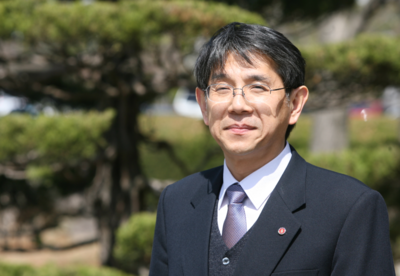
South Korean Scholar Patents Fusion Reactor Optimization Design Method
Professor Bonggeun Hong (transliteration) of the Department of Quantum System Engineering at the College of Engineering, Jeonbuk National University, South Korea, has recently registered a patent for a fusion reactor optimization design method, aimed at supporting the engineering design and commercialization of next-generation fusion technology. [Image source: Jeonbuk National University] The design method proposed in the patent can evaluate the performance of fusion reactors in various application scenarios—including power generation, thermal energy utilization, and use as a neutron source for nuclear transmutation—while optimizing device dimensions and key component structures. Its core approach is to simultaneously consider fusion system performance and economic feasibility during the initial design phase, thereby deriving more optimal design solutions.
2026-08-06

University of Kansas Receives DOE Funding to Build New-Generation Detectors for CERN's Large Hadron Collider
A particle detector development project led by the University of Kansas has recently received funding from the U.S. Department of Energy's Established Program to Stimulate Competitive Research (DOE EPSCoR). The project, funded at $1 million, will be used to design and build two High-Luminosity Zero Degree Calorimeters (HL-ZDC) for the Compact Muon Solenoid experiment (CMS) at CERN's Large Hadron Collider (LHC). The four-year project is co-led by Michael Murray, professor in the Department of Physics and Astronomy at the University of Kansas, and Christophe Royon, distinguished professor at the University of Kansas. Murray also serves as the project lead for the CMS High-Luminosity Zero Degree Calorimeter upgrade...
2026-08-06

"China Nuclear Power Development Report (2026)": China's Total Scale of Operating and Approved-Under-Construction Nuclear Power Units Ranks First in the World
On August 6, the National Energy Administration released the "China Nuclear Power Development Report (2026)". As of the end of 2025, China had a total of 112 nuclear power units in operation and approved for construction, with a total installed capacity of 125 million kilowatts, ranking first in the world. Among them, 59 units were in operation with an installed capacity of 62.48 million kilowatts, ranking third globally; 53 units were approved and under construction with a capacity of 62.93 million kilowatts, maintaining the world's largest nuclear power engineering construction scale for 19 consecutive years. The report shows that during the "14th Five-Year Plan" period, China newly approved 46 nuclear power units with a total capacity of 54.5 million kilowatts, and newly commissioned 11 units with a capacity of 12.45 million kilowatts. In 2025, China commissioned one new nuclear power unit, namely Unit 2 of the "Guohe One" demonstration project; and approved the construction of 10 new nuclear power units with a total capacity of 12.1 million kilowatts, involving Units 5 and 6 of Zhejiang Sanmen, Units 5 and 6 of Shandong Haiyang, Units 1 and 2 of Fujian Xiapu, Units 3 and 4 of Guangdong Taishan, and Units 5 and 6 of Guangxi Fangchenggang...
2026-08-06
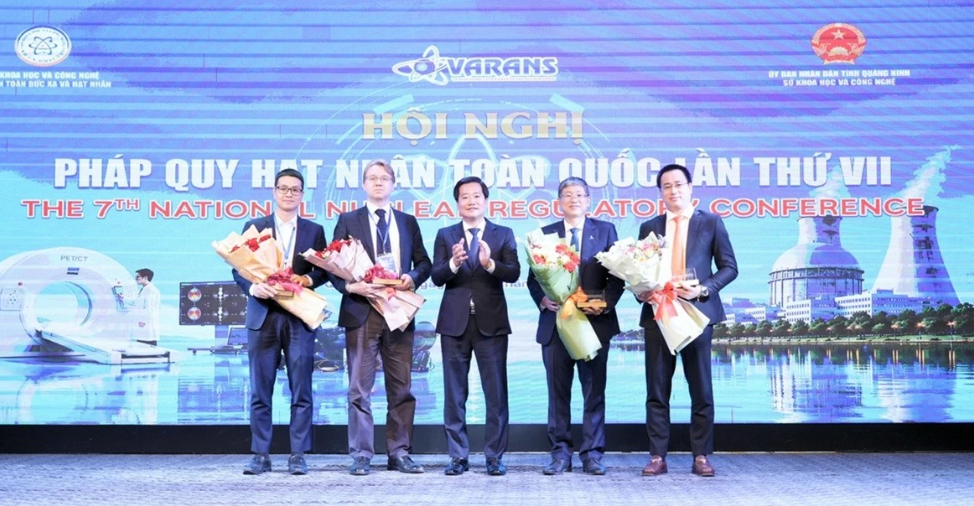
Petrovietnam Calls for Synchronized Regulation and Development in Ninh Thuan 2 Nuclear Power Project
Petrovietnam has proposed adopting a synchronized coordination mechanism in the development of the Ninh Thuan 2 nuclear power project. The Group believes that for this nuclear power plant project, regulatory, licensing, and inspection procedures should proceed in parallel with the project development process during the investment preparation phase. This approach can enhance document quality, control risks, and ensure the project is implemented safely and in compliance with standards. Petrovietnam emphasized that nuclear power projects require regulatory work (including licensing, assessment, and review) to be integrated into all stages of the project lifecycle, rather than being treated as a subsequent step. The Vietnam Oil and Gas Group proposed that, to effectively advance project preparation, regulatory capacity building should be strengthened...
2026-08-06