
Search Results
Keyword:Fukushima Daiichi Nuclear Power Station
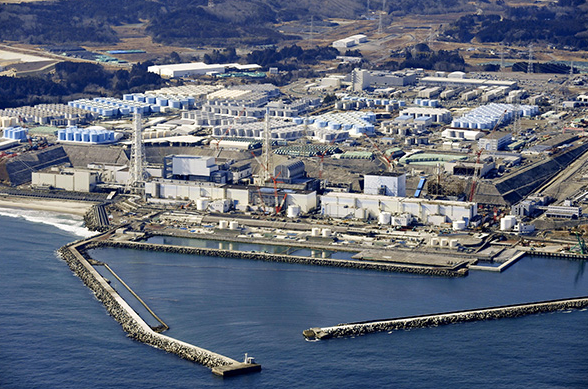
22nd Round of Fukushima Daiichi Nuclear Power Station ALPS Treated Water Discharge Completed
Tokyo Electric Power Company (TEPCO) stated on August 17 that the 22nd round of ALPS treated water discharge from the Fukushima Daiichi Nuclear Power Station had been completed by the afternoon of the same day (local time). This round of discharge began on July 30, with a total of 7,888 tonnes of ALPS treated water released. According to information released by TEPCO, the total amount of radioactive tritium contained in the water discharged in this round was approximately 1.3 trillion becquerels. This is the 4th round of ALPS treated water discharge from the Fukushima Daiichi Nuclear Power Station in Japan's fiscal year 2026. Japan began discharging ALPS treated water from the Fukushima Daiichi Nuclear Power Station in August 2023. To date, 22 rounds of discharge have been carried out, with a cumulative discharge volume of approximately 173,000 tonnes...
2026-08-18
New Decommissioning Plan for Fukushima Daiichi: Priority on Internal Investigation of Unit 3 Before Fuel Debris Retrieval
The Nuclear Damage Compensation and Decommissioning Facilitation Corporation of Japan released on August 6 an outline of the 2026 edition of the "Decommissioning Strategic Plan," proposing technical approaches for the decommissioning of Tokyo Electric Power Company's Fukushima Daiichi Nuclear Power Station. The plan highlights that, for the large-scale retrieval of melted fuel debris at Unit 3, expected to commence in or after fiscal year 2037, priority should currently be given to internal investigations of the reactor building to provide a more reliable basis for subsequent engineering plans. The plan states that the fuel debris retrieval method being studied by TEPCO still requires further improvement in certainty, with the key prerequisite being an understanding of the actual internal conditions of the reactor. Due to the high radiation levels of the water inside the unit following the accident...
2026-08-07
Nitrogen Supply Unit at Fukushima Daiichi Nuclear Power Station Resumes Operation After Malfunction
Tokyo Electric Power Company (TEPCO) reported on August 1 that a reactor nitrogen supply unit at the Fukushima Daiichi Nuclear Power Station malfunctioned that day, but was subsequently repaired and resumed gas supply. The company stated that during the malfunction, no significant fluctuations were observed in hydrogen concentrations inside the reactors of Units 1 to 3 or in surrounding radiation monitoring data, and no risk of hydrogen explosion was confirmed. The reactor containments and pressure vessels of Units 1 to 3 at the Fukushima Daiichi Nuclear Power Station require continuous nitrogen injection to suppress hydrogen accumulation resulting from radiolysis of water. If hydrogen concentrations exceed a certain level, the risk of hydrogen explosion may increase. According to TEPCO, at 11:14 a.m. on August 1, a worker...
2026-08-03
Japan's Fukushima Daiichi Nuclear Power Station launches 22nd release of radioactive wastewater into the ocean, approximately 7,800 tons this time
On the morning of July 30, 2026, Tokyo Electric Power Company (TEPCO) initiated a new round of nuclear-contaminated water discharge into the ocean at the Fukushima Daiichi Nuclear Power Station. This marks the 4th release within 2026 and the 22nd since the discharge plan began in August 2023. According to data released by TEPCO, this discharge is expected to continue until the 17th of next month, with a total volume of approximately 7,800 tons. The total amount of radioactive substance tritium contained therein is as high as approximately 1.3 trillion becquerels. Prior to this, Japan had conducted a total of 21 rounds of radioactive wastewater discharge by the 24th of this month, with a cumulative discharge volume reaching approximately 165,000 tons. This action continues to draw attention and concern from neighboring countries and the international community. This time...
2026-07-31
Third fuel debris retrieval test at Fukushima Daiichi Unit 2 postponed due to robotic arm malfunction
The robot used by Tokyo Electric Power Company (TEPCO) for the third experimental fuel debris retrieval at Fukushima Daiichi Nuclear Power Station Unit 2 malfunctioned during an on-site operational test, forcing the cancellation of the plan originally scheduled to start after July 2026 if all went well. The company stated it will reassess the relevant procedures. The malfunction occurred in part of the large robotic arm equipment used to collect fuel debris. During an operational test in the reactor building of Unit 2, TEPCO found an abnormality in one of the motors driving the robotic arm, causing the brake to fail to release and the arm to be unable to extend. The company is currently studying the replacement of the faulty motor. The third experimental retrieval plan was to use a large robotic arm...
2026-07-31