
Search Results
Keyword:RAG
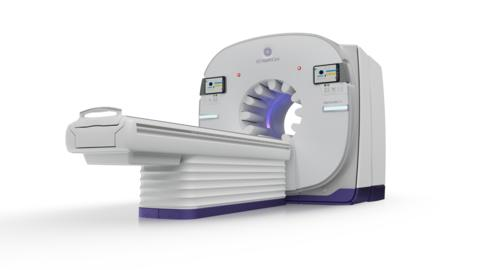
GE HealthCare's StarGuide GX Digital 4D CZT SPECT/CT Receives FDA 510(k) Clearance in the U.S.
GE HealthCare recently announced that its new digital 4D CZT SPECT/CT system, StarGuide GX, has received 510(k) clearance from the U.S. Food and Drug Administration (FDA). The system had previously obtained CE marking, and this U.S. clearance marks progress in the clinical adoption of its next-generation molecular imaging technology. Designed for theragnostics and precision medicine needs, StarGuide GX is a comprehensive SPECT/CT system. It supports imaging at multiple energy levels, enables general-purpose SPECT imaging, and is tailored for emerging tracer applications, including investigational α-emitters, aiming to provide imaging support for clinicians and researchers exploring new pathways in diagnosis, treatment planning, and therapeutic response monitoring.
2026-09-09
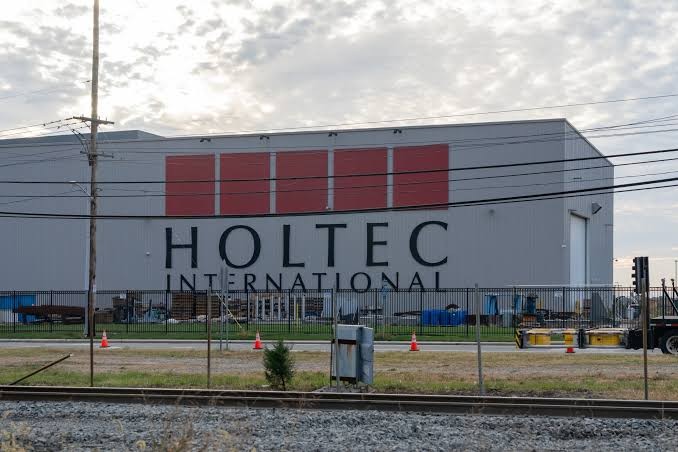
Ukraine's Energoatom purchases additional 41 VVER Spent Fuel Dry Storage Systems
Holtec Nuclear recently announced that Ukraine's national nuclear energy company Energoatom has awarded it a new contract to supply an additional 41 spent fuel safe transport and storage systems for VVER reactors at Ukraine's Khmelnytskyi, Rivne, and South Ukraine nuclear power plants. The contract was signed on August 26, 2026. Energoatom's acting CEO Pavlo Kovtonyuk signed the contract in Kyiv, while Holtec Nuclear's CEO and Board Chairman Kris Singh signed in Camden, New Jersey, USA...
2026-09-09
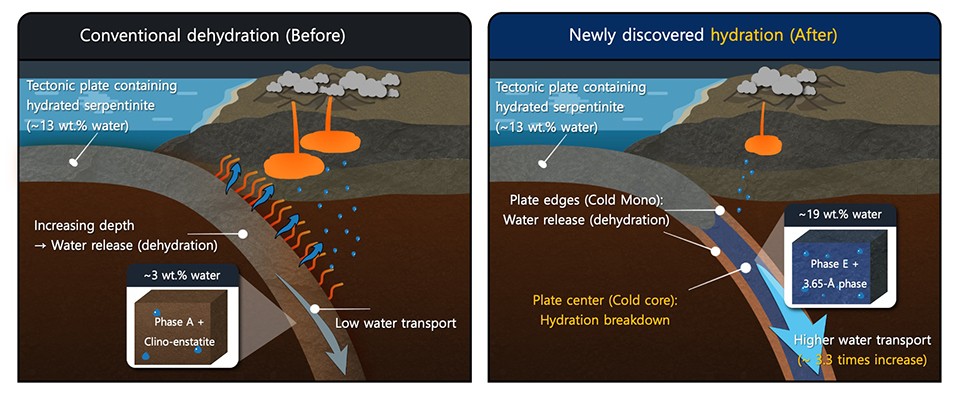
South Korean research team reveals that water storage capacity of cold subducting slabs has been underestimated using synchrotron radiation sources
A research team led by Professor Yongjae Lee of the Department of Earth System Sciences at Yonsei University in South Korea has recently found that in cold, rapidly descending tectonic subduction zones, crustal rocks may transport up to 1 trillion kilograms of water to the mantle each year—approximately twice the previous estimate. The findings have been published in Nature Communications. Subduction zones are regions where Earth's tectonic plates converge and one plate descends beneath another, often accompanied by volcanic and seismic activity. For a long time, the academic community has generally believed that serpentinite, a water-bearing rock, gradually dehydrates as it descends with the plate due to increasing pressure and temperature, and the released water further promotes melting of the overlying plate and is associated with the formation of volcanic arc chains.
2026-09-07

South Korean civic groups oppose construction of spent fuel storage facility at Hanbit Nuclear Power Plant site
On September 4, the Joint Action Organization Against Hanbit Nuclear Power Plant in the Honam region of South Korea held a press conference in front of the high-level radioactive waste forum venue in Gochang County, North Jeolla Province, demanding the cancellation of plans to build a storage facility at the Hanbit Nuclear Power Plant site and proposing fundamental measures to address nuclear waste issues. The organization stated that Korea Hydro & Nuclear Power (KHNP) is pushing forward with the construction of temporary storage facilities at the plant site on the grounds that the spent fuel pools at Hanbit Nuclear Power Plant may reach saturation by 2030. The organization argued that this move fails to adequately respond to the opinions of residents near the plant and amounts to unilaterally shifting the burden of nuclear waste onto the local community. The organization stated that the current plan involves building storage facilities at the existing nuclear power plant site...
2026-09-06
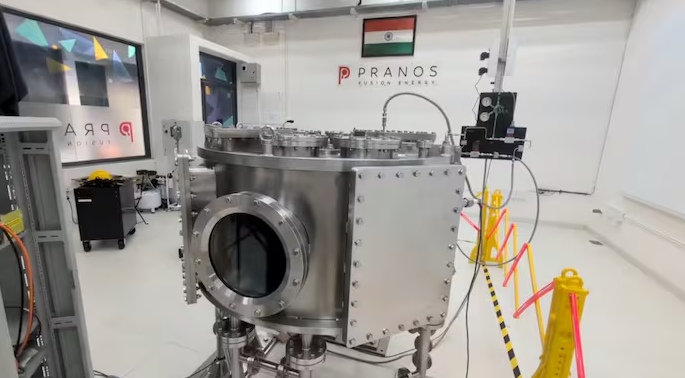
India's Private Fusion Tokamak PRAGYA Achieves Plasma Operation
Bengaluru-based deep-tech energy startup Pranos Fusion has produced plasma in its experimental device PRAGYA. The company states that PRAGYA is India's first compact tokamak developed by a private enterprise, marking a transition in India's private fusion research and development from the design and manufacturing phase to experimental operation. PRAGYA adopts a compact, low-aspect-ratio tokamak design, primarily used to generate, confine, and control plasma. Tokamaks use strong magnetic fields to confine high-temperature plasma within a toroidal vacuum vessel, creating conditions for future fusion of light atomic nuclei. The fundamental process of fusion reactions is the same mechanism by which the Sun releases energy, but engineering implementation still faces multiple challenges in plasma confinement, magnets, materials, and control systems.
2026-09-04
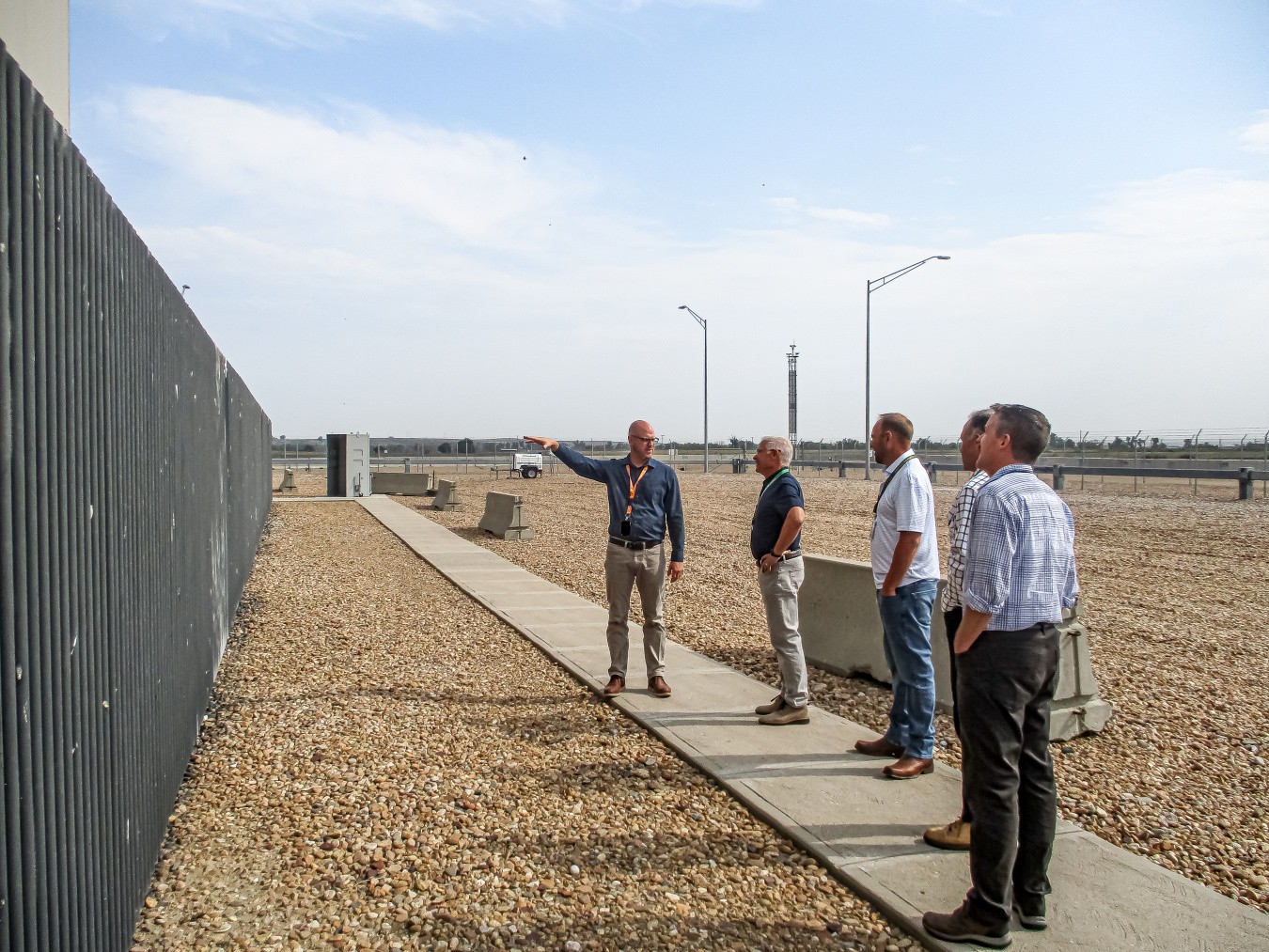
DOE Officials Visit Fort St. Vrain Spent Fuel Storage Facility in Colorado
Tim Walsh, Assistant Secretary of the U.S. Department of Energy's Office of Environmental Management (EM), recently visited the Fort St. Vrain spent nuclear fuel storage facility near Platteville in northern Colorado. The facility is managed by the DOE's Idaho Cleanup Project (ICP) and its contractor, Idaho Environmental Coalition (IEC). During the visit, Walsh inspected the storage facility and multiple supporting buildings to learn about the operational mission and historical background of the Fort St. Vrain facility. The facility currently stores spent nuclear fuel from the former Fort St. Vrain power station, which operated using gas-cooled reactor technology and was shut down in 1979...
2026-09-02
Kansai Electric Power Applies to Build Dry Cask Storage Facilities for Spent Fuel
Kansai Electric Power Company (KEPCO) announced on August 31 that it has submitted an application to Japan's Nuclear Regulation Authority (NRA) seeking approval for the design and construction plans of dry cask storage facilities for spent fuel at its Mihama and Takahama nuclear power plants in Fukui Prefecture. The company plans to begin construction in 2027 and aims to complete the facilities by 2029. This application covers the first-phase construction at the Mihama and Takahama nuclear power plants. KEPCO had previously planned to build a total of four dry cask storage facilities for spent fuel at three nuclear power plants within Fukui Prefecture, including the Mihama, Takahama, and Ohi nuclear power plants. Currently, the related project at the Ohi nuclear power plant and the second-phase construction at the Takahama nuclear power plant remain...
2026-09-01
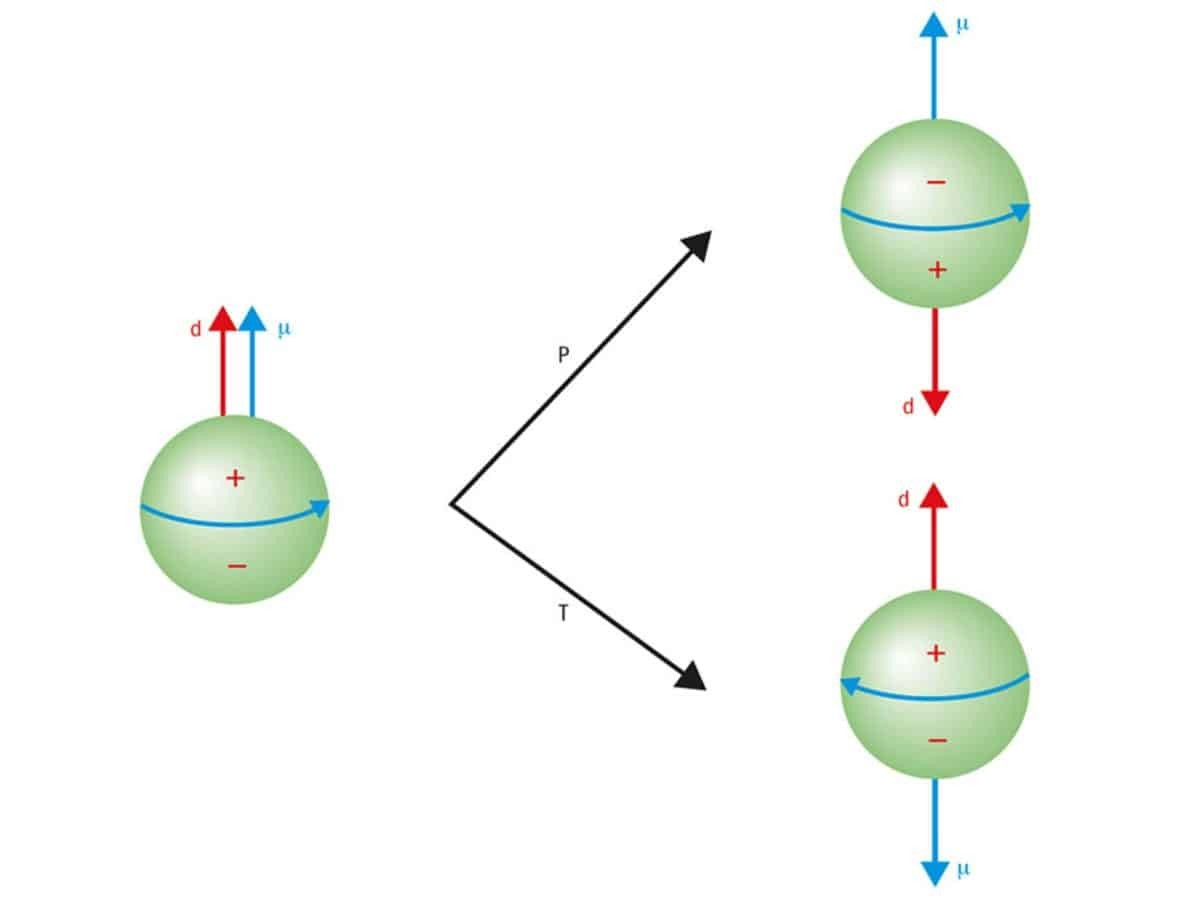
Russian Research Team Proposes New Method for Measuring Proton and Deuteron Electric Dipole Moments in a Single Storage Ring
Physicists from several Russian research institutions have proposed a new method for searching for the electric dipole moments of protons and deuterons, potentially enabling the study of both particle types in a single storage ring. The participating institutions include the Moscow Institute of Physics and Technology, the Institute for Nuclear Research of the Russian Academy of Sciences, the National Research Nuclear University MEPhI, and the Landau Institute for Theoretical Physics of the Russian Academy of Sciences. The research was published in the journal *Nuclear Science and Technology* and was supported by a grant from the Russian Science Foundation. The electric dipole moment reflects whether there is a tiny asymmetry between the internal charge distribution of a particle and its spin direction. According to Standard Model predictions, the electric dipole moments of the proton and deuteron are nonzero but extremely small, on the order of 10...
2026-08-31
Japan's Fukui Prefecture Approves KEPCO's Construction of Dry Cask Storage Facilities for Spent Fuel
Fukui Prefecture Governor Tatsuji Sugimoto announced on August 28 that he approved Kansai Electric Power Company's (KEPCO) plan to construct dry cask storage facilities for spent fuel within the premises of the Mihama and Takahama nuclear power plants in Fukui Prefecture. The decision was made in accordance with the safety agreement between Fukui Prefecture and KEPCO. KEPCO plans to apply to the Nuclear Regulation Authority (NRA) for approval of the relevant design and construction plans as early as August 31. KEPCO plans to build dry cask storage facilities at three nuclear power plants in Fukui Prefecture to temporarily store spent fuel and prepare for future transport to an interim storage facility outside Fukui Prefecture. Among these, the plans for the Mihama and Takahama nuclear power plants...
2026-08-29
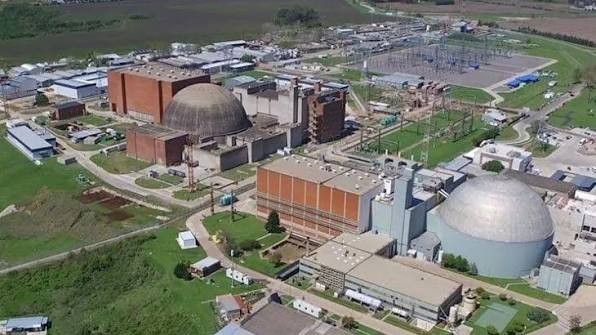
Argentina Advances Testing for Atucha II Spent Fuel Dry Storage Project
Nucleoeléctrica Argentina S.A. is advancing key equipment testing for the spent fuel dry storage facility (ASECG II) at the Atucha II nuclear power plant. This project is a critical supporting infrastructure to ensure the long-term operation of the Atucha II plant. The ongoing tests are part of the verification phase prior to system commissioning, primarily aimed at inspecting and adjusting the operational procedures involved in future operations. Among the key equipment under testing is the gantry crane, which handles the transfer of storage containers within the plant site. The stable performance of this equipment is directly related to the safety and controllability of container movements during spent fuel storage operations. According to the project plan...
2026-08-28
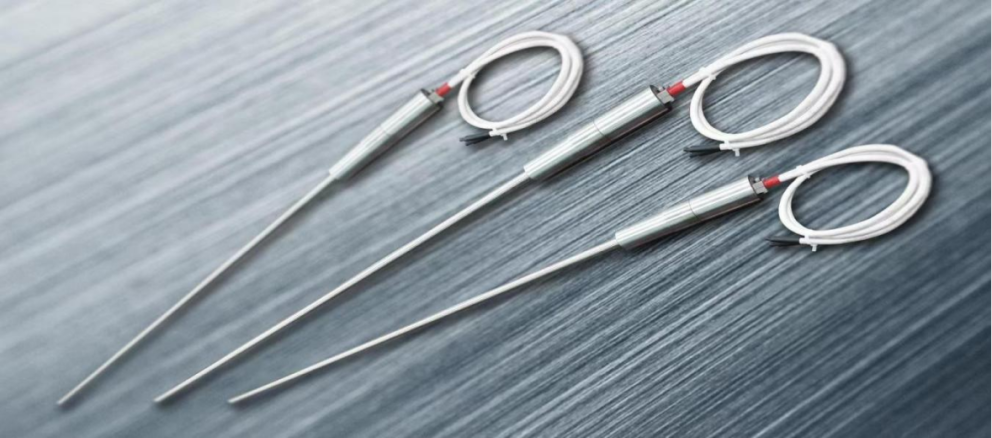
Hualong One Pressurizer Electric Heaters Achieve Coverage of Two Major Technical Routes
The pressurizer electric heater is an important safety-class component of the reactor coolant system (primary loop) in pressurized water reactor nuclear power plants, directly affecting unit pressure regulation and safe, stable operation. The localized pressurizer electric heater developed by Chuanyi Instrument Co., Ltd., a subsidiary of SINOMACH Instrumentation Group under SINOMACH Group, has been applied to China's self-developed Generation III nuclear power units such as "Hualong One." The photo shows the qualification prototype of the Hualong One pressurizer electric heater. With the batch construction of Hualong One units advancing, units adopting different technical routes have imposed new customized operating condition requirements on pressurizer electric heaters. In October 2019, Chuanyi Instrument, together with China General Nuclear Power Engineering Co., Ltd., initiated the development of the CGN-version Hualong One pressurizer electric heater...
2026-08-27
South Korea's Gijang County and KHNP Discuss Communication Issues with Residents near Kori Nuclear Power Plant
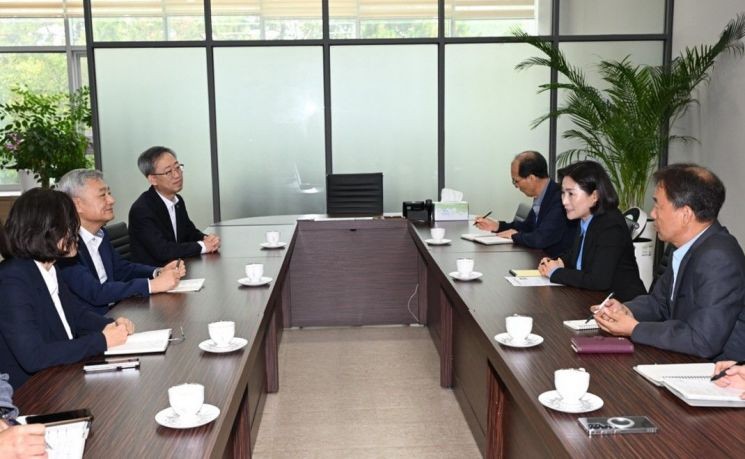
Gijang County, Busan, South Korea, said on August 25 that it held talks with Korea Hydro & Nuclear Power (KHNP) that day on pending issues related to the Kori Nuclear Power Plant, focusing on resident communication, allocation of co-prosperity support funds, dry cask storage facilities for spent fuel, and the small modular reactor project. According to Gijang County, KHNP President Kim Hoe-cheon visited the Gijang County government that day and met with County Governor Woo Sung-bin. Since taking office on March 18, Kim Hoe-cheon has been visiting nuclear power plant sites to understand local concerns, and this visit to Gijang County, the site of the Kori Nuclear Power Plant, is part of that ongoing communication effort...
2026-08-26
Dry Spent Fuel Storage Facility Planned at Hanbit Nuclear Power Plant in South Korea
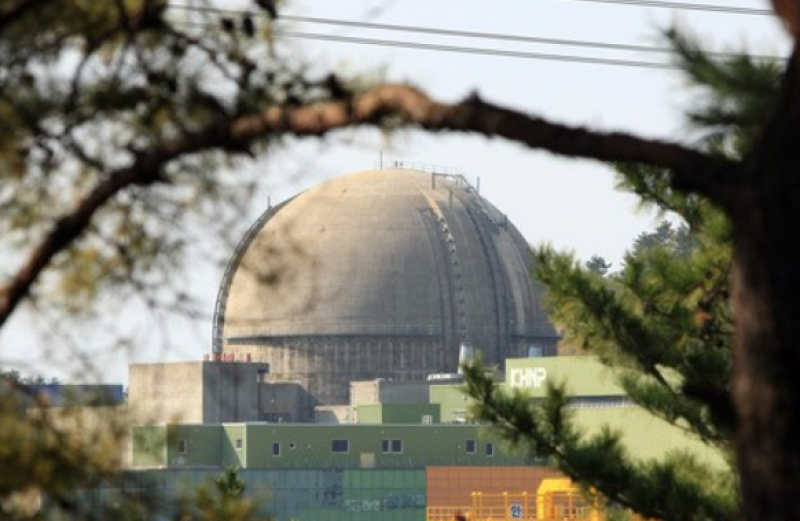
Korea Hydro & Nuclear Power (KHNP) held a resident briefing session on August 25 at the Hongnong-eup Community Center in Yeonggwang-gun, South Jeolla Province, to introduce its plan to build an on-site interim spent fuel storage facility at the Hanbit Nuclear Power Plant. Approximately 200 residents from villages near the plant, along with officials from Yeonggwang-gun and Korea Electric Power Corporation (KEPCO), attended the meeting, which proceeded in an orderly manner. KHNP stated that the existing wet spent fuel storage pools at Hanbit Nuclear Power Plant have reached 86% capacity and are expected to approach saturation by 2030, necessitating the construction of a new on-site storage facility. According to the plan, the proposed facility will be located within the Hanbit Nuclear Power Plant site, covering approximately 7,328 square meters, and will employ dry storage methods for interim spent fuel storage...
2026-08-26
France Authorizes CEA to Dismantle the Pégase Research Reactor Facility at Cadarache
The French Official Journal published a decree on August 23 authorizing the French Alternative Energies and Atomic Energy Commission (CEA) to carry out dismantling operations on the Pégase (Pégase) nuclear facility located at the Cadarache site in Saint-Paul-lès-Durance, Bouches-du-Rhône department. The facility is classified as Basic Nuclear Installation No. 22 (INB 22). The decree specifies the implementation phases for the partial dismantling of the Pégase research reactor and authorizes the CEA to build the equipment required for the dismantling operations. Under the decree, the boundaries of the Pégase facility will be adjusted to provide the necessary space for the layout of dismantling equipment and the temporary storage of waste generated during the dismantling process. The dismantling scope covers the Pégase facility itself, including the main building housing the storage and treatment...
2026-08-25
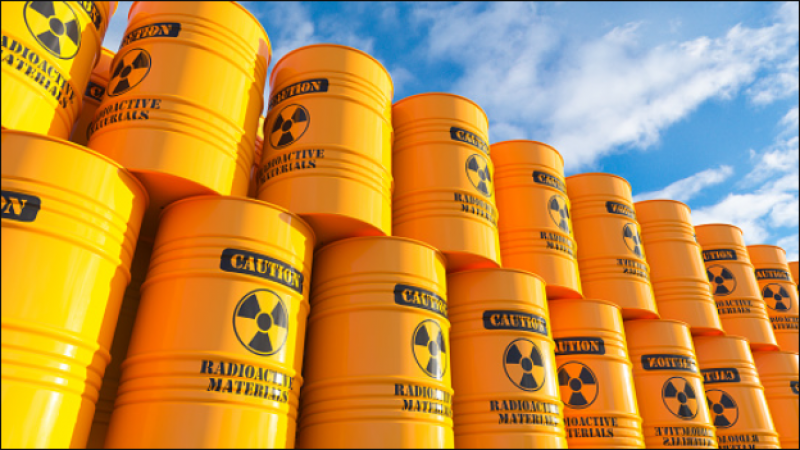
Fukui Prefecture in Japan Likely to Approve KEPCO's Dry Storage Facility for Spent Nuclear Fuel
According to multiple officials of Fukui Prefecture, Japan, Governor Takato Ishida of Fukui Prefecture is expected to approve Kansai Electric Power Company's (KEPCO) construction of a dry storage facility for spent nuclear fuel at its nuclear power plants within the prefecture. If completed, this would mark the first adoption of such an on-site interim storage facility at KEPCO's nuclear power plants. A dry storage facility is used to store spent nuclear fuel discharged from reactors. The basic approach involves placing spent fuel into dedicated metal containers and cooling them naturally through air circulation, without relying on electrical systems. Since the containers themselves can be transported by ship or trailer, subsequent off-site transfer is relatively convenient; even in the event of a power outage, the associated accident risk is considered low. Japan Atomic Power Company (JAPC) and Shikoku Electric Power Company operate nuclear power plants that have already adopted this storage method.
2026-08-25