
Search Results
Keyword:RI

Lightbridge Multi-Zone Fuel Element Granted Japanese Patent, Covering Fuel Assemblies and 3D Printing Manufacturing Methods
Advanced nuclear fuel technology company Lightbridge Corporation recently announced that its Japanese patent application for a multi-zone fuel element has been granted by the Japan Patent Office. The patent covers the fuel element design, fuel assemblies incorporating the design, and methods of producing the element via additive manufacturing, i.e., 3D printing. According to the disclosure, the patent involves a fuel rod composed of three layers of different materials. The thickness of the three layers can vary along the length of the fuel rod, thereby regulating fuel performance at different positions in the reactor to enhance reactor operating performance and safety margins. In addition to the fuel rod itself, the patent also covers fuel assemblies for mounting these fuel rods.
2026-09-02
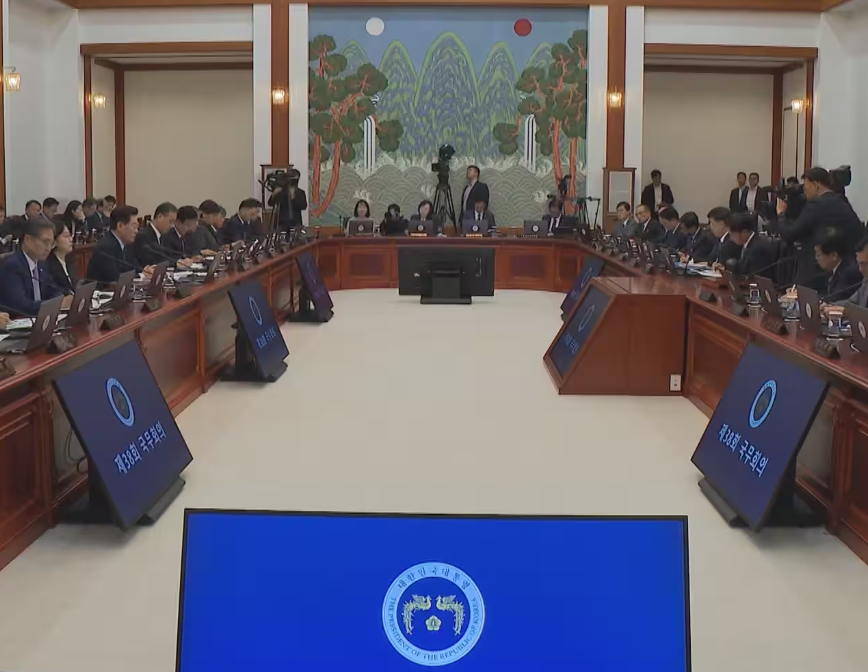
South Korea's 2027 Budget Proposal Includes First-Ever Funding for Domestic Nuclear Submarine Development
The South Korean government approved its 2027 budget proposal, with total government spending reaching 820.9 trillion won, approximately 95.6 trillion yen, marking a 12.8% increase from the previous year and setting a record high. The budget proposal has been submitted to the National Assembly for review. President Lee Jae-myung presided over a cabinet meeting at the presidential office on September 1, where the budget proposal was reviewed and approved. Under the plan, the South Korean government intends to increase investment in growth-oriented industries, with approximately 2.5 trillion yen allocated to infrastructure development related to semiconductor manufacturing and artificial intelligence, nearly doubling the scale of the previous year. On the revenue side, the South Korean government expects that as AI demand continues to grow and major semiconductor companies see improved performance, corporate income tax and personal income tax revenues will increase significantly.
2026-09-02
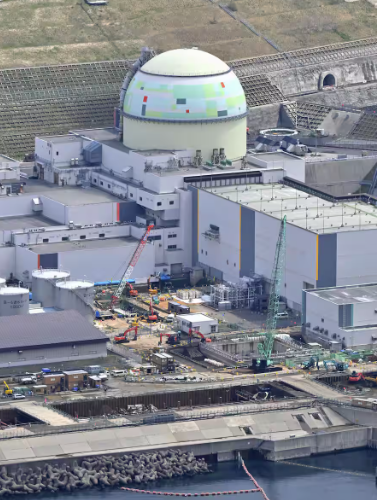
Japan's Tomari Nuclear Power Plant Plans New Low-Level Radioactive Waste Processing Facility
Hokkaido Electric Power Company (HEPCO) recently announced plans to construct a new low-level radioactive waste processing facility within the premises of the Tomari Nuclear Power Plant in Hokkaido, Japan, to handle approximately 12,000 drums of low-level radioactive waste currently stored on site. According to HEPCO, the new facility will sort waste such as paper and metal, reduce its volume through fine shredding or compression, and then solidify it by pouring mortar into the waste drums. After processing, the waste will undergo radioactivity level testing before being transported to the disposal center in Rokkasho Village, Aomori Prefecture. Previously, the Tomari plant had stored this type of waste in 200-liter drums without further processing. The proposed facility will have an annual processing capacity of over 1,000 drums, feature a three-story structure, and cover a total floor area of approximately 4,600 square meters.
2026-09-02
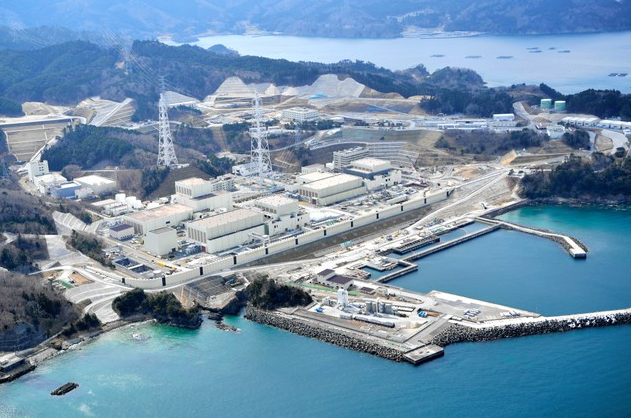
Japan's Onagawa Nuclear Power Station Unit 2 Plans to Replace Hydrogen Concentration Monitoring Equipment
Tohoku Electric Power has consulted with Miyagi Prefecture, Ishinomaki City, and Onagawa Town in advance regarding a change to the method of monitoring hydrogen concentration inside the containment vessel under severe accident conditions at Unit 2 of the Onagawa Nuclear Power Station. The company plans to submit an application to amend the reactor installation license to the Nuclear Regulation Authority (NRA) of Japan on the 2nd. Unit 2 of the Onagawa Nuclear Power Station is located in Onagawa Town and Ishinomaki City, Miyagi Prefecture. Tohoku Electric Power previously installed a total of four hydrogen concentration detectors inside and outside the reactor containment vessel of this unit, intended to monitor changes in hydrogen concentration within the containment vessel in the event of a severe accident. In 2025, some of these detectors experienced malfunctions. In the same year...
2026-09-02
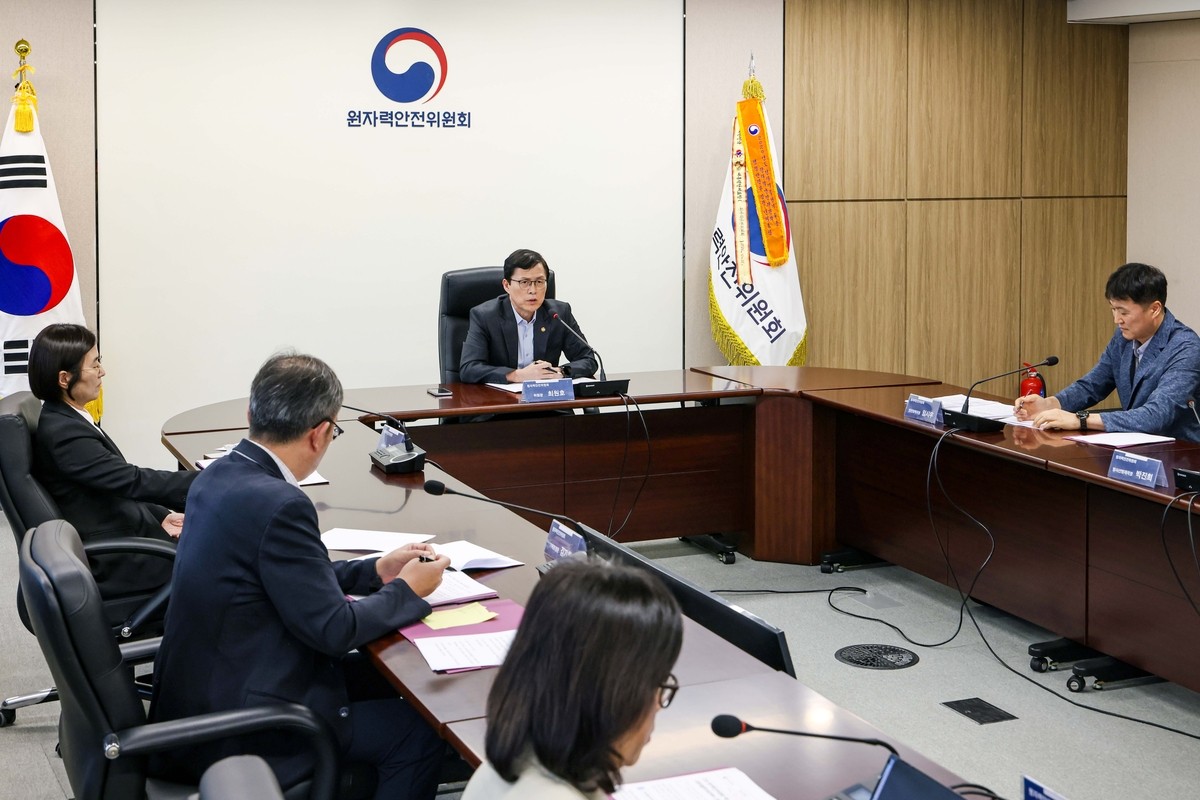
South Korea's Nuclear Safety Regulatory Budget for 2027 Rises to KRW 303 Billion
The Nuclear Safety and Security Commission (NSSC) of South Korea announced on September 1 that it has allocated KRW 303 billion for the 2027 budget, an increase of KRW 10.4 billion from this year. The new budget focuses on areas such as small modular reactor regulation, spent nuclear fuel safety, nuclear facility decommissioning review, environmental radiation monitoring, and nuclear safety information disclosure. Regarding small modular reactors, as non-light water reactor-type small modular reactor development projects aim to obtain licenses by the early 2030s, South Korea will invest KRW 8 billion in R&D to establish a new safety evaluation system. In addition, in line with the preliminary review system set to take effect in November this year, the government has allocated KRW 2.7 billion to conduct preliminary reviews of non-light water reactor-type small modular reactors expected to file applications next year. This system allows applicants to request regulatory review of reactor designs before formally submitting license applications.
2026-09-02
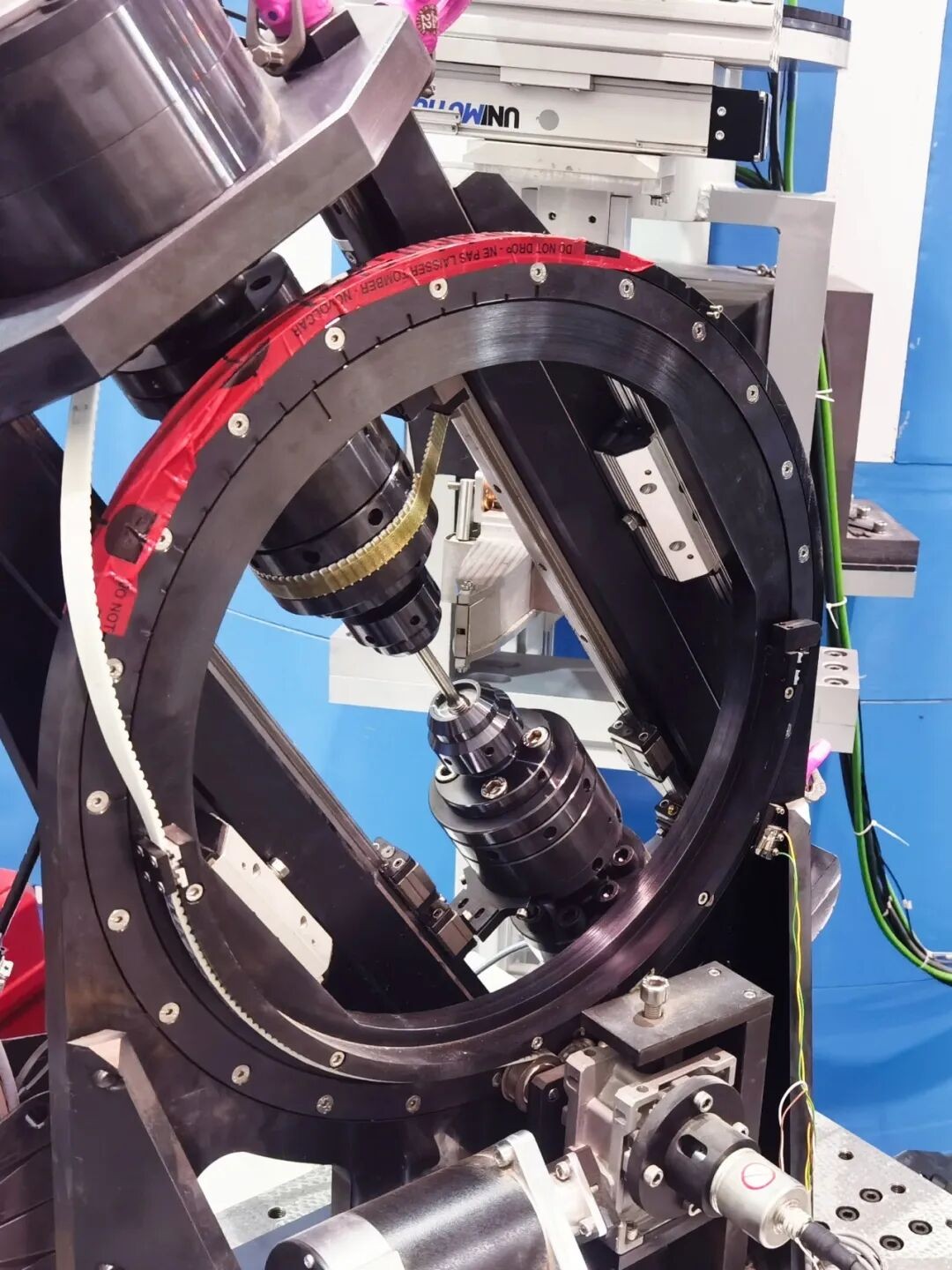
Major Breakthrough in Residual Stress Research on Key Aviation Materials in China
Nickel-based single-crystal superalloys are key materials for manufacturing turbine blades in aviation engines. Recently, the neutron scattering team from the Department of Nuclear Physics at the China Institute of Atomic Energy (CIAE) under CNNC, leveraging the Engineering Science Stress Spectrometer at the China Advanced Research Reactor (CARR), overcame technical challenges in residual stress measurement of single-crystal superalloys and established a precise three-dimensional residual stress testing method based on neutron diffraction. This provides an effective solution for residual stress assessment of critical aviation materials and lays a solid methodological foundation for the in-depth application of the CARR Engineering Science Stress Spectrometer in high-end manufacturing. During high-temperature heat treatment or service of nickel-based single-crystal superalloys...
2026-09-02

CGN Begoo Empowers Fuzhou Changle Airport T2 Terminal to Pass Provincial Acceptance
Recently, the opening of Terminal T2 at Fuzhou Changle International Airport successfully passed the provincial joint acceptance inspection, laying a solid foundation for the terminal's official operation and supporting the expansion and upgrade of Fujian's aviation ports. Among the achievements, the smart passenger inspection and customs intelligent supervision system constructed by CGN Begoo Technology Co., Ltd. passed comprehensive inspections and received full recognition from the acceptance team. As a core international aviation gateway hub in Fujian, the Phase II expansion project of Fuzhou Changle International Airport is a key infrastructure project for regional opening-up. The commissioning of Terminal T2 will effectively address the shortcomings in Fuzhou's aviation port support capacity, significantly enhancing the port's comprehensive carrying capacity, international service level, and clearance operational efficiency...
2026-09-02
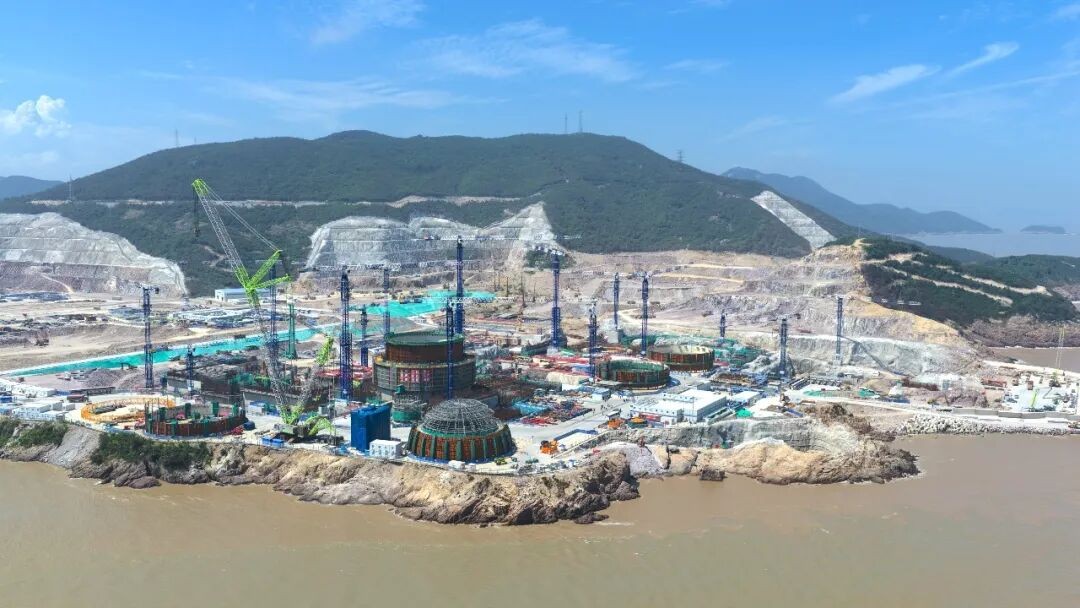
Zhejiang Jinqimen Nuclear Power Unit 1 Pressurizer Relief Tank Successfully Hoisted into Place
On August 30, the pressurizer relief tank, a major nuclear island equipment item of Unit 1 at Zhejiang Jinqimen Nuclear Power Plant, contracted by China Nuclear Industry Fifth Construction Co., Ltd. (CNF), was successfully hoisted into place. The entire hoisting process was smooth and orderly, with overall safety and quality under control. This hoisting has laid a solid foundation for the subsequent installation of main nuclear island equipment and the construction of the primary loop system. The pressurizer relief tank is an important auxiliary equipment of the reactor coolant system in a nuclear power plant. Its main function is to collect and condense the high-temperature and high-pressure steam discharged from the pressurizer safety valves, ensuring the safe and stable operation of the reactor system. The relief tank hoisted this time is pre-installed equipment in the nuclear island. The main body of the equipment is heavy in weight and large in size, with limited hoisting workspace. After being hoisted into place, it needs to be placed in the nuclear island building for a long period, and subsequent construction will be constrained by space, making it necessary to introduce the equipment precisely within the civil construction window period.
2026-09-02
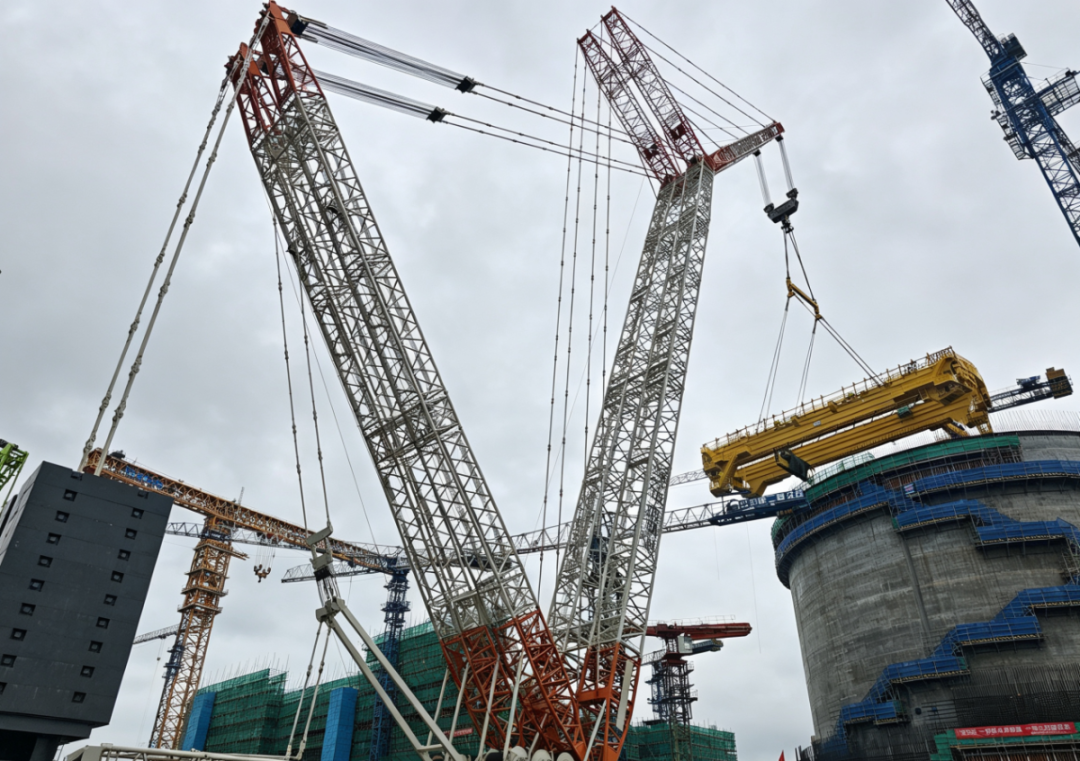
Completion of Polar Crane Bridge Lifting for Unit 4 of Zhangzhou Nuclear Power Plant
On September 1, the lifting operation of the polar crane bridge for Unit 4 of the Zhangzhou Nuclear Power Project was successfully completed. The equipment was smoothly positioned under the traction of a 3200-ton crawler crane, with the entire process lasting 2 hours and 5 minutes, creating conditions for subsequent nuclear island plant construction and equipment installation. The polar crane bridge is a core component of the polar crane, installed at the top of the nuclear island plant, and serves as an important structure of the key lifting equipment within the nuclear island plant. Once put into operation, it will provide support for various lifting operations during the installation and operation phases of the nuclear power plant. The total weight of this lifting exceeded 420 tons, with a lifting height of over 100 meters. The project team selected a 3200-ton crawler crane and used a dedicated spreader beam for the operation. In response to challenges such as wind disturbance during high-altitude slewing, limited clearance between the bridge and plant structures, and high load-bearing requirements for the large crawler crane positioning, the construction team conducted simulation rehearsals in advance, optimized lifting condition parameters, verified the stress conditions of the crane, spreader beam, and lifting points, and refined control requirements for key operations.
2026-09-02
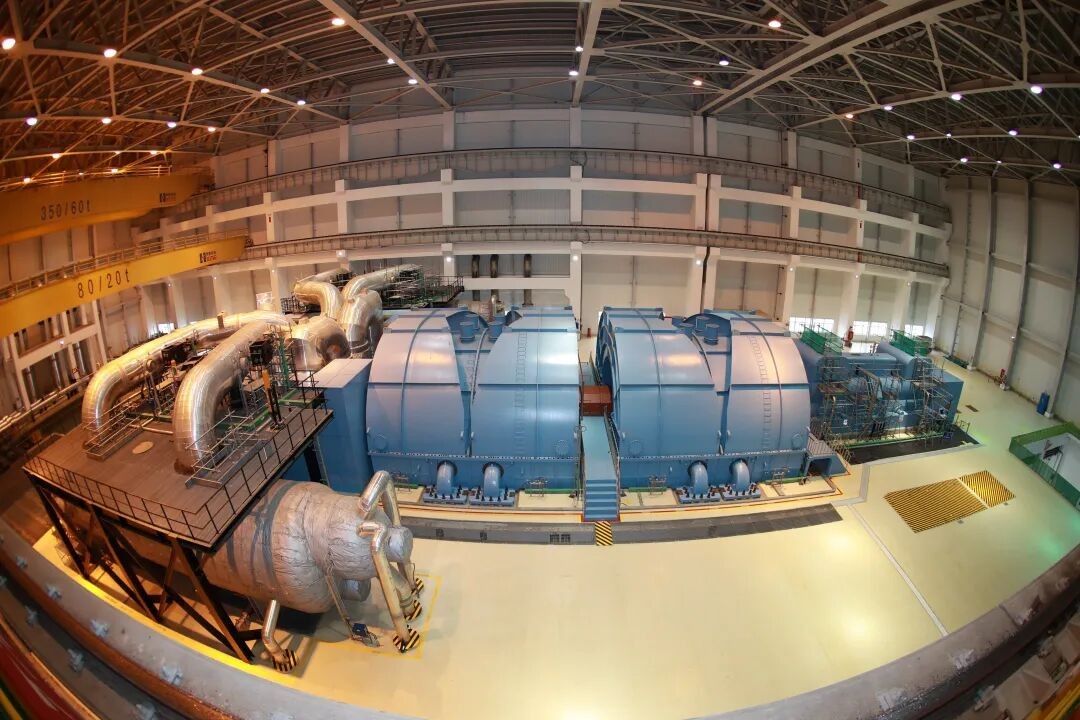
Dongfang Electric's Nuclear Generator Sealing Patent Wins China Patent Excellence Award
The China National Intellectual Property Administration recently announced the award decision for the 26th China Patent Award. Dongfang Electric Group won the China Patent Excellence Award for three patents, among which "a full-path sealing structure for turbine generators and its assembly method" has been applied to nuclear power generating unit-related projects, demonstrating its innovative achievements in key technologies for nuclear power equipment. The patent, applied to the world's first Hualong One nuclear power generating unit, proposes a full-path sealing structure that breaks through the traditional intermittent sealing approach, constructing a continuous, uninterrupted sealing surface. By proactively preventing hydrogen leakage in generators, it reduces the risk of hydrogen explosion at the source. The related technology has achieved large-scale application and has been successfully used in the national major science and technology project Guohé One...
2026-09-02
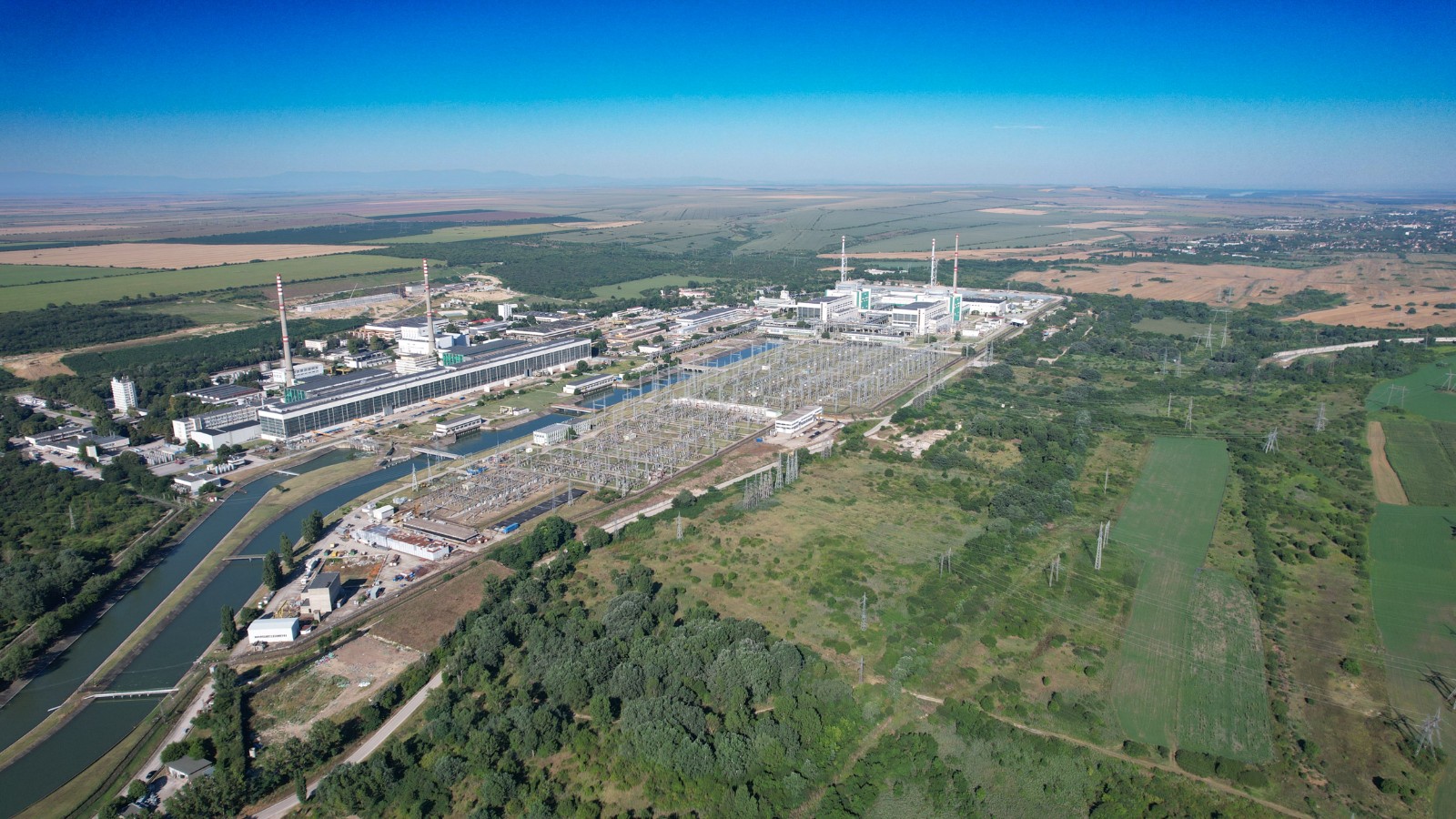
Unit 5 of Bulgaria's Kozloduy NPP Raises Power Output to 950 MW
At 10:00 on August 31, 2026, Unit 5 of Bulgaria's Kozloduy NPP (Kozloduy Nuclear Power Plant) began a phased increase in power output as scheduled. By 17:00 that day, the unit's power output had risen to 950 MW. In the preceding days, the Danube River water level in Bulgaria had recovered, and the plant proceeded accordingly to resume normal unit operation. Kozloduy NPP stated that the operating team continues to carry out relevant work to ensure the safe and reliable operation of the nuclear unit. In response to changes in river water levels, the plant continuously monitors the Danube River water level and maintains communication with the Danube Research and Maintenance Executive Agency to promptly track water level trends. At the same time, the plant strictly implements long-term low-water emergency procedures, conducts continuous monitoring of hydraulic structures in the technical water supply area, and takes necessary measures to ensure the effective operation of relevant facilities.
2026-09-01

GE HealthCare's Photonova Spectra Photon-Counting CT Receives CE Mark, to Be Commercialized in Countries Recognizing CE Marking
On August 31, GE HealthCare announced that its advanced photon-counting computed tomography (PCCT) system, Photonova Spectra, has received CE marking. The system utilizes GE HealthCare's proprietary Deep Silicon™ detector technology. This certification will expand the system's availability in countries and regions that recognize the CE mark and pave the way for its clinical use. According to reports, Photonova Spectra is designed to address the growing patient volumes and increasing diagnostic complexity faced by healthcare institutions today, aiming to provide clinicians with clearer and more timely imaging information. Leveraging deep silicon detector technology, the system can acquire spectral and spatial imaging information in each scan...
2026-09-01

U.S. Laboratory and Company Collaborate to Advance TRISO Thorium Fuel Development
Lawrence Livermore National Laboratory (LLNL) in the United States is collaborating with micro nuclear reactor startup AMPERA to advance next-generation reactor fuel development using novel metal particle manufacturing technology. The collaboration focuses on tristructural isotropic (TRISO) coated particle fuel, aiming to provide more durable fuel solutions for advanced reactors operating at higher temperatures and with longer service lifetimes. Small modular nuclear fission reactors are viewed as a distributed energy option deployable in remote areas, military installations, and industrial sites. Compared with traditional light-water reactors, some advanced reactors...
2026-09-01
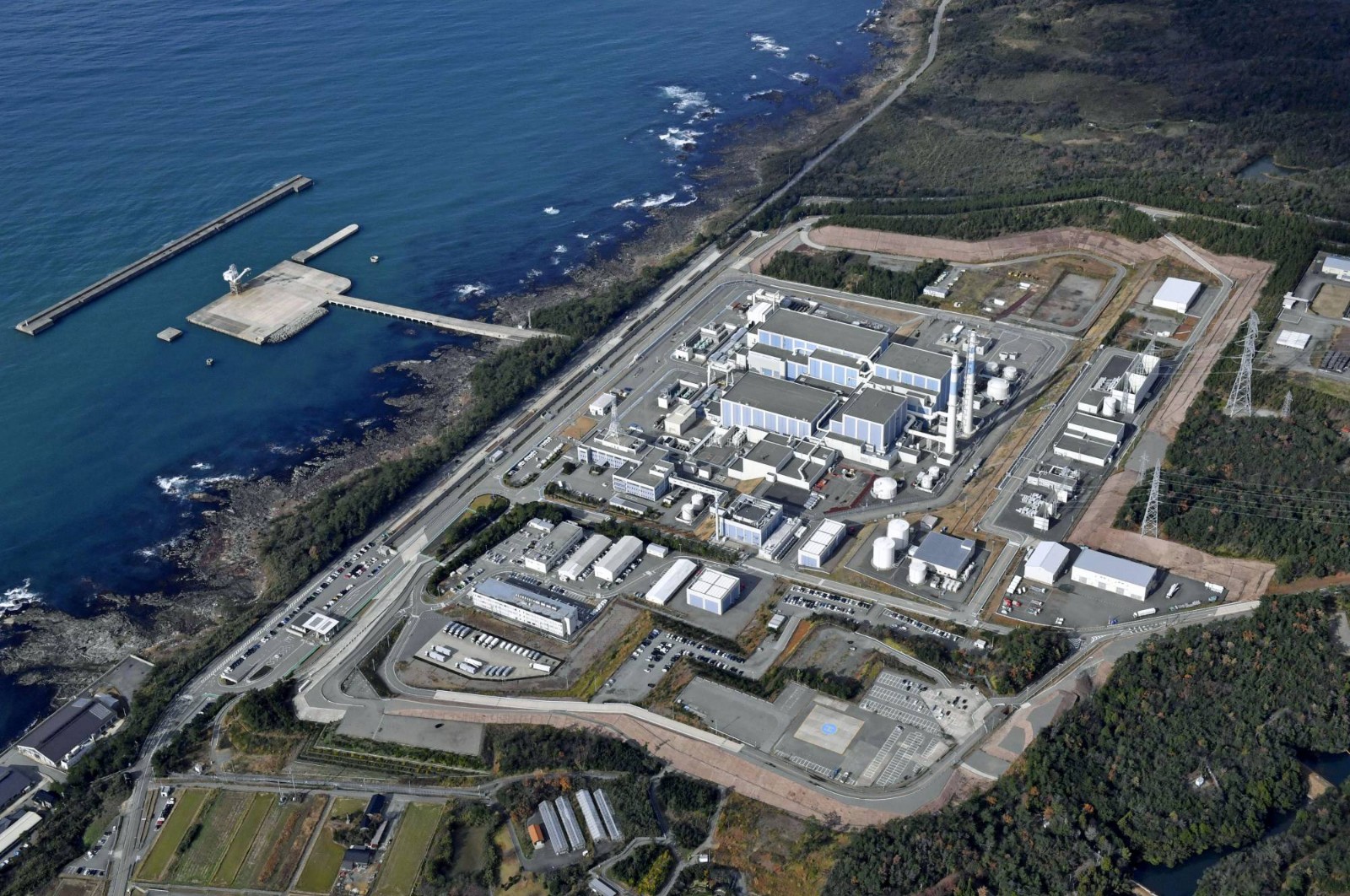
Hokuriku Electric Power Submits Revised Nuclear Disaster Prevention Business Plan for Shika Nuclear Power Station
Hokuriku Electric Power Company announced on August 31 that it has submitted revisions to the "Nuclear Operator Disaster Prevention Business Plan" for the Shika Nuclear Power Station to the Prime Minister of Japan and the Nuclear Regulation Authority for filing. The plan is formulated under Japan's Act on Special Measures Concerning Nuclear Emergency Preparedness, and primarily stipulates the operations required of nuclear power stations in nuclear disaster prevention, emergency response, post-nuclear-disaster response, as well as preventing the occurrence and escalation of nuclear disasters and promoting recovery efforts. Hokuriku Electric Power stated that consultations with Ishikawa Prefecture, Shika Town, and Toyama Prefecture have been completed for this revision. Under relevant Japanese laws and regulations, nuclear power...
2026-09-01
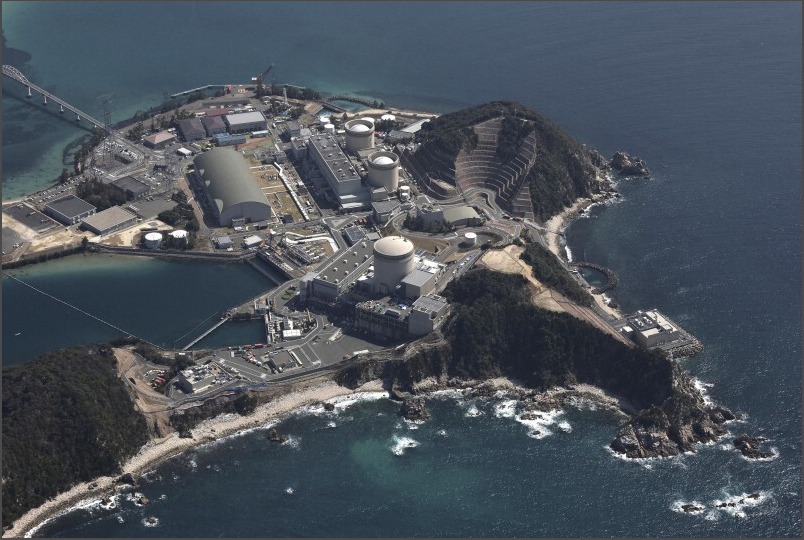
Japan's Mihama Nuclear Power Station Unit 3 Plans Grid Connection on September 15
Kansai Electric Power announced on September 1, 2026, that work related to the periodic inspection of Unit 3 at Japan's Mihama Nuclear Power Station is progressing as planned. Based on the progress of the inspection and the status of corrective measures for the steam leakage issue in the high-pressure turbine, the unit is scheduled to be connected to the grid on September 15. Unit 3 of Mihama Nuclear Power Station is a pressurized water reactor unit with a rated electrical output of 826 MW and a rated thermal output of 2,440 MW. On May 8 this year, the unit underwent a manual reactor shutdown after steam leakage was confirmed in the high-pressure turbine. From June 16, the unit entered its 29th periodic inspection. Kansai Electric Power stated that, in response to the steam leakage in the high-pressure turbine, the upper cylinder sealing cover has been replaced based on the results of the cause investigation, and multiple measures such as the development of relevant guidelines are being advanced.
2026-09-01