
Search Results
Keyword:licensing
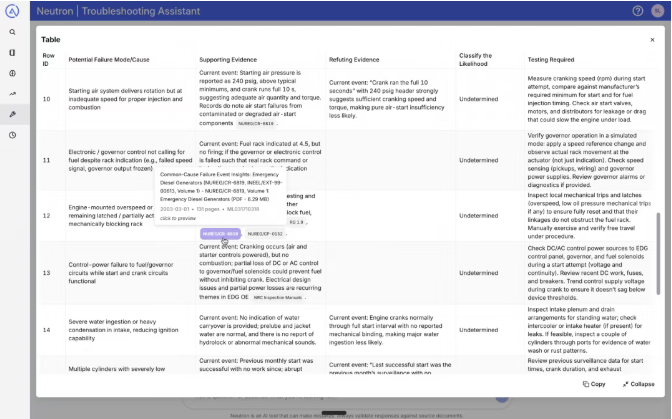
U.S. Nuclear Industry Virtual Assistant NIVA Officially Launched in North America
Recently, the nuclear industry virtual assistant NIVA has completed its testing phase and officially entered production use at nuclear power plants across North America. The project was jointly developed by the Electric Power Research Institute (EPRI), the Institute of Nuclear Power Operations (INPO), and the Nuclear Energy Institute (NEI). Since its debut in August 2026, leveraging decades of technical, regulatory, and operational experience, it has provided utilities with tools such as a knowledge assistant and an operating experience assistant, aimed at accelerating licensing and maintenance work and helping new personnel quickly acquire...
2026-11-23

South Korea's Nuclear Safety and Security Commission Establishes Pre-Review System for SMRs to Accelerate Licensing
Recently, South Korea's Nuclear Safety and Security Commission (NSSC) officially launched a preliminary review system for small modular reactors (SMRs). This pre-licensing channel, established as new legislation, stems from the previously passed amendment to the Nuclear Safety Act and is designed to build a procedural bridge between early-stage reactor design and the highly rigorous formal licensing stage, thereby comprehensively streamlining the commercialization development process for SMRs. The preliminary review will be conducted before the submission of a formal construction permit application, focusing on assessing whether various design concepts and technical blueprints can pass final safety justification, and identifying potential technical blind spots at an early stage. By...
2026-11-14
US NRC Details the Bridge Between DOE Authorization and Commercial Licensing
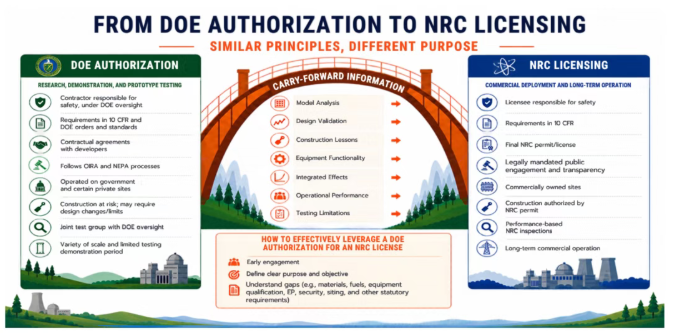
Recently, the Advanced Reactor Office of the U.S. Nuclear Regulatory Commission (NRC) officially launched a seminar series titled "License to Launch." The first seminar focused on "Building the Bridge: From DOE Authorization to NRC Licensing," highlighting how design and operational data from reactors authorized by the U.S. Department of Energy (DOE) or the Department of Defense can be applied through a streamlined pathway to the NRC's commercial licensing process. Previously, the NRC finalized the relevant rule in October, allowing applicants with designs authorized by federal departments to use the streamlined channel, with the rule scheduled to take effect on November 25. The core topic of the seminar centered on a 158-page white paper written by NRC staff titled "Leveraging Information from Previously Licensed Facilities."
2026-11-13

U.S. House of Representatives Passes Amendment to Spent Fuel Reprocessing Licensing
Recently, the U.S. House of Representatives overwhelmingly passed, by a vote of 397 to 2, the revised text of H.R. 3978, the Nuclear Fuel Recycling Act (Nuclear REFUEL Act). The bill proposes major adjustments to the definition of production facility in the U.S. Atomic Energy Act of 1954, thereby clarifying the regulatory classification of specific spent fuel reprocessing equipment and devices. According to the revised text, whether a process separates plutonium from other transuranic elements constitutes the core condition for classification. The proposed provisions explicitly stipulate that if the relevant equipment or devices are capable of reprocessing spent fuel and the process they employ...
2026-11-10

Floating Molten Salt Reactor Approaches Licensing Readiness: What New Issues Must Be Addressed When Putting Nuclear Power on a Barge
Coastal industrial parks need stable power, but onshore land, cooling conditions, and construction resources may not be easy to coordinate. Placing power generation facilities on floating platforms and having them centrally manufactured by shipyards has therefore become a deployment approach explored by some nuclear companies. It may change the construction location, but it will not detach the reactor from site, regulatory, and long-term operational responsibilities. Information published on November 3 shows that Denmark's Saltfoss is preparing to engage in pre-application communication with the U.S. Nuclear Regulatory Commission and plans to submit a regulatory communication plan in the first quarter of 2027. The company hopes to establish a licensing pathway for offshore molten salt reactor platforms. What has been disclosed so far is preparatory work and corporate goals, and should not be understood as having obtained...
2026-11-07

US NRC Finalizes New Rule to Speed Up Nuclear Licensing Through Contested Hearing Reform
Recently, according to relevant foreign media reports, the U.S. Nuclear Regulatory Commission (NRC) has formally completed the formulation of a new rule restructuring the contested hearing process in licensing applications for reactors and other nuclear facilities, aiming to significantly compress administrative adjudication timelines and support the rapid deployment and expansion of advanced nuclear technologies. It is reported that in the past, NRC adjudication of contested matters typically lasted for years, causing delays in nuclear power project approvals. The new rule introduces three hearing tracks—Standard, Focused, and Expedited—based on the complexity of applications, compressing the adjudication period for the simplest cases to approximately 6 months, with the vast majority...
2026-11-03
U.S. NRC Issues New Rule Allowing Use of Demonstration Data to Accelerate Commercial Licensing
Recently, the U.S. Nuclear Regulatory Commission (NRC) finalized a major new regulatory rule that explicitly allows applicants for commercial nuclear reactors to cite analyses, test data, and operating experience from reactor demonstration projects previously authorized by the U.S. Department of Energy (DOE) or the U.S. Department of Defense (DOD) as technical support basis for commercial licensing applications. It is reported that the rule implements Executive Order 14300 and amends relevant provisions of Title 10 of the Code of Federal Regulations (10 CFR) Part 50 (adding new Section 50.43(f)) and Part 53....
2026-10-27
Canada's Terrestrial Energy Plans to Split IMSR Licensing to Accelerate Conventional Facility Construction and Financing
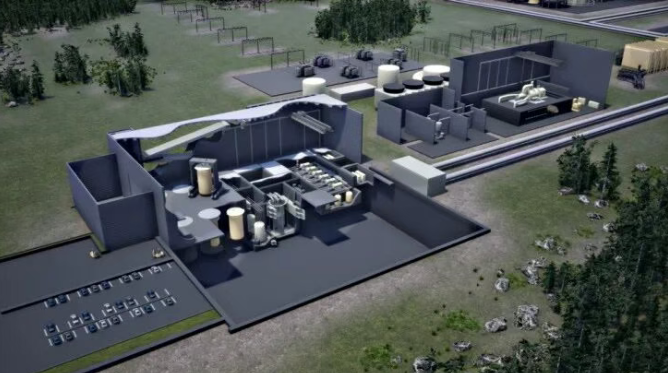
Recently, Canadian nuclear innovation company Terrestrial Energy announced that it has submitted a key topical report to the U.S. Nuclear Regulatory Commission (NRC). The company plans to license its Integral Molten Salt Reactor (IMSR) power plant as two separate parts—the nuclear facility and the Thermal and Electric Facility (TEF)—allowing the non-nuclear portion to be built and operated as a conventional industrial project before obtaining nuclear licensing. It is understood that the IMSR, as a Generation IV small modular reactor, uses molten salt as both fuel and coolant, and can directly supply heat to industrial facilities or be used for power generation. If the topical report is approved, the site-customizable TEF facilities will not be classified as nuclear facilities, thereby allowing developers to...
2026-10-22
Terrestrial Energy Submits Graphite Topical Report to U.S. Nuclear Regulatory Commission, Advancing Integrated Molten Salt Reactor Licensing Process
Terrestrial Energy, a leading company in fourth-generation molten salt reactor technology, announced on September 10 that it has submitted the Graphite Topical Report to the U.S. Nuclear Regulatory Commission (NRC). The submission of this report is intended to establish a solid regulatory certification basis for the application of nuclear-grade graphite—a core component of the IMSR core unit—in commercial power plants, marking an important step in the company's commercialization process. The IMSR reactor is a graphite-moderated molten salt reactor. Although graphite has a relatively long history of application in the nuclear power field, regulators require independent performance verification for each specific reactor design to ensure safety and reliability. This submission...
2026-09-16
Sweden's Blykalla Partners with Microsoft to Use AI to Advance Licensing Review of Lead-Cooled Advanced Nuclear Reactor
Swedish advanced nuclear technology developer Blykalla recently announced a partnership with Microsoft to apply artificial intelligence (AI) technology to one of the most challenging bottlenecks in the nuclear power industry——project licensing and regulatory review. Blykalla has begun deploying Microsoft's GenAI for Energy Permitting Solution Accelerator and Agentic AI tools in its regulatory business processes, aiming to significantly shorten the licensing approval cycle for its Swedish Advanced Lead-cooled Reactor (SEALER) in Sweden and the United States. Microsoft's solution demonstrates how generative AI and AI agent...
2026-09-16

US-based Terrestrial Energy Submits IMSR Graphite Topical Report to Advance Molten Salt Reactor Licensing Preparation
US fourth-generation molten salt nuclear power plant developer Terrestrial Energy Inc. (NASDAQ: IMSR) recently announced that it has submitted a graphite topical report to the US Nuclear Regulatory Commission (NRC). The report is intended to provide a regulatory basis for the use of graphite, a key core component of the Integral Molten Salt Reactor (IMSR), in commercial power plant operation. Terrestrial Energy CEO Simon Irish stated that this is the second of at least three IMSR topical reports the company plans to submit to the NRC in 2026, and is part of its structured regulatory engagement plan, ultimately...
2026-09-11
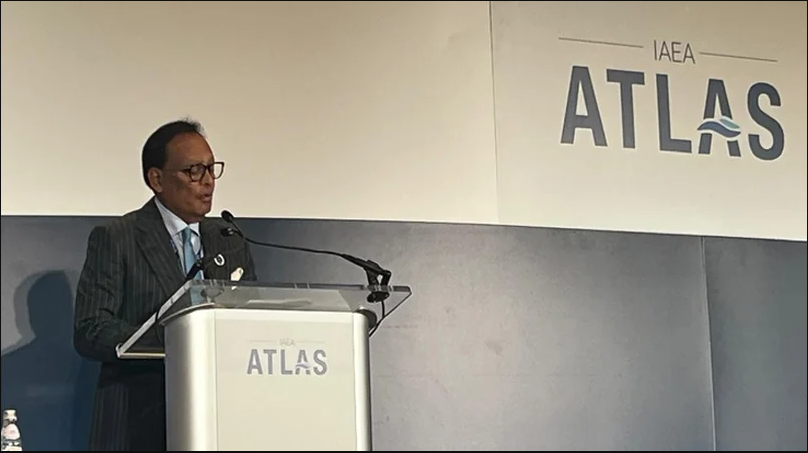
Bangladesh Highlights Potential of Nuclear Technology for Maritime Applications at ATLAS Ministerial Meeting
On August 26, local time, Bangladesh's Minister of Science and Technology, Faqrul Mahbub Anam, stated at the 2026 Ministerial Launch of the Licensing of Atomic Technology for Marine Applications (ATLAS) held in Washington, D.C., USA, that Bangladesh is committed to responsible participation in the global nuclear dialogue and believes that emerging nuclear technologies hold significant potential in the field of maritime applications. Anam stated that in the face of challenges such as climate change, energy security, and growing energy demand, the importance of nuclear energy in reducing emissions and ensuring reliable energy supply is rising. Advanced nuclear technologies, including Small Modular Reactors (SMRs), can provide stable low-carbon electricity and support economic growth, poverty reduction...
2026-08-27
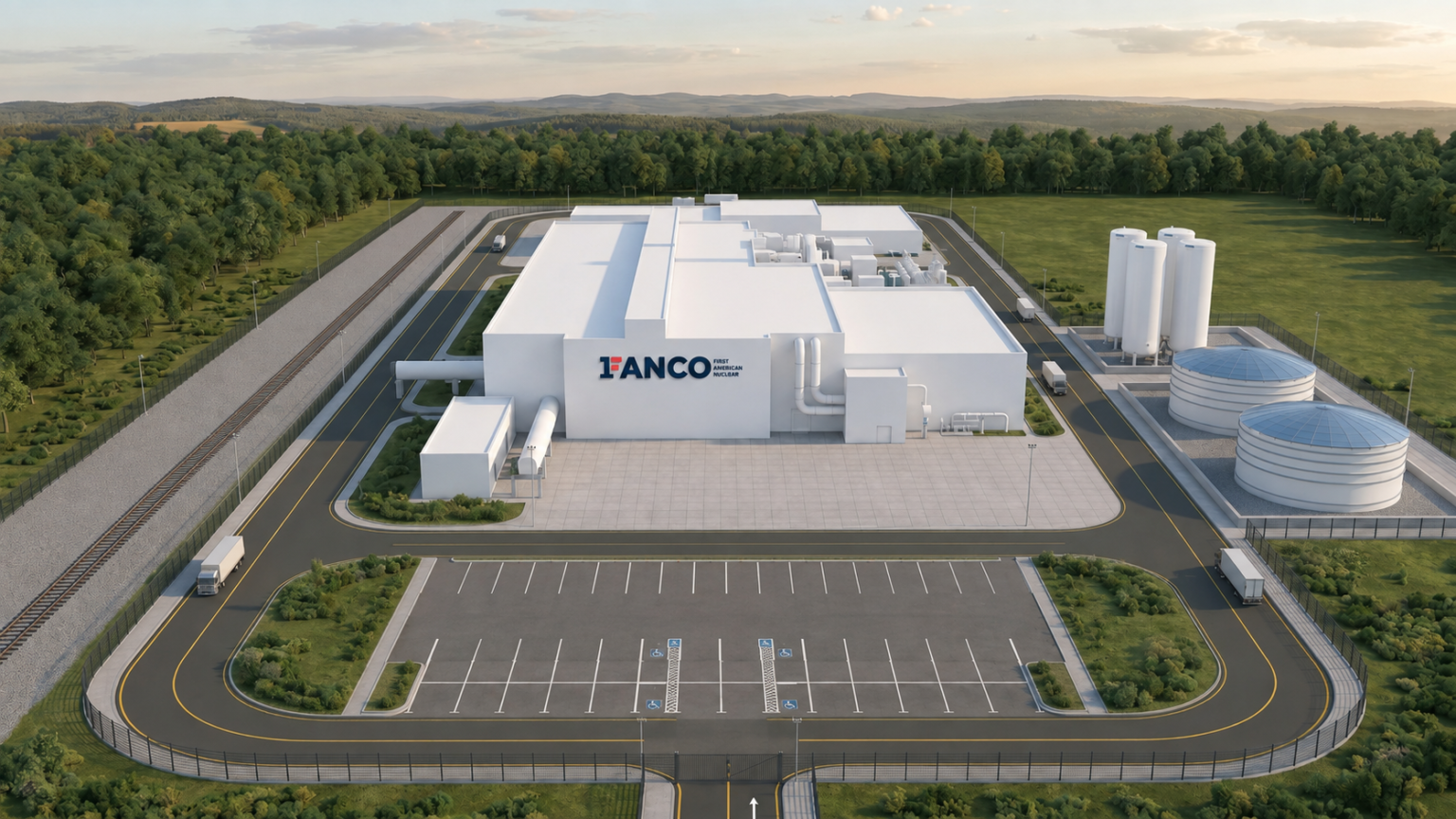
First American Nuclear Company's Regulatory Engagement Plan for Proposed HALEU Fuel Facility Accepted for Docketing by NRC
First American Nuclear Co. (FANCO) announced on August 17 that its regulatory engagement plan for the proposed Class II high-assay low-enriched uranium (HALEU) conversion and fuel fabrication facility has been accepted for docketing by the U.S. Nuclear Regulatory Commission (NRC). The facility will serve the company's EAGL-1 small modular reactor project currently under development. According to the company's disclosure, the NRC ADAMS accession number for the letter of intent is ML26222A181, and the NRC ADAMS accession number for the regulatory engagement plan is ML26222A177. This submission advances the pre-application regulatory engagement between FANCO and the NRC regarding the proposed ceramic fuel fabrication facility. The facility is planned to support the EAGL-1 lead-bismuth...
2026-08-18
NRC to Hold Online Public Meeting on Proposed Medical Use Licensing Rule
The U.S. Nuclear Regulatory Commission recently announced it will hold an online public meeting from 1:00 p.m. to 2:30 p.m. Eastern Time on August 20 to introduce the proposed rule aimed at reducing barriers to medical use licensing. The proposed rule was published in the Federal Register on July 27. During the meeting, NRC staff will outline the key provisions of the rule and related implementation activities, and answer questions from the public. The meeting is open to the public and will focus on regulatory processes related to medical use licensing, with the goal of explaining and discussing the proposed rule and subsequent implementation arrangements...
2026-08-16
U.S. NRC to Debut Modernized Hearing Process in Advanced Reactor Licensing Review for the First Time
The U.S. Nuclear Regulatory Commission (NRC) will hold a public hearing on August 13 in Oak Ridge, Tennessee, to consider the Tennessee Valley Authority's (TVA) application to build a small modular reactor at the Clinch River site. This will mark the first time the NRC applies its modernized mandatory hearing framework in an advanced reactor licensing review. According to the NRC, the new hearing process is designed to give the public earlier insight into the agency's review of the project's safety and environmental impacts, while improving the transparency, predictability, and efficiency of licensing reviews. As part of its licensing modernization efforts, the NRC currently aims to complete construction permit-related decisions within 18 months. TVA plans to...
2026-08-07