
Search Results
Keyword:nuclear
Russia Delivers First Steam Generator for MBIR Fast Neutron Research Reactor
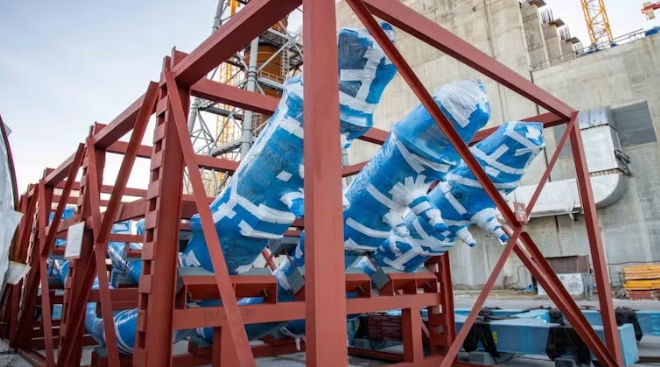
Recently, the Podolsk Machine-Building Plant (ZiO-Podolsk), a subsidiary of Russia's State Atomic Energy Corporation (Rosatom), has officially completed the manufacture and delivery of the first of two steam generators for the Multipurpose Fast Neutron Research Reactor (MBIR). The unit is currently under intensive construction at the Research Institute of Atomic Reactors (NIIAR) in Dimitrovgrad, Ulyanovsk Oblast. It is reported that as the world's largest 150 MW sodium-cooled fast neutron research reactor of its kind, the MBIR employs a unique three-circuit heat transfer scheme and a counter-flow steam generator design, with its technology continuing and optimizing the experience from the BOR-60 reactor, which has been operating smoothly for decades. Each unit weighs 9 tonnes...
2026-11-04

America's First "Large Reactor in a Chemical Plant" Clears the Hurdle: X-energy Xe-100 Ushers in the Conclusion of Safety Review and a Key Springboard to Commercialization
In the global race to industrialize advanced nuclear energy technologies, the high-temperature gas-cooled reactor is reaching a milestone. In late October 2026, the U.S. Nuclear Regulatory Commission (NRC) formally issued the Final Safety Evaluation Report (FSER) for the construction permit application of the Long Mott Generating Station, proposed to be built at Dow Chemical's Seadrift site along the Texas Gulf Coast. This means that the Xe-100 high-temperature gas-cooled reactor, developed by X-energy with an installed capacity of 320 megawatts electric, has successfully passed the most central safety examination at the U.S. nuclear regulatory level, clearing...
2026-11-03

US NRC Finalizes New Rule to Speed Up Nuclear Licensing Through Contested Hearing Reform
Recently, according to relevant foreign media reports, the U.S. Nuclear Regulatory Commission (NRC) has formally completed the formulation of a new rule restructuring the contested hearing process in licensing applications for reactors and other nuclear facilities, aiming to significantly compress administrative adjudication timelines and support the rapid deployment and expansion of advanced nuclear technologies. It is reported that in the past, NRC adjudication of contested matters typically lasted for years, causing delays in nuclear power project approvals. The new rule introduces three hearing tracks—Standard, Focused, and Expedited—based on the complexity of applications, compressing the adjudication period for the simplest cases to approximately 6 months, with the vast majority...
2026-11-03

US Regulator Completes Safety Review of X-energy's Microreactor
Recently, the U.S. Nuclear Regulatory Commission (NRC) formally completed its final Safety Evaluation Report (SER) for the first deployment in Texas of X-energy's Xe-100 high-temperature gas-cooled reactor (HTGR). It is reported that the project is planned for construction at the Longtom nuclear power plant site in Texas, located at the Seadrift operations center owned by chemical giant Dow. X-energy, which is backed by investment from technology and retail giant Amazon, stated that once completed, the plant will become the first grid-scale advanced modular nuclear reactor deployed within a large industrial facility in U.S. history. The U.S. Nuclear Regulatory Commission, in its final safety...
2026-11-03

Russia and Uganda Sign Roadmap to Advance Nuclear Power Construction
Recently, according to relevant foreign media reports, Rosatom of Russia and Uganda's Ministry of Energy and Mineral Development signed a roadmap for cooperation in the peaceful uses of nuclear energy in Moscow. The two sides will establish a joint working group to assess Uganda's nuclear infrastructure and advance negotiations on an engineering survey contract for the Nakasongola nuclear power plant site. It is reported that the agreement was jointly signed by Nikolay Spassky, Deputy Director General of Rosatom, and Irene Batebe, Permanent Secretary of Uganda's Ministry of Energy. Alexey Likhach...
2026-11-03

Unit 2 of Phase I of the Sanao Nuclear Power Project Completes First Fuel Loading
Recently, Unit 2 of Phase I of CGN's Zhejiang Sanao Nuclear Power Project successfully completed its first nuclear fuel loading, marking the unit's official transition from the engineering installation phase to the new stage of commissioning with nuclear fuel in the main systems, and representing a key step toward the full completion and commercial operation of Phase I. It is reported that the fuel loading operation adopted a semi-automatic refueling system, precisely transferring 177 nuclear fuel assemblies sequentially into the reactor core. Since the commencement of nuclear island installation, the Sanao project department of China Nuclear Industry 23 Construction Co., Ltd., the contractor, has strictly followed the principles of "safety first, quality first, pursuit of excellence," and completed a series of major prerequisite tests—including nuclear circuit flushing and cold and hot performance tests—to a high standard...
2026-11-03
Russia's InterPolyaris Company Successfully Develops New Filter for Nuclear-Powered Icebreakers
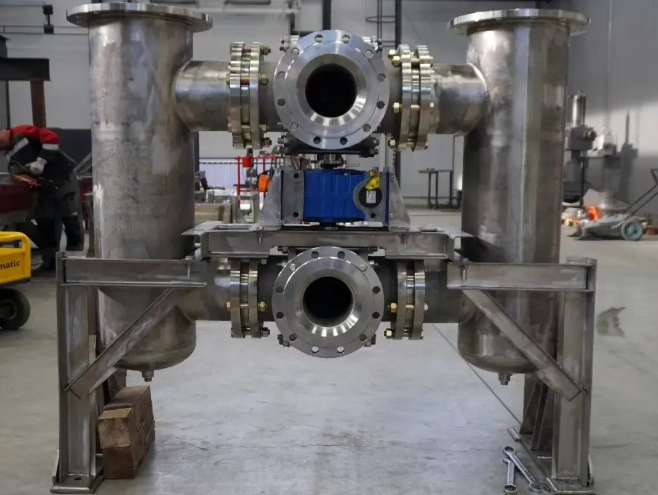
Recently, the International Polyaris (InterPolyaris) company, located in Novovoronezh, successfully completed the manufacture and test preparation of a new type of mechanical filter specially designed for nuclear energy facilities and nuclear-powered icebreakers. It is reported that the new mechanical filter adopts a compact two-stage sealed architecture and is mainly deployed at the condensate and feedwater system nodes of turbine units, as well as in the makeup water and water treatment systems of reactor installations, for efficiently removing mechanical impurities from process media and ensuring high-standard water quality cleanliness requirements for nuclear power systems. The equipment consists of two independent sealed housings with built-in metal filter elements, connected in the middle by upper and lower three-way ball valves. By adjusting the upper valve...
2026-11-03

Xeonova Pulsed Field-Reversed Configuration Fusion Validation Device X-3 Begins Installation
Recently, Xeonova, a fusion startup established under the authority of the University of Science and Technology of China, has officially entered the on-site construction and equipment installation phase for its self-developed X-series pulsed compression Field-Reversed Configuration (FRC) high-parameter validation device XEONOVA-3 (X-3). It is noted that the Field-Reversed Configuration (FRC) possesses unique advantages such as high beta, compact structure, and low cost, and is becoming an important development direction in the international controlled nuclear fusion field. Professor Sun Xuan, founder of Xeonova, pointed out that the X-3 device adopts the overall technical route of "high-flux FRC formation + staged wall compression + magnetic compression implosion," aiming to validate the formation, compression, and high-repetition-rate pulsed operation capabilities of high-parameter FRCs...
2026-11-03
MEPhI Develops Non-Destructive Testing Device for Microfuel of High-Temperature Gas-Cooled Reactors
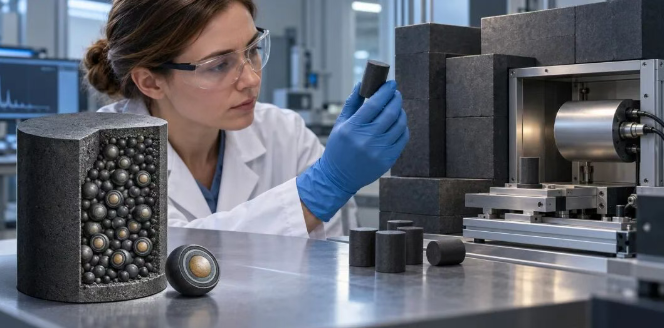
Recently, the research team led by Tatyana Borisovna Aleyeva, Associate Professor of the Department of Theoretical and Experimental Physics of Nuclear Reactors at the National Research Nuclear University MEPhI (Moscow Engineering Physics Institute), announced that it is about to complete the development of an experimental device for non-destructive testing of uranium content in fuel compacts for innovative high-temperature gas-cooled reactors (HTGR). It is reported that the helium temperature at the core outlet of the 200 MW HTGR under design can reach 850°C, aiming to provide high-potential heat for large-scale nuclear hydrogen production process stations (AETS). Its fuel uses graphite cylindrical compacts with a height of 5 cm and a diameter of 12.5 mm, each...
2026-11-03
U.S. Department of Energy Allocates $5 Billion to Upgrade Illinois Nuclear Power Plants
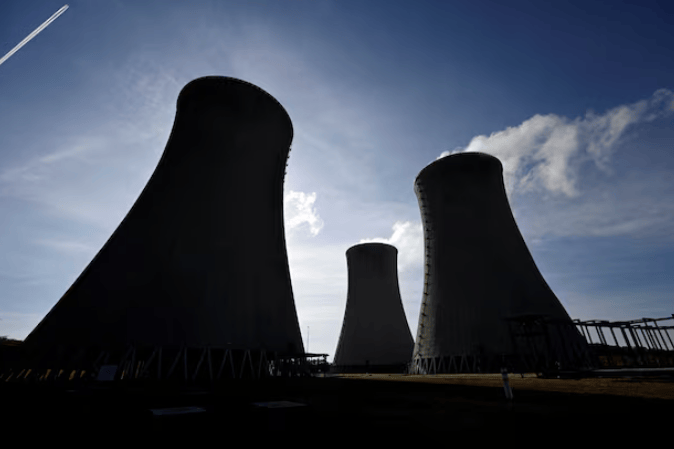
Recently, the U.S. Department of Energy (DOE) announced the provision of $5 billion in federal earmarked funding, focused on equipment modernization and power uprates at 8 nuclear power plants in Illinois, Maryland, and Pennsylvania. It is reported that the funded projects cover six clean energy centers in Illinois—Braidwood, Byron, Clinton, Dresden, LaSalle, and Quad Cities—as well as the Calvert Cliffs and Limerick nuclear power plants in other states. Among them, the 11 reactors within Illinois will receive...
2026-11-02
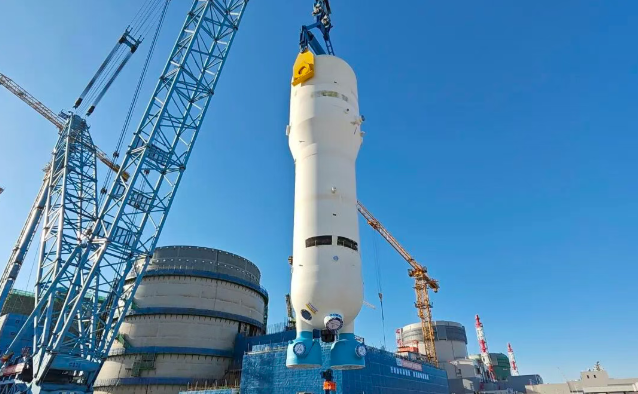
First Steam Generator of Xudapu NPP Unit 2 Hoisted into Place
Recently, Xudapu Nuclear Power Plant Unit 2 reached a major engineering milestone as its first steam generator was successfully hoisted into place, with safety and quality fully controlled throughout the entire process. The precise positioning of this key equipment marks that the installation of the primary system of the unit's primary loop has officially entered a new stage. It is reported that the steam generator, as one of the core main equipment items in the nuclear reactor building, is a key hub connecting the primary loop and the secondary loop of the nuclear island, mainly responsible for absorbing core heat and producing dry saturated steam to drive the turbine generator. A single steam generator of Xudapu Nuclear Power Plant Units 1 and 2 is approximately 22 meters long, about 5 meters in outer diameter, and weighs about 600 tonnes, making it an extra-large heavy nuclear power component. To ensure high...
2026-11-02
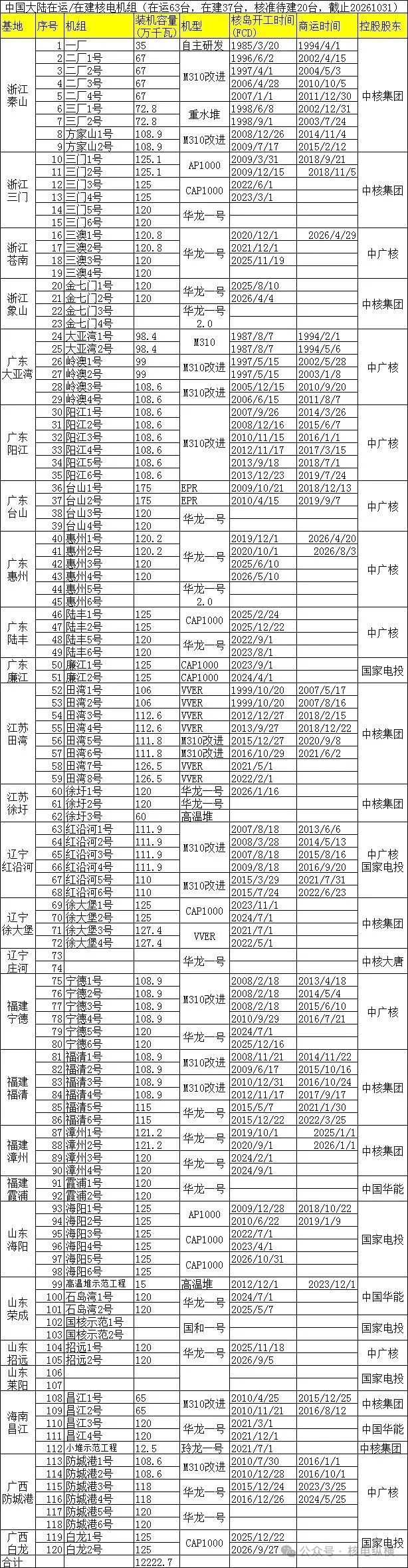
The scale of nuclear power units in operation and under construction in Chinese mainland continues to expand
Recently, the latest statistics show that the construction and operation scale of nuclear power units in Chinese mainland continues to maintain a globally leading momentum. As of October 31, 2026, Chinese mainland had 63 nuclear power units in operation, 37 units under construction, and another 20 units approved and awaiting construction. It is reported that this massive nuclear power engineering system fully covers third-generation pressurized water reactors with completely independent intellectual property rights as well as cutting-edge advanced reactor demonstration projects. With the batch construction and efficient and safe operation of advanced units such as Hualong One and Guohe One, China's nuclear power industry is playing an increasingly central supporting...
2026-11-02

CNNC Atom High-Tech Sodium Iodide Capsules Supplied Directly to Macao for the First Time
Recently, sodium iodide [¹³¹I] capsules independently developed and produced by Atom High-Tech Co., Ltd., a subsidiary of China Isotope & Radiation Corporation under CNNC, successfully arrived at clinical frontlines in Macao, achieving the first stable supply of domestically produced sodium iodide [¹³¹I] capsules to Macao and completely filling the previous gap in Macao's lack of this clinical diagnostic and therapeutic service. It is understood that sodium iodide [¹³¹I] capsules are core radiopharmaceuticals widely used clinically for the diagnosis and treatment of thyroid diseases. Previously, Atom High-Tech had successfully achieved routine supply of short-half-life radiopharmaceuticals to Macao; the successful launch of this new product will strongly support Macao medical institutions in carrying out systematic radionuclide therapy and effectively reduce the burden of cross-border medical treatment on local patients.
2026-11-02
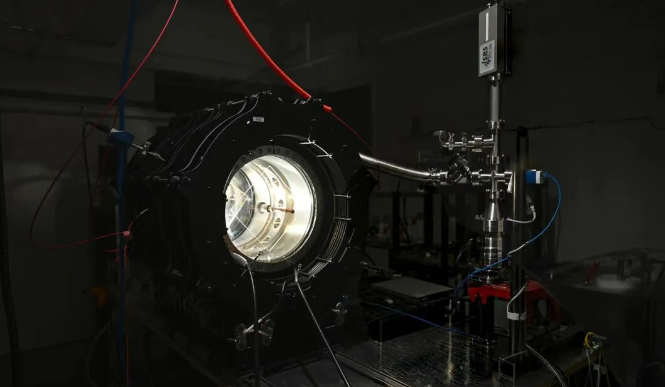
Startup "Marathon Fusion" Announces Transmutation of Mercury into Gold Using Thermonuclear Fusion Neutrons
Recently, San Francisco-based startup Marathon Fusion announced that it has successfully used high-energy neutrons produced by deuterium-tritium (D-T) thermonuclear fusion reactions to transmute the element mercury into gold, claiming that its yield reached ten times the previously recorded level at CERN. It is reported that the technology is based on high-energy neutrons released by D-T fusion reactions striking mercury-198 nuclei, stripping one neutron to convert them into the radioactive isotope mercury-197, which subsequently decays to ultimately form gold-197, the only stable isotope of gold. Marathon Fusion published gamma-ray spectroscopy as characteristic evidence for the presence of mercury-197; however, the specific mass of gold produced remains at...
2026-11-02
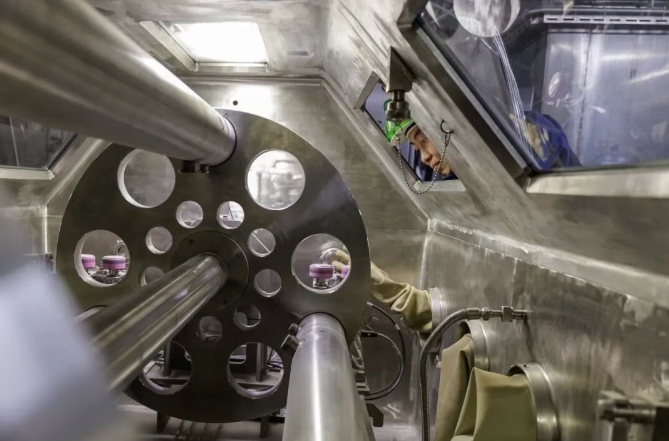
Russia proposes optical laser monitoring method for spent nuclear fuel reprocessing
Recently, a research team from Sechenov University in Russia, together with the Proryv Project and the All-Russian Scientific Research Institute of Inorganic Materials (VNIINM), published latest results in the journal Applied Spectroscopy, proposing a non-contact optical method for continuous monitoring of the spent nuclear fuel reprocessing process. It is reported that in the liquid-liquid extraction process of spent nuclear fuel reprocessing, traditional laboratory analysis has problems such as long sampling time and increased risk of radioactive waste. The research team introduced Raman Spectroscopy to monitor the state of extractants such as tributyl phosphate in the organic phase, measuring a median error of about 1%; meanwhile, laser-induced breakdown spectroscopy (LIBS) was used to determine the concentration of metal elements in the aqueous phase, with an average error controlled at 4%–8%, achieving near-real-time synchronous monitoring of the two-phase streams.
2026-11-02