
Search Results
Keyword:radiation detection
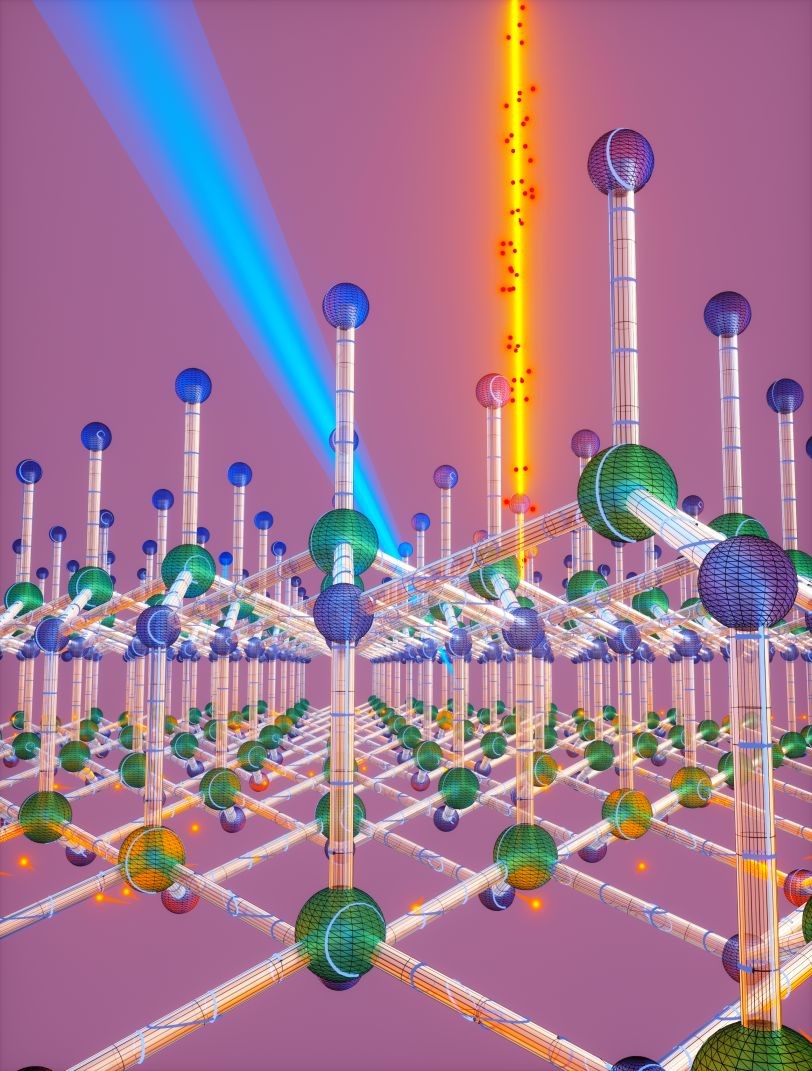
U.S. Research Team Discovers Strong Ultrafast Optical Response Induced by Ionizing Radiation, Potentially Advancing Medical Imaging and Sensing Technologies
September 3 news, Stanford University and the U.S. Department of Energy's SLAC National Accelerator Laboratory research team used ultrafast electron and laser pulses to observe a strong ultrafast optical response triggered by ionization processes in semiconductor materials. The related research has been published in Nature Photonics. The researchers believe this discovery could provide new insights for radiography and sensing technologies, and also offer experimental evidence for understanding the fundamental behavior of materials under high-energy particle interactions. Radiation detection is a key technology in particle accelerators, scientific instruments, medical imaging, and security screening equipment. Existing detectors typically face a trade-off between signal strength and response speed: processes with stronger signals tend to be slower, while those with faster response may produce weaker signals...
2026-09-08

Russian Far Eastern Federal University Develops Ultrafast Ceramic Scintillators for Rapid Ionizing Radiation Detection
On August 21, 2026, scientists at the Russian Far Eastern Federal University, with support from the Russian Science Foundation, are developing ceramic materials for ultrafast detection of ionizing radiation. The results could be used in the future for medical diagnostics, baggage and cargo security screening, radiation monitoring, and scientific equipment requiring fast, precise radiation detection. The project, titled "Ultrafast Ceramic Scintillators for Ionizing Radiation Detection," is led by Anastasia Vonovskikh, a researcher at the Research and Education Center for Advanced Ceramic Materials, Department of Industrial Safety, Polytechnic Institute, Far Eastern Federal University. Scintillators are a class of materials that emit light when exposed to ionizing radiation. Detectors record these light signals to determine radiation intensity and energy. Currently, most related equipment uses single-crystal scintillators, but their production typically requires significant energy and resource inputs. The Far Eastern Federal University team proposes special ceramic materials as an alternative, aiming to improve detection speed and efficiency, making them more suitable for detecting trace amounts of radiation.
2026-08-25
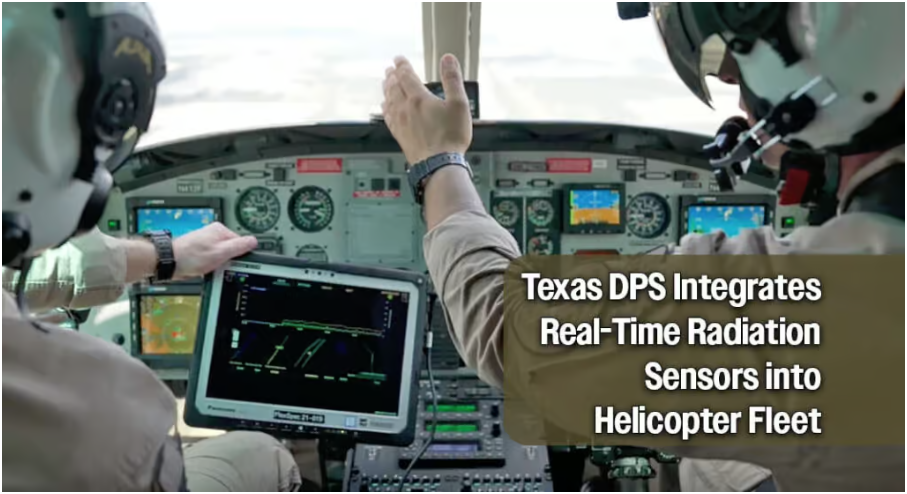
Texas Department of Public Safety Advances Airborne Radiation Detection Capabilities
The Texas Department of Public Safety recently highlighted an airborne radiation detection capability being advanced by its Aviation Operations Division. The program integrates specialized radiation detection sensors and real-time data transmission systems onto helicopters, enabling crew members to rapidly survey large areas from the air and relay relevant information to ground personnel in a timely manner, supporting homeland security and security operations for major public events. According to reports, this capability is implemented jointly by the Aviation Operations Division and the Radiation/Nuclear Unit of the Commercial Vehicle Enforcement Division. The equipment has already been used to support security operations for major events, including FIFA-related venues in Houston and Dallas, and will continue to serve...
2026-08-23
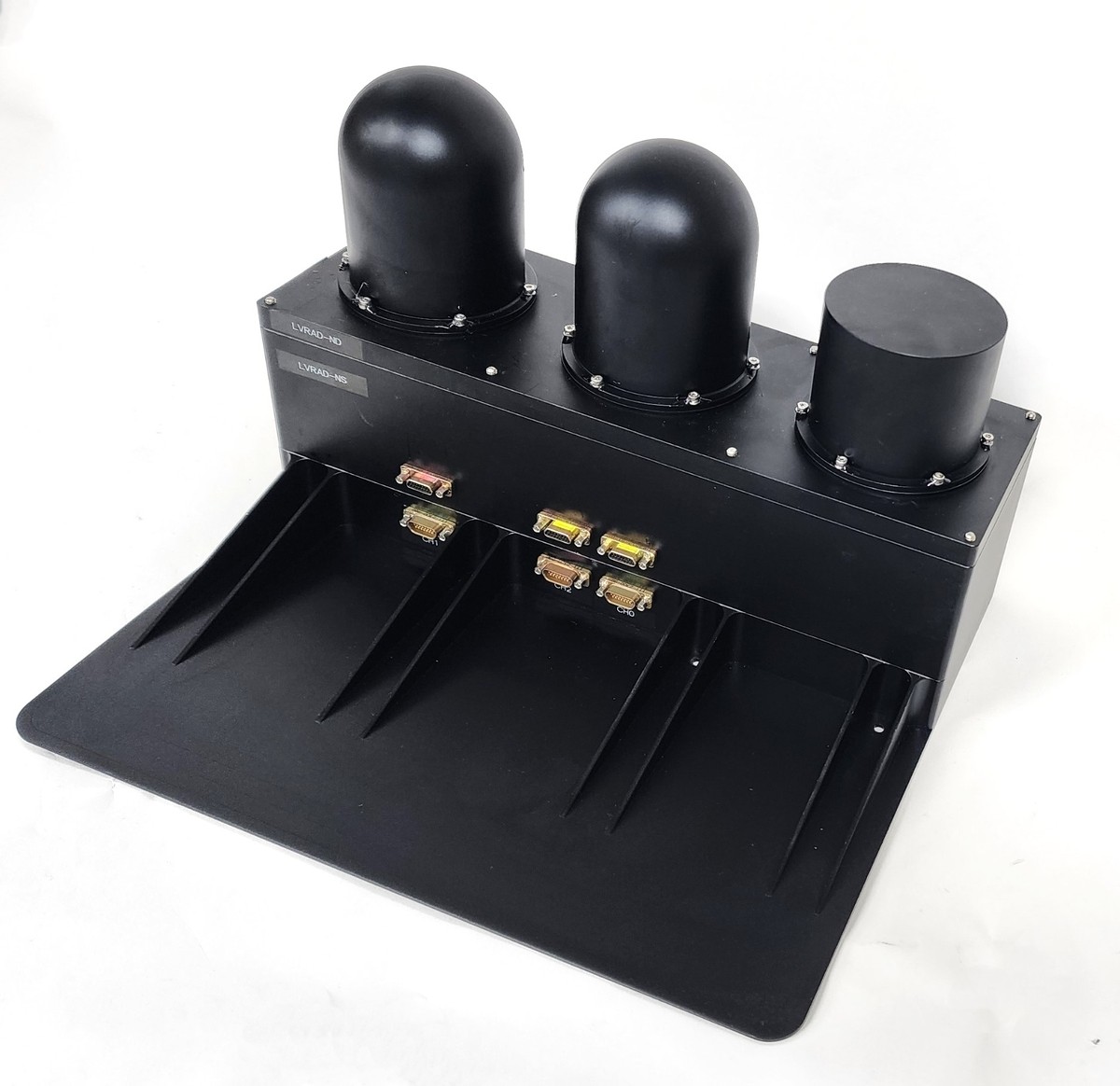
South Korea's domestically developed lunar radiation detector to travel to the Moon aboard NASA commercial lunar lander
The Korea AeroSpace Administration (KASA) announced on August 17 that the Lunar Space Radiation Detector (LVRAD), independently developed by South Korea, will be mounted on a lander under NASA's Commercial Lunar Payload Services (CLPS) program to conduct observations of the radiation environment on the lunar south pole surface. The two sides signed the relevant implementation agreement on August 14. Under the agreement, KASA plans to complete the development of the flight model of the detector by next year and deliver the equipment to the United States in accordance with the NASA lunar lander mission schedule. NASA will be responsible for integrating the Korean-developed detector onto the commercial lunar lander and supporting its operation and data transmission on the lunar surface after launch. LVRAD consists of...
2026-08-17
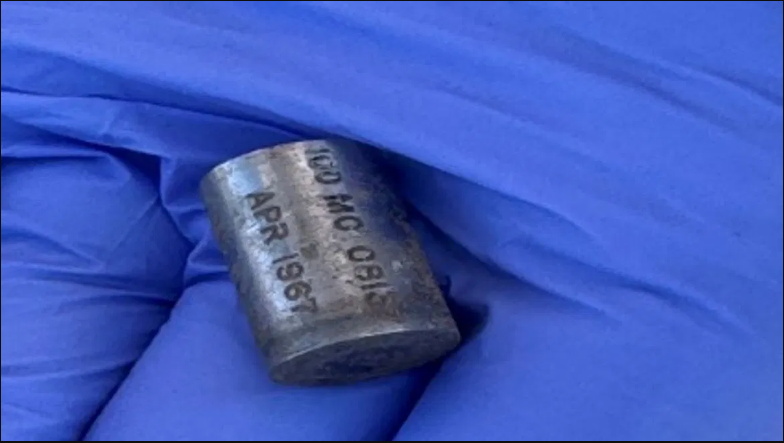
Buried Cesium-137 Sealed Source Discovered by Texas Patrol Officer Near Roadside in Midland County
According to the Texas Department of Public Safety, a corporal with the department recently discovered a buried cesium-137 sealed radioactive source with an activity of 100 millicuries during a routine patrol near a roadway in Midland County. The incident resulted in no injuries or radiation contamination, and public safety was not threatened. On July 24 local time, the corporal, assigned to the department's Radioactive/Nuclear Threat Detection Section, was patrolling near South County Road 1210 when the vehicle-mounted radiation detection system activated. He then used other detection equipment to survey the surrounding area and traced the radiation signal to an underground location. To ensure safe disposal, he requested assistance from local, state, and federal...
2026-08-02