
Search Results
Keyword:scientific research

BESIII Experiment Achieves High-Precision Measurement of Charm Meson Semileptonic Decays and First Constraint on "Scalar Current"
Recently, the BESIII international collaboration utilized the world's largest near-threshold charm meson data sample to perform a combined measurement of four semileptonic decay channels: D⁰→K⁻e⁺νₑ, D⁰→K⁻μ⁺νμ, D⁺→K̄⁰e⁺νₑ, and D⁺→K̄⁰μ⁺νμ. The research team extracted the quark mixing matrix element |Vcs| with a precision better than 0.5%, determined the form factor zero-point value f₊(0) with a precision better than 0.2%, and verified lepton universality in the above processes at the 0.5% precision level. Beyond these precise determinations of Standard Model parameters, what is particularly noteworthy is that this experiment has, for the first time...
2026-09-08

Beijing Synchrotron Radiation Facility to Resume Operations in Mid-September
The Beijing Synchrotron Radiation Facility (BSRF) User Office issued a notice on September 2 stating that the facility will conclude its summer maintenance and resume operations in mid-September 2026. The notice reminds users with experimental needs to promptly log in to the Chinese Academy of Sciences' Major Scientific and Technological Infrastructure Sharing Service Platform, or submit project proposals and beamtime reservation requests through the BSRF User Service System. The BSRF accepts project proposals and beamtime reservation requests year-round, and the specific application procedures can be found in the relevant attachments. Users encountering issues during the application or reservation process may contact the BSRF User Office or the corresponding beamline station contacts. Contact information for each beamline station has been provided along with the notice...
2026-09-03

Carbon Nanotubes Can "Remember" Their Initial Structure, Isotope Labeling Reveals Dynamic Growth Process
A study released on September 1 shows that carbon nanotubes can maintain their initial atomic structure in dynamically changing growth environments. The research team used digital isotope labeling technology to encode the elongation process of individual carbon nanotubes as sequences of different carbon isotope compositions, and read their growth history through Raman spectroscopy, thereby tracking the structural stability of nanotubes under conditions of temperature variation and catalyst evolution. The properties of carbon nanotubes are highly dependent on their atomic arrangement. The same material may exhibit metallic or semiconducting characteristics due to structural differences, so structural uniformity has always been a key issue for the large-scale application of carbon nanotubes. In floating catalyst chemical vapor deposition and other industrial production routes, catalyst particles experience constantly changing temperatures and gas compositions within the reactor and may undergo irreversible enlargement. Previously, direct evidence was lacking on whether individual carbon nanotubes could maintain their initial structure under such complex conditions.
2026-09-02
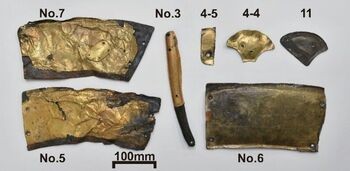
Japan's J-PARC Uses Negative Muon Non-Destructive Analysis to Reveal Gold-Rich Surface Structure of Nagoya Castle's Golden Shachi Scales
A joint research team comprising the High Energy Accelerator Research Organization (KEK), the J-PARC Center, the Nagoya Castle Research Center, and the National Museum of Nature and Science, among others, used the negative muon beam at the J-PARC Materials and Life Science Experimental Facility (MLF) to conduct non-destructive depth analysis on seven surviving scales of the golden shachi (ornamental dolphin-tiger fish) on Nagoya Castle's keep, confirming that five of the scales have a layered structure with high gold content within approximately 10 micrometers of the surface. The golden shachi on Nagoya Castle's keep was largely destroyed in the air raids of 1945, with some scales rescued and preserved to this day. Previously, researchers had examined these scales using X-ray fluorescence analysis, but the results showed that some scales with a bright golden appearance did not necessarily have a high average gold content.
2026-08-31
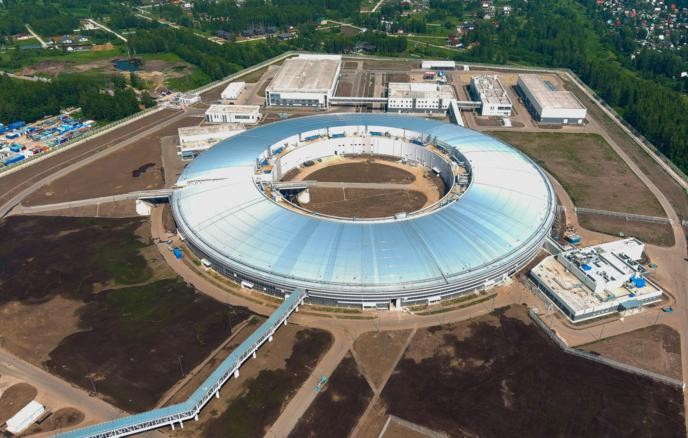
First Seven Experimental Stations of Russia's SKIF Synchrotron Planned for Commissioning in Summer 2027
The first seven scientific experimental stations at the Siberian Circular Photon Source (SKIF) shared center, located near Novosibirsk, Russia, are planned to begin beam testing in August 2027. According to the center's relevant official, all experimental station equipment has been fully installed, and experts are currently conducting commissioning work. Construction of the SKIF synchrotron was completed in June 2026. Once the project becomes operational, it will utilize synchrotron radiation to help researchers observe the internal structure of matter, obtaining high-precision data on material structure and behavior, which can serve fundamental research and related industrial R&D. As planned, the Budker Institute of Nuclear Physics of the Siberian Branch of the Russian Academy of Sciences will launch beam operation in the main storage ring in September...
2026-08-28
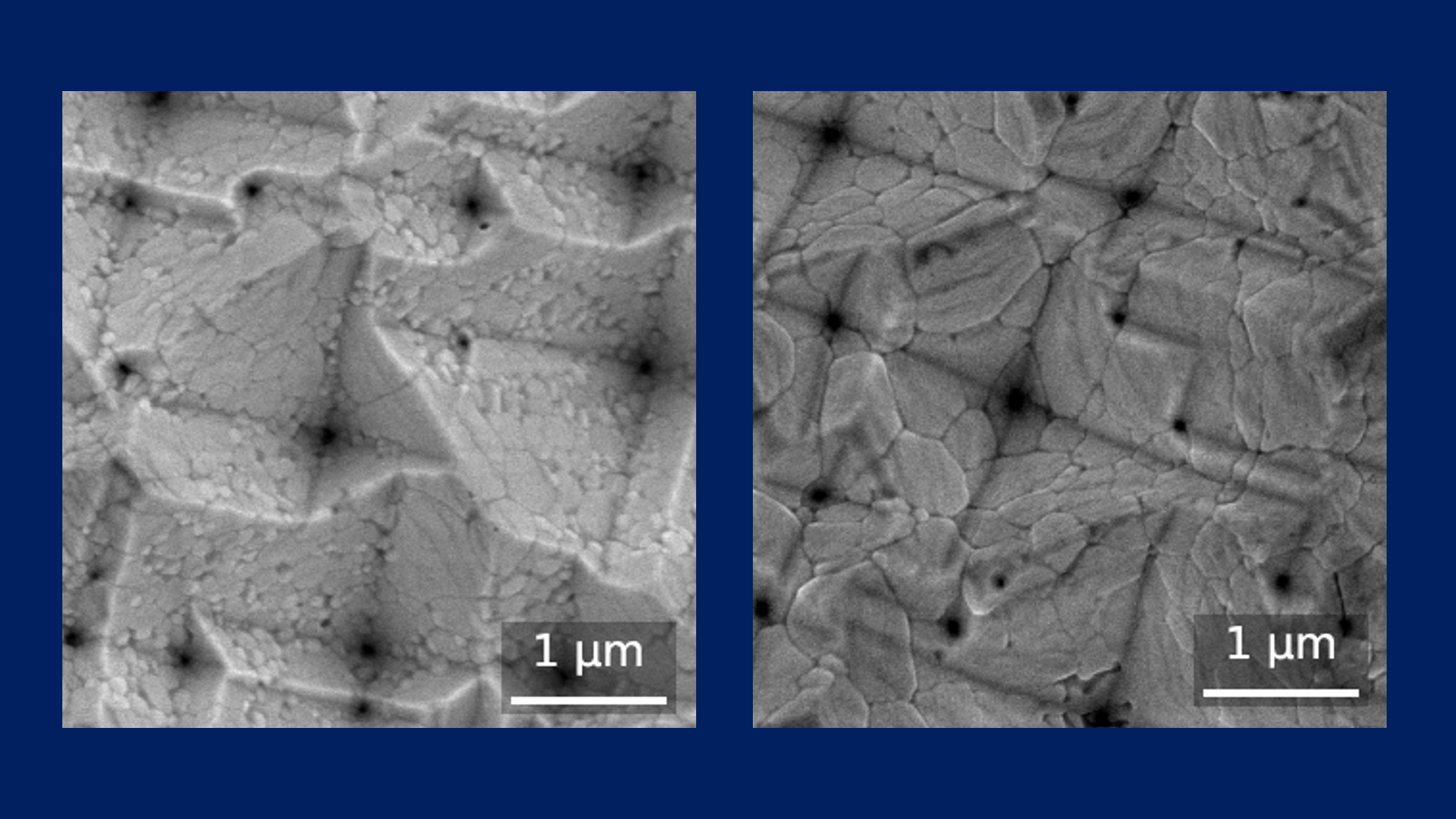
German BESSY II Research Reveals: Cesium Chloride Seed Layer Can Improve Quality of Perovskite-Silicon Tandem Solar Cells
A team from the Helmholtz-Zentrum Berlin (HZB) in Germany used the BESSY II synchrotron radiation facility to conduct nanoscale analysis of perovskite-silicon tandem solar cells fabricated by evaporation methods, and proposed a new approach to improve the quality of perovskite thin films. The study shows that introducing a thin cesium chloride (CsCl) seed layer between the two sub-cells promotes uniform growth of the perovskite layer while reducing undesirable lead iodide deposition at the interface. The research demonstrates that the cesium chloride seed layer improves the growth of the evaporated perovskite layer and reduces the formation of lead iodide. Scanning electron microscopy images show that the perovskite layer grown without a seed layer (left image) consists of extremely fine crystallites...
2026-08-27

Oak Ridge National Laboratory marks 80 years of isotope research and production, with applications spanning medicine, industry, and scientific research
On August 2, 1946, the Clinton Laboratories in Oak Ridge, Tennessee, held the first formal ceremony to deliver reactor-produced radioactive isotopes. A shipment of carbon-14 was sent from there to the Barnard Free Skin and Cancer Hospital in St. Louis, Missouri. Over the past 80 years, this event has been regarded as the starting point of Oak Ridge National Laboratory's isotope research and production endeavors, and also marked the beginning of broader civilian applications for reactor-produced radioactive isotopes. After World War II, the U.S. scientific community began exploring peaceful uses of atomic energy, with radioactive isotopes becoming an important direction. As unstable variants of elements, radioactive isotopes release radiation during decay and can be used...
2026-08-15

U.S. Company Proposes Americium-241 Radioisotope Heating Solution for Spacesuits, Receives Early NASA Research Support
U.S.-based Zeno Power Systems has proposed a radioisotope heating concept for lunar extravehicular activities, planning to use Americium-241 (Am-241) to provide continuous passive warmth for astronauts during lunar nights and in permanently shadowed regions. The proposal has been selected for this year's NASA Innovative Advanced Concepts (NIAC) program, with the potential to receive up to $175,000 in early-stage research funding. The lunar surface environment is one of the key challenges for long-duration crewed missions. Data shows that lunar nights can last approximately two weeks, and extreme low temperatures will limit the duration of astronaut extravehicular activities in shadowed areas and at night. Even with new-generation spacesuits, their cold resistance remains limited...
2026-08-13
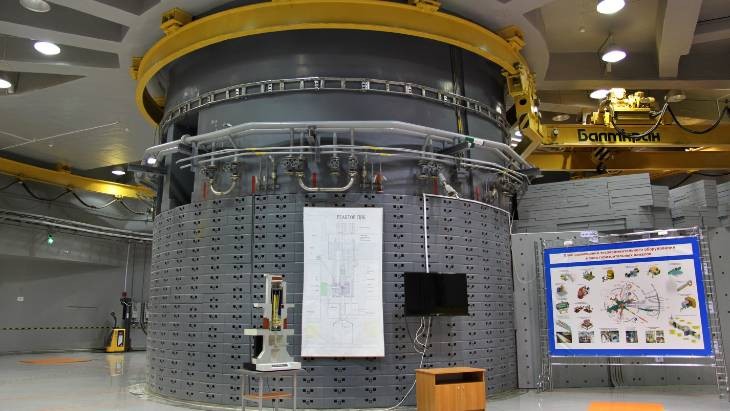
25 experimental stations of the PIK high-flux nuclear reactor at the Kurchatov Institute to be commissioned in December 2026
At a meeting of the Science and Education Committee, Mikhail Kovalchuk, Director of the National Research Centre "Kurchatov Institute," announced that 25 experimental stations of the PIK high-flux nuclear reactor at the Konstantinov Nuclear Physics Institute in Gatchina, Leningrad Oblast, Russia, will be commissioned in December 2026. According to reports, the project is being implemented pursuant to a presidential decree. Currently, construction of these 25 experimental stations is nearing completion, and the associated waveguide hall is planned to open in December of the same year. As a large-scale research facility, the PIK reactor will provide experimental conditions for related nuclear physics research once its experimental stations are commissioned...
2026-08-13

Russia's MEPhI Receives Over 1 Billion Rubles in Funding for Two Domestic Scientific Instrument Projects
The Russian Ministry of Science and Higher Education will allocate 2.81 billion rubles to support the development of eight types of domestically produced scientific research equipment. According to the results of an additional competitive selection, the funds are planned to be disbursed from 2026 to 2028, with six universities and research institutions set to receive support. Among them, the National Research Nuclear University MEPhI (Moscow Engineering Physics Institute) will receive the largest share, with two projects totaling slightly over 1 billion rubles in funding. Under the arrangement, MEPhI will receive 591 million rubles for the development of a tandem quadrupole time-of-flight mass spectrometer (QTOF MS), and an additional 433 million rubles for the atom probe tomography project. Both projects have previously been approved by the Russian Academy of Sciences and included in...
2026-08-12

Russia Offers Brazil Nuclear Technology Cooperation and Small Modular Reactor Projects, Including Floating Nuclear Power Plants and Arctic/Antarctic Scientific Research
During his visit to Brazil, Nikolai Patrushev, aide to the Russian President and head of Russia's Maritime Board, proposed cooperation initiatives involving nuclear energy, scientific research, and maritime security to the Lula administration. This agenda indicates that Brazil continues to pursue a relatively autonomous diplomatic approach in its relations with major powers, while seeking to expand external cooperation space in areas such as energy transition, defense technology, and protection of maritime rights. In the nuclear energy sector, the Russian side focused on promoting small nuclear reactors and low-power nuclear technologies, including the Elena-M small nuclear power plant and floating offshore power generation units. The Russian side described these technologies as capable of long-term operation, relatively cost-effective...
2026-08-08