
Search Results
Keyword:spent fuel management
Belarus Advances Preparations for Radioactive Waste Disposal Facility
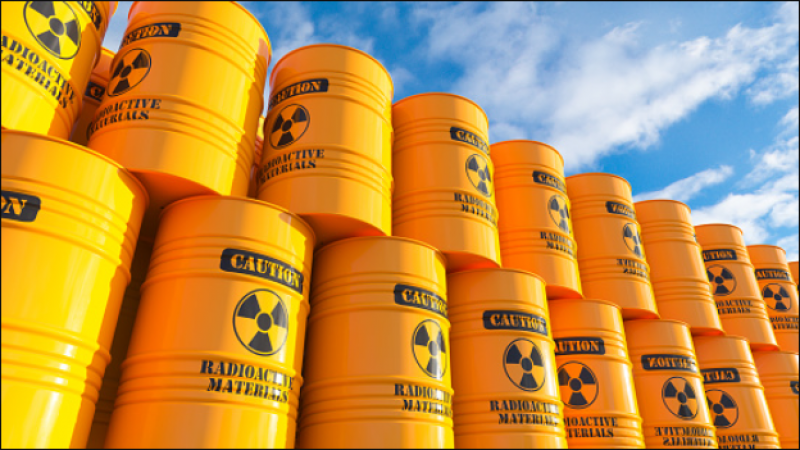
Belarus is advancing preliminary work on the construction of a centralized radioactive waste disposal facility. Mikhail Kisel, Director of the Belarusian Radioactive Waste Management Organization, recently stated at a public discussion on the environmental impact assessment report held in Mstsislaw that, according to the country's radioactive waste management strategy through 2050, existing storage facilities will need to be decommissioned in the future, and the new radioactive waste disposal facility is planned to be completed by 2030. Kisel noted that the sources of radioactive waste are not limited to the nuclear energy sector, but also include healthcare, industrial, and scientific research activities. Currently, centralized long-term storage of such waste is handled by the specialized enterprise Ekores. Belarusian radioactive waste...
2026-08-27
Japan's Nuclear Power Revival Enters Supply Chain Rebuilding Phase, with Spent Fuel and Engineering Capacity as Key Constraints
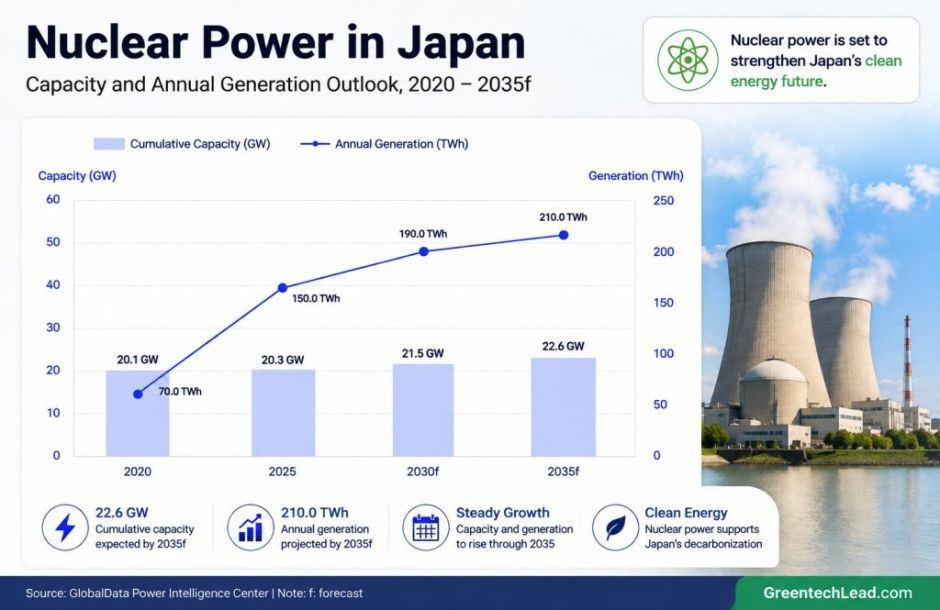
As Japan advances energy security, reduces dependence on fossil fuel imports, and expands low-carbon electricity supply, the focus of the country's nuclear power market is shifting from mere reactor restarts to a comprehensive supply chain rebuild covering manufacturing, operations and maintenance, life extension, fuel cycle, and waste management. GlobalData estimates Japan's nuclear power generation at 101.0 TWh in 2025 and projects it to increase to 123.3 TWh by 2035. Japan's policy target is to maintain nuclear power at approximately 20% to 22% of the electricity generation mix. Based on total annual electricity demand of approximately 1,050 TWh, a 20% nuclear share corresponds to about 210 TWh, while a 22% share corresponds to about 231 TWh. Compared with the 2025 nuclear generation figure of 101.0 TWh, the estimated gap is approximately 109 TWh to 130 TWh.
2026-08-18