Registration
REGISTER FOR THE CONFERENCE
Registration
REGISTER FOR THE CONFERENCE
 Apply to Exhibit
APPLICATION FOR EXHIBITION
Apply to Exhibit
APPLICATION FOR EXHIBITION
 Sponsorship
SPONSORSHIP APPLICATION
Sponsorship
SPONSORSHIP APPLICATION
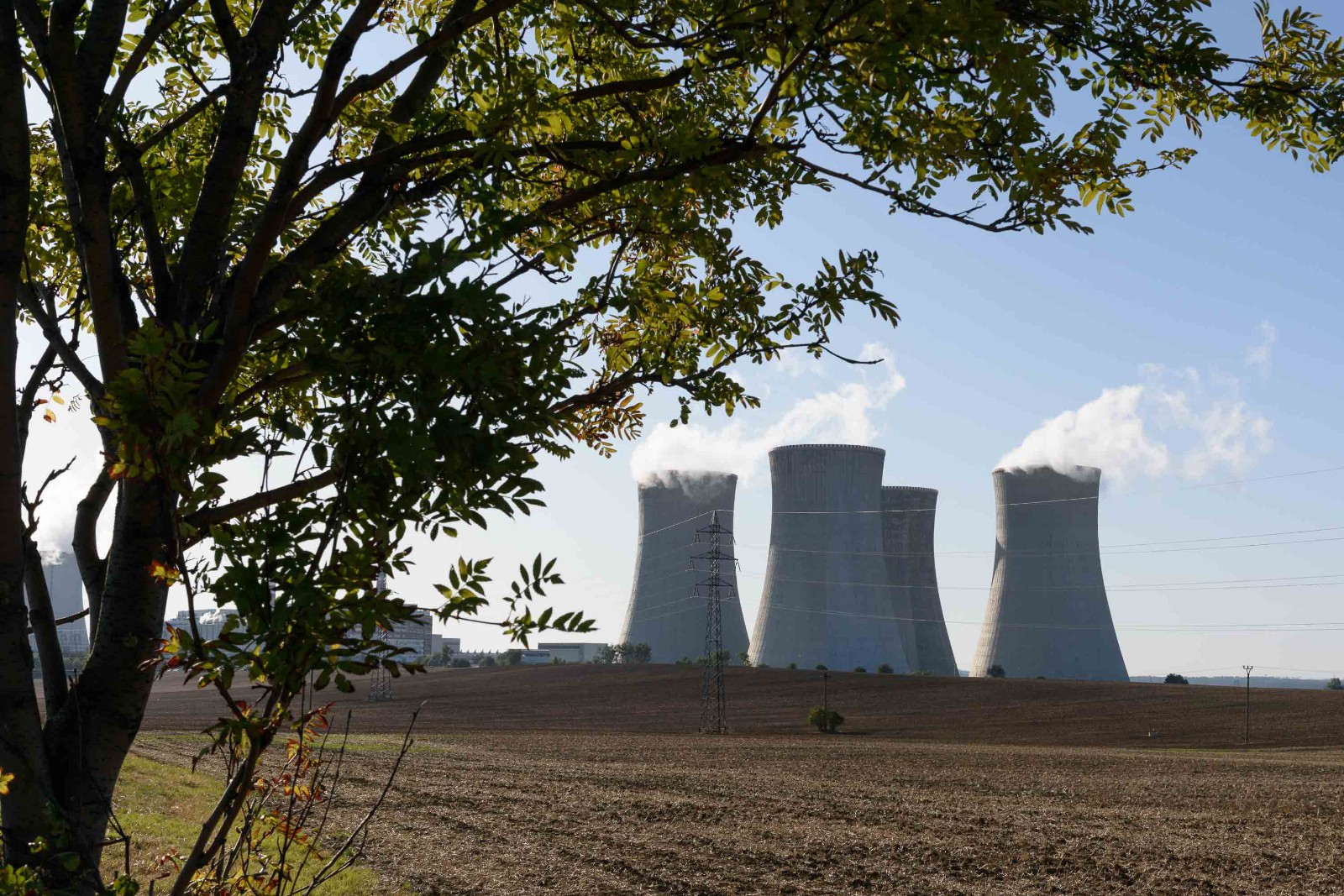
Czech Dukovany New Nuclear Project Scheduled to Break Ground in 2029
Preliminary work on the new nuclear power plant project at Dukovany, Czech Republic, continues to advance. According to information released by the Confederation of Industry and Transport of the Czech Republic (SP ČR), geological surveys at the project site have been completed, and the permitting process is underway with no major obstacles identified so far. Under the current schedule, main construction of the new nuclear power plant is set to begin in 2029. Development of the local supply chain is also progressing in parallel. To date, Czech domestic companies have secured 17 tendered supply packages, though the total contract value has not yet been disclosed. Doosan Škoda Power has joined the project, along with ČEZ Energetické projekty and Energoprojekt Praha, which have entered the relevant design, engineering, and supply chain segments.
2026-08-24
The 10th Batch of Auxiliary Equipment for Shaanxi Zhonghuan's Egypt El Dabaa Nuclear Power Cooperation Project Successfully Loaded and Shipped
2026-08-24
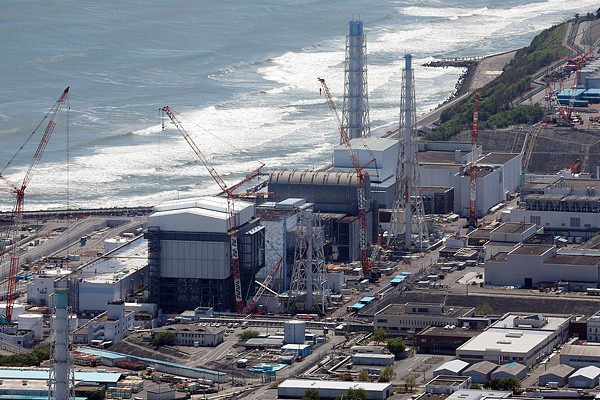
Three Years Since Japan Began Discharging Nuclear-Contaminated Water: Over 170,000 Tons Released Across 22 Rounds
2026-08-24
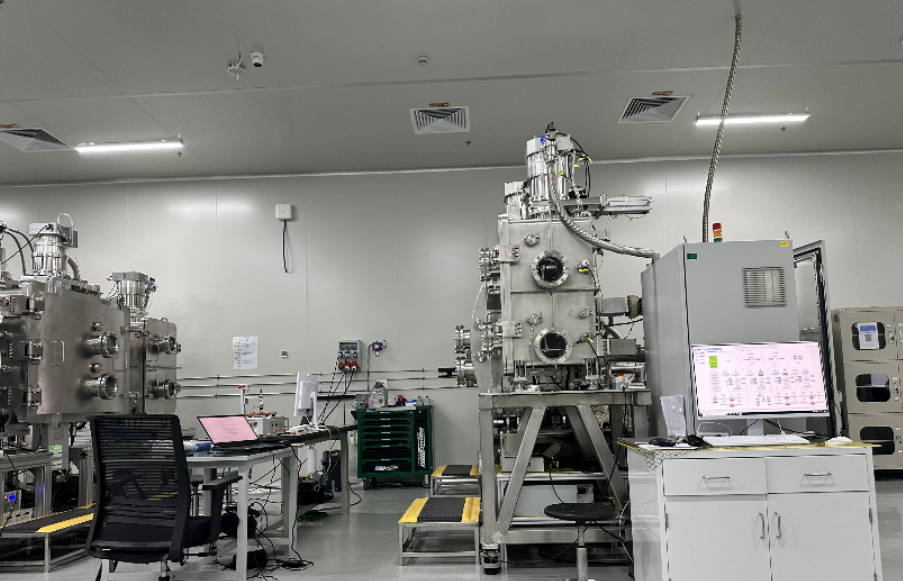
Beijing's First Second-Generation High-Temperature Superconducting Tape Mass Production Line Project Approved
2026-08-24
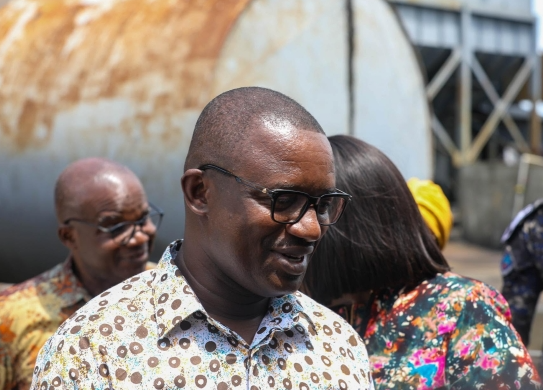
Ghana Says Nuclear Energy Key to Meeting Future Electricity Demand
2026-08-24
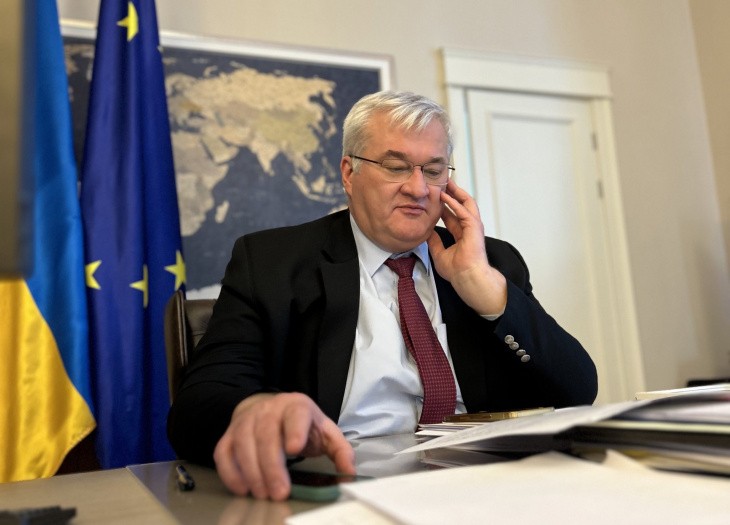
Ukrainian Foreign Minister and IAEA Director General Discuss Zaporizhzhia Nuclear Power Plant Safety in Phone Call
2026-08-24

UK Wylfa SMR project early works package valued at up to £1.1 billion
2026-08-24
U.S. Plans to Launch Nuclear Fission-Powered Spacecraft to Fly by Mars by End of 2028
2026-08-24
Japan's GX Promotion Organization Invests in Nuclear Fusion Startups
2026-08-24
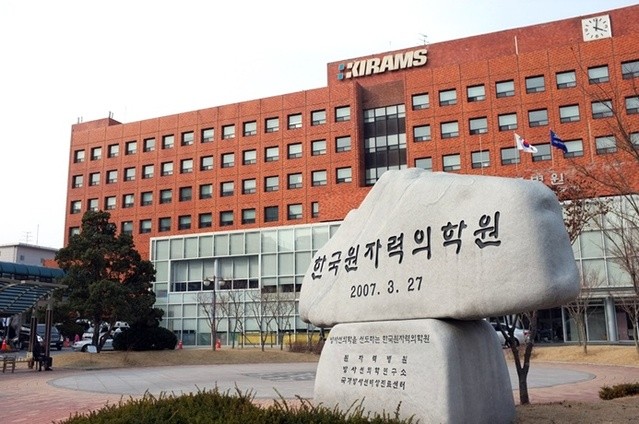
The Korea Atomic Energy Research Institute (KAERI) announced on August 24 that the National Assembly had passed a partial amendment to the Act on the Promotion of Radiation and Radioisotope Utilization at its plenary session on August 20, incorporating the functions of a radiation injury treatment hospital, along with supporting research and technology development, into the institute's statutory scope of business. Under the amendment, relevant institutions will provide specialized medical services to individuals who have sustained radiation injuries or are at risk of such injuries. Radiation injury generally refers to health abnormalities in the human body resulting from excessive exposure to radiation. Such injuries may not manifest immediately after exposure; even when early symptoms appear only as skin redness, they can later progress to ulceration, necrosis, and affect the blood or bone marrow systems. Some individuals also require long-term follow-up to monitor for delayed health risks such as cancer.
2026-08-24
Mohammad Eslami, head of the Atomic Energy Organization of Iran, recently stated that more than 1.5 million patients in Iran use diagnostic and therapeutic products developed by the organization each year, and related medical products have also been exported to multiple countries. Eslami made these remarks at a ceremony held by Iran's nuclear industry to celebrate Physicians' Day. He said that promoting the application of advanced treatment methods is one of the key directions of Iran's scientific and technological development. The progress made by Iranian researchers in cold plasma technology has opened up a "brand-new and promising path" for medical applications. He stated that plasma technology has not only achieved notable results in the research field but has also played a role in healthcare settings.
2026-08-24
South Korean medical device company Radexel announced on August 24 that it has been selected as the lead institution for a global flagship project, partnering with Asan Medical Center, the Korea Atomic Energy Research Institute (KAERI), and other organizations to develop next-generation radiotherapy equipment based on magnetic field control. The project is a national strategic R&D initiative jointly promoted by the Ministry of Science and ICT, the Ministry of Trade, Industry and Energy, the Ministry of Health and Welfare, and the Ministry of Food and Drug Safety, with a total investment of KRW 35.2 billion, including KRW 27.95 billion in government funding, over a seven-year period. Under the plan, the Radexel consortium will develop a Magnetically Controlled Radiotherapy (MPRT) system. This technology controls secondary...
2026-08-24
On August 23, the first National MRI Brain-Computer Interface Conference, themed "Integration · Decoding · Modulation — Ushering in a New Era of Brain-Computer Interaction," was held in Tianjin. At the conference, United Imaging Healthcare and Tianjin University jointly released the world's first full-stack MRI brain-computer interface solution, "uMR Shenguan." uMR Shenguan spans the entire translational chain of brain-computer interfaces from fundamental research to clinical application, advancing the realization of "understanding the brain, precise modulation, and making neural plasticity measurable and controllable." It is understood that uMR Shenguan is built on United Imaging's uMR series equipment as its hardware foundation, addressing key technical challenges in the closed loop of "reading the brain — writing the brain — verification" in brain-computer interfaces, providing a complete technical system that upgrades MRI equipment from a mere "imaging tool for structure" to a "central platform" participating in the entire brain-computer interaction process.
2026-08-24
August 21 news, researchers from the Moscow Institute of Physics and Technology, the Institute for Nuclear Research of the Russian Academy of Sciences, the National Research Nuclear University MEPhI, and the Landau Institute for Theoretical Physics of the Russian Academy of Sciences have proposed a new experimental scheme to study the electric dipole moments of protons and deuterons in a single storage ring. The scheme can be implemented both in specially constructed new facilities and, potentially, in upgraded existing accelerator complexes. The electric dipole moments of protons and deuterons reflect the asymmetry of the internal charge distribution relative to the spin direction. According to Standard Model predictions, their values are non-zero but extremely small, on the order of 10⁻³¹ e·cm, far below current experimental sensitivity...
2026-08-24
Physicists at the European Organization for Nuclear Research (CERN), analyzing a new batch of collision data from the CMS detector at the Large Hadron Collider, have found that oxygen and neon nuclei do not behave entirely as predicted by existing models in high-energy collisions. This result indicates that the scientific community's understanding of the shapes and internal structures of certain light nuclei still requires further refinement. In high-energy nuclear collisions, a quark-gluon plasma is briefly formed in the collision region. This state of matter decays rapidly, but the collective flow characteristics of its particles can be used to infer the collision geometry and indirectly provide information about nuclear structure. Researchers believe that symmetric collisions of light ions help better control the initial collision conditions, making them suitable for studying collective responses in small systems.
2026-08-24
Busan Metropolitan City stated on August 24 that since the discharge of contaminated water from the Fukushima nuclear power plant began in 2023, the city has continuously conducted radiation monitoring and analysis of coastal seawater and seafood. The results show that the safety conditions of Busan's waters and seafood remain stable with no abnormal changes detected. According to Busan Metropolitan City, seawater radioactivity testing is currently conducted at 26 coastal points. Among them, samples from 14 coastal locations including Haeundae, Gwangalli, Dadaepo, Songdo, and Songjeong are analyzed by the Busan Metropolitan City Institute of Health and Environment and local university research institutions. Test results show that the concentrations of relevant radionuclides are far below the World Health Organization drinking water standards, with cesium-134,...
2026-08-24