
Brazilian research team uses stable isotope analysis to trace Amazon timber origins
 Scan to share
Brazilian researchers are developing a timber traceability tool based on stable isotope analysis to help identify the origins of illegally logged wood in the Amazon region.
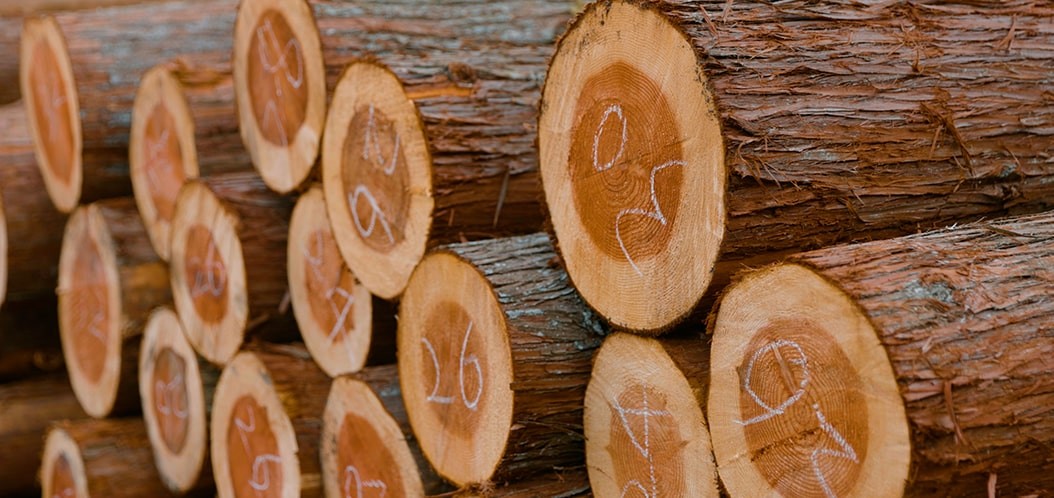
Illegal logging is reported to be one of the major causes of deforestation in the Amazon. Local environmental and law enforcement agencies currently typically determine timber origins through plant anatomical characteristics, tree species distribution, and official records such as forest origin documents, but these methods are not always sufficient to prove that timber comes from legal areas.
A research team at the Center for Nuclear Energy in Agriculture, University of São Paulo (CENA-USP) is mapping the isotopic distribution of Amazon trees. The method analyzes the ratios of different isotopes of elements such as oxygen, carbon, nitrogen, and strontium in wood cellulose to narrow down the potential harvesting areas of timber. Team leader Luiz Antonio Martinelli stated that stable isotopes are difficult to forge artificially, offering the potential to provide federal police with a more tamper-resistant technical tool.
In a paper published in Molecules in May, the research team showed that the ratio of oxygen-18 to oxygen-16 in Amazon timber exhibits a gradient from the southwest to the northwest, with wood from the western region showing relatively higher oxygen-16 ratios and relatively lower oxygen-18 ratios. The researchers believe this is related to the progressive depletion of heavier oxygen isotopes as moisture from the Atlantic Ocean moves inland, with water entering the western Amazon containing lower oxygen-18 levels, which is correspondingly reflected in local plant wood.
However, oxygen isotopes alone are still insufficient for precise tracing. Martinelli noted that the Amazon is vast and ecologically complex, and relying on a single isotope is inadequate to meet law enforcement needs. The team is currently mapping carbon and nitrogen isotope distributions through doctoral research projects and plans to incorporate strontium isotopes into the model.
At this stage, the tool still has limitations. The research team stated that the current best model can exclude 92% of the Amazon forest area, approximately 3 million square kilometers, but the remaining 8% still covers about 240,000 square kilometers, which remains a relatively large area. Additionally, tree sample results from the deforestation arc region show more pronounced fluctuations, and these areas are precisely where timber harvesting is more concentrated, posing challenges to the method's application.
To improve accuracy, the research team has collected samples from 800 trees at 63 locations across the Amazon and stated that future efforts will need to cover more trees and locations. In addition to isotope measurements, the team is also exploring an "elemental landscape mapping" approach based on differences in concentrations of specific chemical elements in wood. The researchers hope to combine multiple chemical and isotopic methods to form a more precise timber origin identification tool for combating illegal logging and forest destruction.
Disclaimer: Information republished from partner media, institutions or other websites is provided for reference and communication purposes only. It does not imply endorsement of its views or verification of its accuracy. Please contact us if any content infringes rights or requires correction.