
Russia Advances Rare Earth Extraction Technology Using Hyperaccumulator Plants, Plans Field Trials
 Scan to share
August 7 news - Russian researchers have developed a technology for extracting rare earth metals using hyperaccumulator plants. The technology involves planting crops such as mustard, buckwheat, and sunflower at engineered landfill sites, allowing them to absorb metal elements from the soil and concentrate them in their biomass; after harvest, the plants are incinerated, and valuable elements are extracted from the ash.
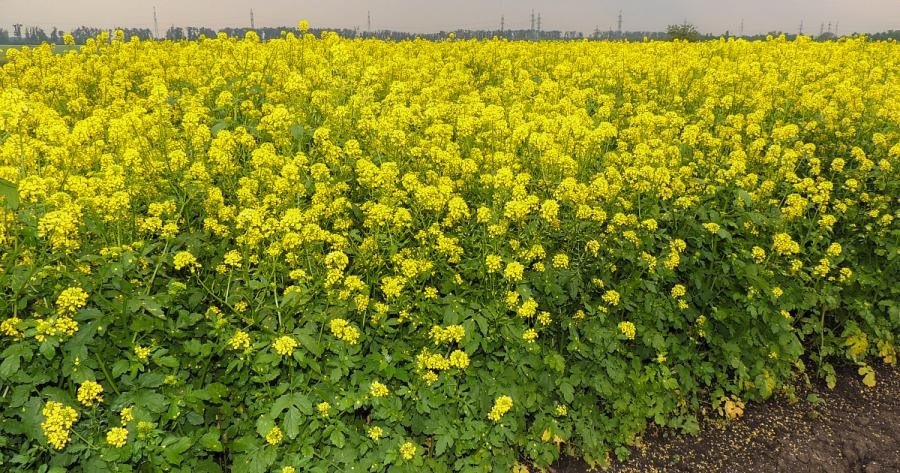
Mustard plantation. Photo: Pustovoit All-Russian Research Institute of Oil Crops
According to reports, under natural conditions in Russia, the relevant crops can be harvested two to three times per growing season. Estimates indicate that a single landfill site can yield up to 15 tons of rare earth metals annually. Currently, the laboratory has conducted tests using phosphogypsum waste from the Voskresensk and Balakovo areas, as well as loparite from the Lovozersky Mining and Processing Plant. The project plans to conduct field trials under real-world conditions this year, with pilot planting scheduled for next year.
Lyudmila Komarova, Doctor of Biological Sciences and Head of the Biology Department at the Obninsk Institute for Nuclear Power Engineering, part of the National Research Nuclear University MEPhI, stated that phytomining is not a new concept. As early as the 19th century, scientists discovered that plants have the ability to accumulate metals; in 1983, Rufus Chaney, an agronomist at the U.S. Department of Agriculture, proposed using plants to extract metals and remediate zinc-contaminated land, formally establishing this technical direction.
Komarova noted that the commercialization of phytomining faces two main categories of challenges: first, the need to screen plant species that combine strong remediation capacity, rapid growth characteristics, and suitability for mechanized sowing and harvesting; second, the lack of comprehensive economic assessments. Even with highly efficient hyperaccumulator plants, metal yields often remain at the milligram or gram level, a significant gap from the ton-scale volumes required by industrial supply chains. Additionally, downstream processing of plant biomass involves high costs and complex technical processes, while also imposing requirements on land area and stable cultivation conditions.
Regarding potential solutions, Komarova believes that breeding and genetic engineering can enhance plant accumulation efficiency, machine learning can be used to screen species, predict yields, and simulate recovery capacity, and the enriched biomass can be further processed into fertilizers, catalysts, and other related products to improve the commercial appeal of the technology. She also emphasized that translating laboratory results into field applications requires interdisciplinary and cross-sector collaboration.
Beyond rare earth extraction, the ability of plants to accumulate elements has well-defined applications in environmental remediation. Komarova explained that phytoremediation can be used to remove heavy metals such as zinc, copper, cadmium, cobalt, manganese, and chromium from soil, as well as to remove radionuclides. For example, in the removal of cesium-137, the aquatic plant common duckweed is considered one of the more effective accumulator species; leguminous plants and cereal crops can also be used to treat organic pollutants such as petroleum products and pesticides. Furthermore, hyperaccumulator plants can serve as indicator plants for pollution, used to assess toxic element levels in soil.
Disclaimer: Information republished from partner media, institutions or other websites is provided for reference and communication purposes only. It does not imply endorsement of its views or verification of its accuracy. Please contact us if any content infringes rights or requires correction.