
Hanford Site Completes Radioactive Waste Removal from 24th Underground Tank
 Scan to share
The Hanford team under the U.S. Department of Energy Office of Environmental Management recently continued its tank cleanup mission, removing radioactive waste from the 24th underground single-shell tank.
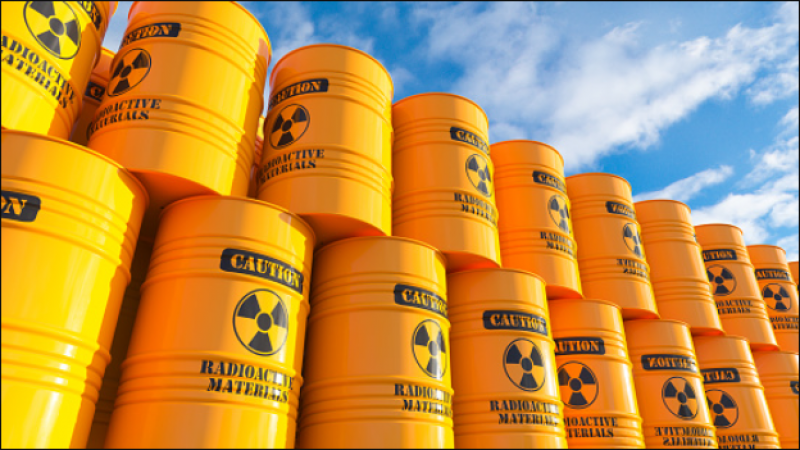
The cleanup targeted the A-106 single-shell tank. In less than seven months, Hanford Tank Waste Treatment and Storage Project workers transferred approximately 79,000 gallons of waste that had been stored for decades into a double-shell tank for continued safe storage. During operations, the contractor first used water to dissolve salt-based waste on the tank surfaces, then reused the transferred liquid waste to mobilize sludge. This method had last been used nearly a decade ago.
The Hanford Site produced plutonium for U.S. nuclear weapons programs between 1944 and 1989. To store the associated radioactive and chemical byproducts, the site constructed underground reinforced concrete tanks lined with steel plates, each with a capacity of up to 1 million gallons. After the Cold War ended and production ceased, approximately 56 million gallons of waste were stored across 177 large tanks.
According to reports, the U.S. Department of Energy and its contractors have completed waste retrieval operations in two tank farms at the site, and the relevant area has now become the third tank farm to transfer waste from aging single-shell steel-lined tanks to newer double-shell tanks, which offer enhanced leak resistance. To date, the Hanford Site has removed approximately 3.5 million gallons of waste from 24 single-shell steel-lined tanks.
A Hanford Site office official stated that each waste retrieval operation helps reduce risks associated with single-shell tanks and creates conditions for treating more waste through a combined strategy of vitrification and grout disposal.
As planned, waste retrieval operations for Hanford's 25th single-shell tank, A-103, are scheduled to begin in October. Given that current double-shell tank capacity is full, relevant departments will rely on the science-supported dual-path approach of vitrification and grouting to continue advancing waste retrieval and downstream treatment tasks for aging single-shell tanks.
Disclaimer: Information republished from partner media, institutions or other websites is provided for reference and communication purposes only. It does not imply endorsement of its views or verification of its accuracy. Please contact us if any content infringes rights or requires correction.