
South Korea plans to build an innovative self-developed fusion reactor by 2035
 Scan to share
Yang Hyeong-ryeol, head of the fusion sector of the K-Moonshot project at the Korea Institute of Fusion Energy (KFE), recently stated that South Korea plans to complete the construction of an independently developed innovative fusion reactor by 2035 and strives to complete power generation demonstration by 2039. He said that nuclear fusion is an extremely challenging technical endeavor, but once a breakthrough is achieved, it will have broad driving effects on the energy, industrial, and technological systems.
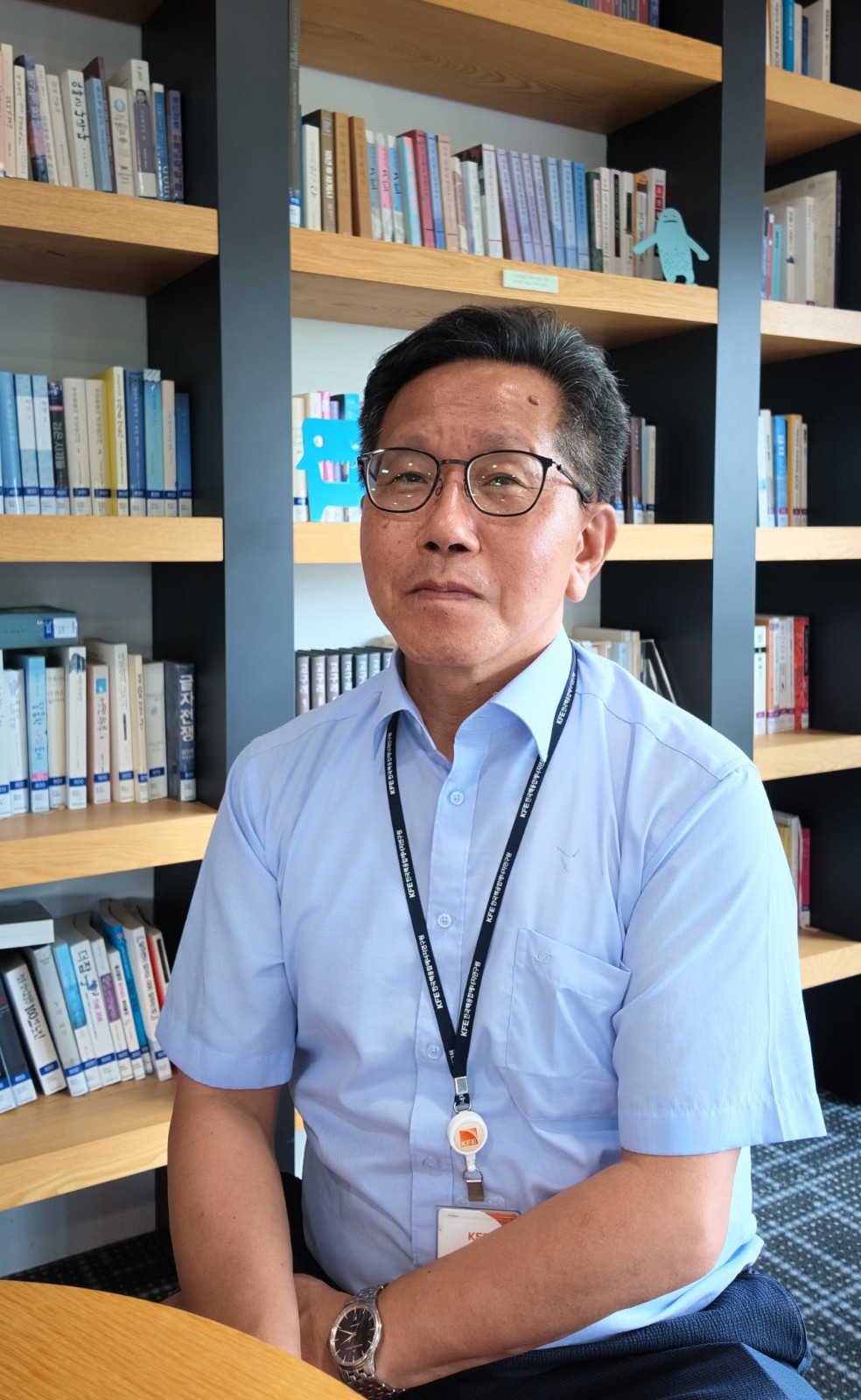
Yang Hyeong-ryeol, project director of South Korea's Moonshot program
Nuclear fusion is often called an "artificial sun" because it generates energy by simulating the energy production process inside the sun. Against the backdrop of rapid expansion of AI applications, rising electricity demand, and increasing global pressure for carbon reduction, the commercialization of fusion energy is attracting growing attention from more countries and enterprises. The South Korean government has listed nuclear fusion, along with small modular reactors and renewable energy, as key future technology directions, and hopes to advance the commercialization of fusion energy through public-private partnerships.
According to the plan disclosed by the South Korean side, the conceptual design of the main device for the Korean innovative fusion reactor will be launched this year, with basic design to be completed next year, engineering design to begin in 2028, and related design work to be completed by 2030. Yang Hyeong-ryeol introduced that the project aims to begin assembly in the early 2030s, complete device construction by 2035, achieve first plasma in 2036, and conduct actual power generation demonstration in 2039.
Yang Hyeong-ryeol stated that the technical feasibility of generating electricity using a fusion reactor and supplying it to the power grid has been preliminarily verified at the simulation and experimental levels. The greater challenge at present lies in economic viability—namely, whether future fusion power generation costs can compete with small modular reactors and renewable energy.
Global competition in fusion commercialization is accelerating. Commonwealth Fusion Systems (CFS), a U.S. private fusion company, is advancing testing of the SPARC fusion demonstration device with investment support from major technology companies, and plans to supply electricity through the subsequent commercial reactor ARC in the 2030s. China is also advancing operational preparations for the BEST device and conducting research and development related to the China Fusion Engineering Test Reactor (CFETR) to verify fusion power generation capability.
One of the important foundations for South Korea's advancement of fusion commercialization is the superconducting tokamak fusion research device KSTAR, which has been independently developed and operated since 2007, as well as the engineering experience accumulated through participation in the International Thermonuclear Experimental Reactor (ITER) project. However, fusion power generation still faces multiple key technical challenges, including how to stably confine high-temperature plasma exceeding 100 million degrees Celsius over long periods, sustain fusion reactions, process and recycle tritium, and achieve safe control and stable operation of fusion reactors.
The South Korean side believes that artificial intelligence is expected to play an important role in fusion research and development. Yang Hyeong-ryeol stated that AI can be used in areas such as materials development and prediction of high-temperature plasma behavior, and AI agents may also help automate the operation processes of fusion reactors. To shorten the research and development cycle, the Korea Institute of Fusion Energy plans to build an "AI virtual fusion reactor" for automated optimization of reactor design and control schemes. The high-quality experimental data generated by KSTAR will also provide support for AI model training.
The South Korean government also plans to advance public-private partnerships by establishing special purpose companies and other means, and to build supporting infrastructure in Naju, South Jeolla Province, for large-scale demonstration and verification of core components and equipment for fusion reactors. Yang Hyeong-ryeol believes that establishing a governance structure with private sector participation is an important condition for accelerating project progress.
The development of a safety licensing system has also been listed as a subsequent priority. Yang Hyeong-ryeol stated that fusion energy has relatively high safety compared to other energy sources, but the legal and institutional framework surrounding the handling of tritium, a byproduct of fusion, still needs to be improved. South Korea needs to establish a fusion safety regulatory system that meets international standards as soon as possible, laying the foundation for subsequent demonstration operations and commercialization.
Disclaimer: Information republished from partner media, institutions or other websites is provided for reference and communication purposes only. It does not imply endorsement of its views or verification of its accuracy. Please contact us if any content infringes rights or requires correction.