
SuperMag New Energy Achieves Milestone Progress in Development of 25 T-Class High-Temperature Superconducting Toroidal Field Model Magnet
 Scan to share
Recently, SuperMag New Energy has achieved two milestone progresses in the development of its 25 T-class high-temperature superconducting toroidal field model magnet: following the completion of R&D and testing of the first panel-type high-temperature superconducting single pancake coil, the company has initiated batch manufacturing of panel-type single pancake coils; meanwhile, the self-developed 24 cm² low-resistance detachable joint has completed prototype fabrication and performance testing in the liquid nitrogen temperature range, with an equivalent joint resistance of approximately 33 nΩ.
These two progresses correspond to two critical aspects: stable manufacturing of single pancake coils and low-loss interconnection of multiple units. The project has advanced from the single-component process validation stage toward multi-pancake manufacturing and model magnet system integration.
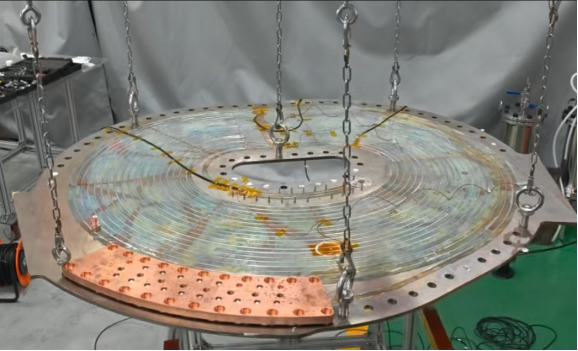
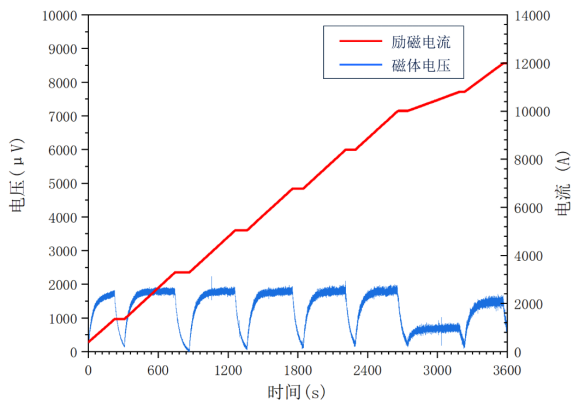
The single pancake coil is not an ordinary component in the model magnet, but rather a fundamental unit integrating conductor, panel structure, insulation, electrical connection, and testing interfaces. Each single pancake requires independent manufacturing and inspection, and also serves as the foundation for subsequent multi-pancake stacking, magnet excitation, and cryogenic operation.
The panel-type coil achieves integrated incorporation of the superconducting winding and mechanical load-bearing structure by embedding high-temperature superconducting conductors into a high-strength plate-type structure, representing one of the key technological pathways for compact high-temperature superconducting high-field tokamak toroidal field magnets. This approach helps improve winding positioning accuracy and structural load-bearing capacity, while providing support for stress management under high-field conditions.
In the development of the model magnet, whether single pancake coils can achieve stable and repeatable batch manufacturing will directly affect subsequent assembly precision, electromagnetic performance, and operational reliability. The initiation of batch manufacturing signifies that relevant work has further transitioned from key process research to the system engineering implementation stage.
In multi-pancake magnets, individual pancakes need to be interconnected through joints to form a complete current transmission path. For high-temperature superconducting fusion magnets, the operating current is substantial, and even joint resistance at the level of tens of nano-ohms can generate non-negligible Joule heating. Therefore, reducing joint resistance while ensuring connection reliability is an important requirement for controlling cryogenic heat load and improving magnet operating efficiency.
Addressing the modular assembly requirements of the model magnet, SuperMag New Energy has carried out the development of low-resistance detachable joints, and completed prototype fabrication through optimization of joint structure, contact interface, and assembly processes. Liquid nitrogen temperature range test results show that the joint voltage and current exhibit an overall linear relationship, with the fitted equivalent joint resistance being approximately 33 nΩ; normalized by the effective contact area, the joint resistance index is 792 nΩ·cm².
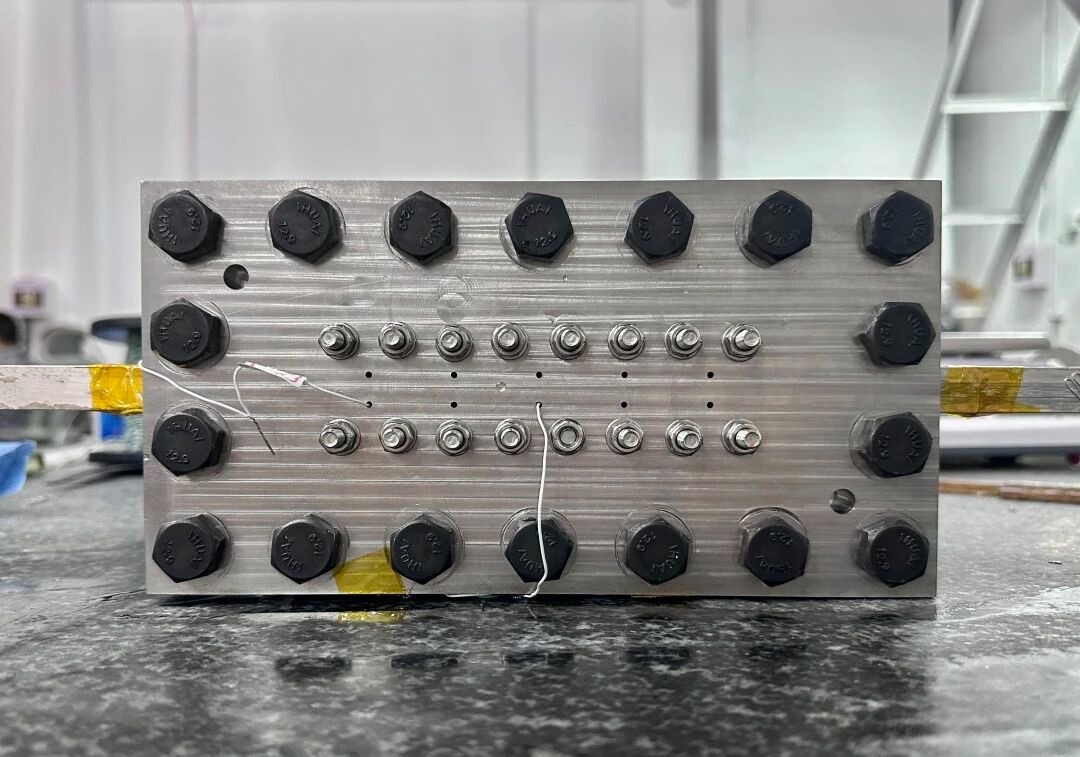
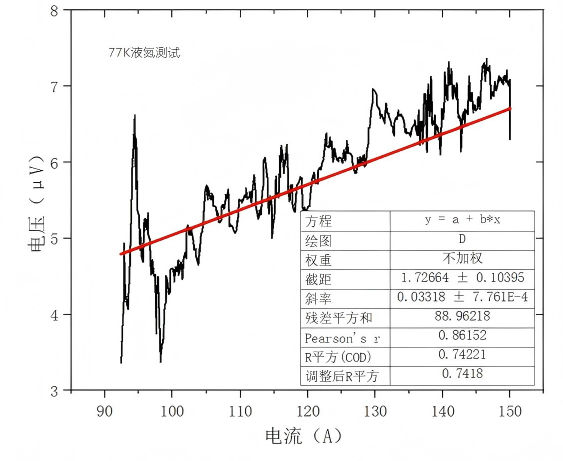
These results demonstrate that the joint achieves nano-ohm-level low-resistance current transmission while maintaining detachability, providing a technical foundation for subsequent single pancake coil interconnection, multi-pancake magnet assembly, and model magnet maintenance and replacement.
In the next stage, SuperMag New Energy will continue to advance batch single pancake coil manufacturing and quality acceptance, conduct joint repeated assembly, cryogenic cycling, and current cycling performance tests, and progressively promote multi-pancake stacking, high-current validation in the 20 K temperature range, and overall model magnet integration.
Disclaimer: Information republished from partner media, institutions or other websites is provided for reference and communication purposes only. It does not imply endorsement of its views or verification of its accuracy. Please contact us if any content infringes rights or requires correction.