
Search Results
Keyword:fusion engineering

South Korea's POSCO Group Invests in Japanese Fusion Company Kyoto Fusion Engineering
South Korea's POSCO Group has invested in Japanese fusion energy company Kyoto Fusion Engineering (KF) to establish an early presence in the global fusion energy market and explore new business opportunities in future steel, specialty materials, and energy infrastructure. According to industry sources on the 27th, POSCO Group participated in Kyoto Fusion Engineering's Series D funding round. The investment was made through the Korea-Japan Fusion Fund, established by IMM Investment Japan (IMMJ) together with Korean and Japanese investors. POSCO Holdings and POSCO International also contributed to the fund...
2026-08-27
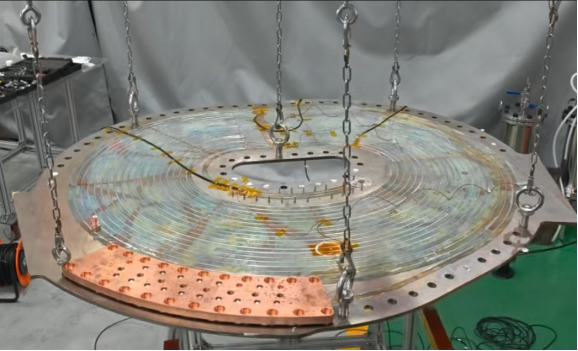
SuperMag New Energy Achieves Milestone Progress in Development of 25 T-Class High-Temperature Superconducting Toroidal Field Model Magnet
Recently, SuperMag New Energy has achieved two milestone progresses in the development of its 25 T-class high-temperature superconducting toroidal field model magnet: following the completion of R&D and testing of the first panel-type high-temperature superconducting single pancake coil, the company has initiated batch manufacturing of panel-type single pancake coils; meanwhile, the self-developed 24 cm² low-resistance detachable joint has completed prototype fabrication and performance testing in the liquid nitrogen temperature range, with an equivalent joint resistance of approximately 33 nΩ. These two progresses correspond to two critical aspects: stable manufacturing of single pancake coils and low-loss interconnection of multiple units. The project has advanced from the single-component process validation stage toward multi-pancake manufacturing and model magnet system integration. The single pancake coil is not an ordinary component in the model magnet, but rather a fundamental unit integrating conductor, panel structure, insulation, electrical connection, and testing interfaces. Each single pancake requires independent manufacturing and inspection, and also serves as the foundation for subsequent multi-pancake stacking, magnet excitation, and cryogenic operation.
2026-08-21
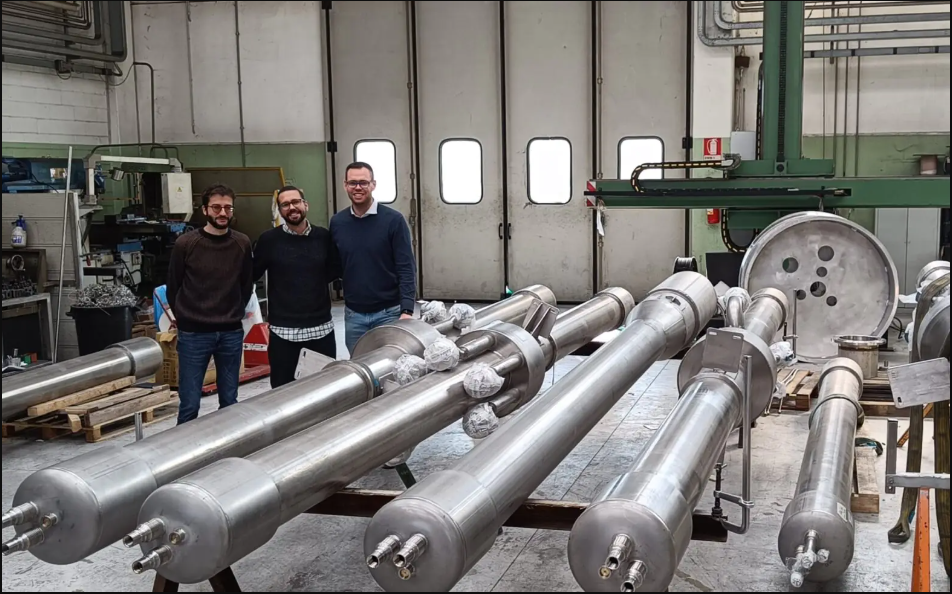
Fusion for Energy completes full delivery of ITER cryopump distribution system
The International Thermonuclear Experimental Reactor (ITER) will operate in an ultra-high vacuum environment. To prevent contamination inside the device, a set of cryopumps supplied by Europe will extract gas particles and alternate operation before and after plasma discharges, maintaining the vacuum vessel pressure at approximately one millionth of Earth's atmospheric pressure. The core of cryopump operation lies in the extremely low-temperature environment. Its internal panels will be cooled to 4 K, approximately minus 269 degrees Celsius, close to absolute zero, to capture gas particles; they are then warmed to release and expel the particles. To precisely control this process, Europe is also supplying ITER with the Front-End Cryopump Distribution System (FECDS), which delivers helium at specific doses and temperatures to the cryopumps...
2026-08-12
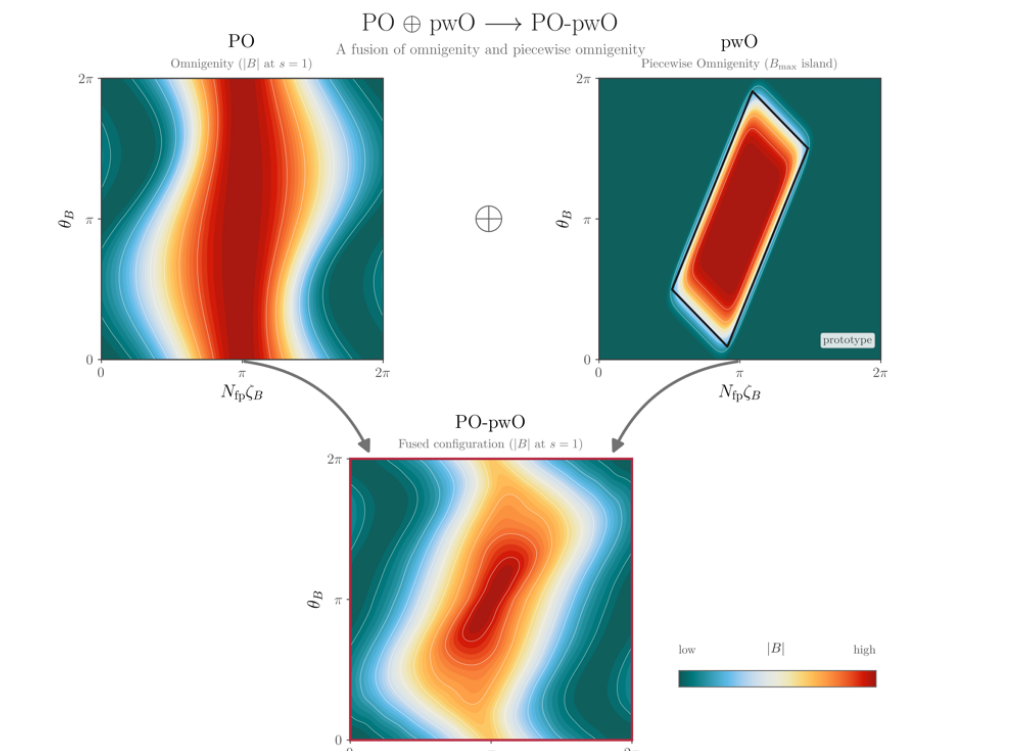
Department of Plasma Physics and Fusion Engineering at the University of Science and Technology of China Proposes New Three-Dimensional Magnetic Field Configuration for Stellarators
Stellarators confine high-temperature plasma using three-dimensional magnetic fields generated by external coils, enabling steady-state operation without relying on plasma current and avoiding instabilities such as disruptions, making them the fastest-growing technological route globally. However, if the three-dimensional magnetic field is not carefully optimized, trapped particles can experience significant radial drift, leading to a substantial increase in neoclassical transport losses. To suppress this drift, the magnetic field must satisfy the "omnigenity" condition, meaning that the time-averaged radial drift of all trapped particle orbits is zero. The most widely applied class of omnigenous magnetic fields is poloidal omnigenity (PO), and such configurations are also commonly referred to as quasi-isodynamic (QI) configurations...
2026-08-06