
Search Results
Keyword:2
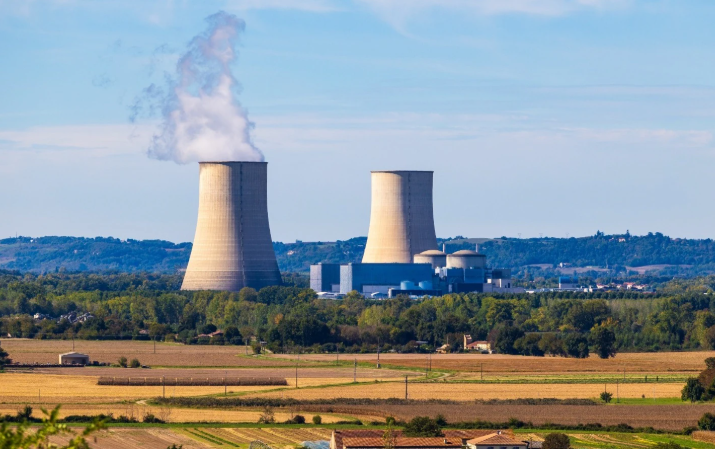
After only 4 days of restart, Unit 2 of France's Golfech Nuclear Power Plant shut down again due to Garonne River water temperature approaching limit
On the evening of August 8, French utility EDF (Électricité de France) once again shut down Unit 2 of the Golfech Nuclear Power Plant, just four days after the unit had been restarted. The direct cause of this shutdown was that the water temperature of the Garonne River was expected to reach 28°C on August 9, hitting the local operational limit. Since Unit 1 had already been taken offline for maintenance and fuel replacement, the closure of Unit 2 left both reactors at the Golfech plant simultaneously out of service, with the station temporarily ceasing power generation. Located in the Tarn-et-Garonne department of France, the Golfech Nuclear Power Plant was commissioned between 1991 and 1994, and features two 1,300 MW pressurized water reactor units. It draws cooling water from the Garonne River and dissipates heat through natural-draft cooling towers. According to EDF dat...
2026-08-10
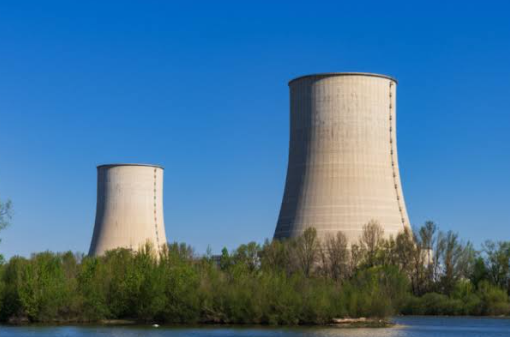
Germany's renewable energy summer generation approaches French nuclear power, may overtake it before 2030
French nuclear power has long been regarded as a key pillar of Europe's low-carbon electricity system, but the latest data shows that Germany's renewable energy generation is rapidly closing in on French nuclear power. According to the data, in January this year, Germany's combined renewable energy generation from solar, wind, and other sources totaled 22,854 GWh, while French nuclear power generated 36,838 GWh, about 61% higher. By July, however, the gap had narrowed significantly: French nuclear power generated 29,689 GWh, while Germany's renewable energy generated 26,501 GWh, with French nuclear power leading by only about 12%. This change is closely linked to summer heat. Nuclear power plants require large amounts of cooling water and are therefore typically built near coastlines or rivers. When river water levels are insufficient, or when discharged water temperatures exceed environmental limits, nuclear plants must reduce output or even shut down. The data mentions that French nuclear plants such as Golfech, Bugey, and Nogent-sur-Seine have already been affected. As heatwaves become more frequent, the cooling constraints on nuclear power in summer may become more pronounced, challenging the stability advantage of French nuclear output.
2026-08-10

India Announces INR 26.75 Trillion in Investments This Fiscal Year, with INR 6.5 Trillion Planned for Nuclear Power
According to a report released by the Economic Research Department of India's Bank of Baroda, total announced investments in India reached INR 26.75 trillion between April 1 and August 5 of the 2026-2027 fiscal year. Amid persistent uncertainties in the global economic landscape, Information Technology-enabled Services (ITeS) emerged as the dominant investment destination, accounting for 56% of total proposed investments. The report stated that the ITeS sector announced investments of INR 14.98 trillion, with nearly 99% concentrated in data centers and artificial intelligence, involving 13 companies. This indicates that digital infrastructure and AI-related industries remain a strategic focus for Indian enterprises and capital allocation. By sector, investment announcements remain highly...
2026-08-10
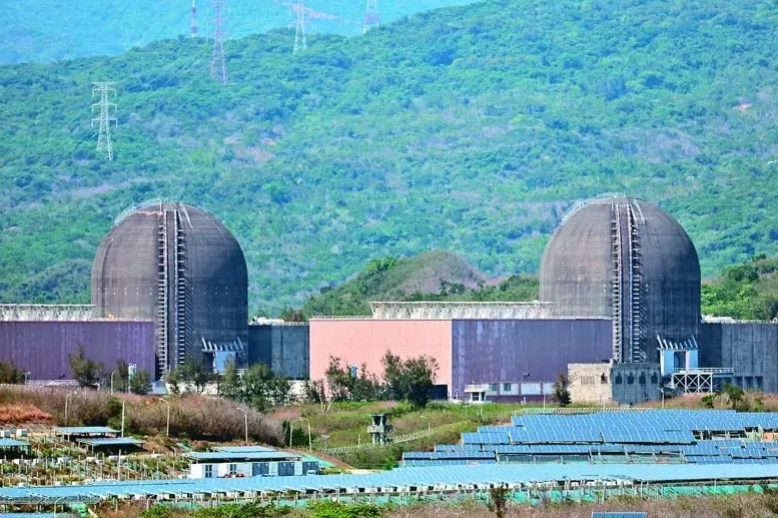
Taiwan's Nuclear Plant No. 3 safety inspection schedule extended to 2029, nuclear restart progress faces uncertainty
The latest report from the Audit Department shows that the actual progress of Taiwan's nuclear restart may be lower than expected by the public. Although the Ministry of Economic Affairs has determined that Nuclear Plant No. 2 and Nuclear Plant No. 3 are feasible for restart, and Taipower's restart plan for Nuclear Plant No. 3 has been submitted to the Nuclear Safety Commission for review, a gap has emerged in the progress of the critical self-conducted safety inspections. Although the five self-conducted safety inspection contracts for Nuclear Plant No. 3 have been awarded, the contract performance period may be extended to July 2029, casting uncertainty over the original goal of completing document review by the end of 2028. Nuclear Plant No. 3 is currently regarded as the plant with the best chance of advancing toward restart, but its restart process still must clear multiple hurdles including safety review, aging assessment, aging management, and related document review...
2026-08-10
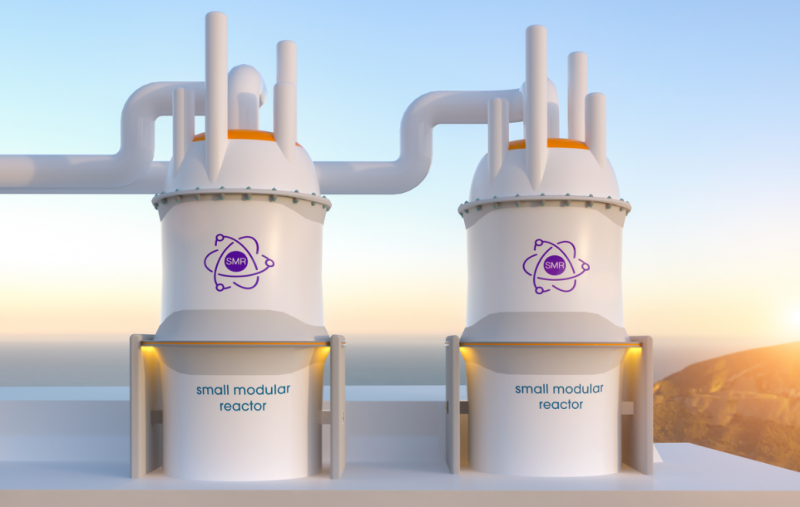
Small Modular Reactors Expected to Contribute One-Quarter of Global New Nuclear Capacity by 2050
According to data compiled by the World Nuclear Association (WNA), global nuclear power installed capacity is expected to reach 1,446 GWe by 2050. This projection is based on the continued operation of existing reactors and the implementation of announced nuclear power development targets by governments. Currently, global installed nuclear capacity stands at approximately 403 GWe. To achieve the above scale, an additional approximately 1,043 GWe of nuclear capacity will need to be added. Among this, Small Modular Reactors (SMRs) are expected to contribute about 260 GWe, accounting for roughly one-quarter of global new nuclear capacity. Factors driving nuclear power expansion are increasing. The rapid adoption of artificial intelligence applications has driven up electricity demand from data centers, and the accelerating electrification of transportation and industrial sectors has further elevated the importance of stable, low-carbon electricity supply. Meanwhile, energy security and net-zero emission targets are prompting more countries to reassess the role of nuclear energy in their energy mix.
2026-08-10
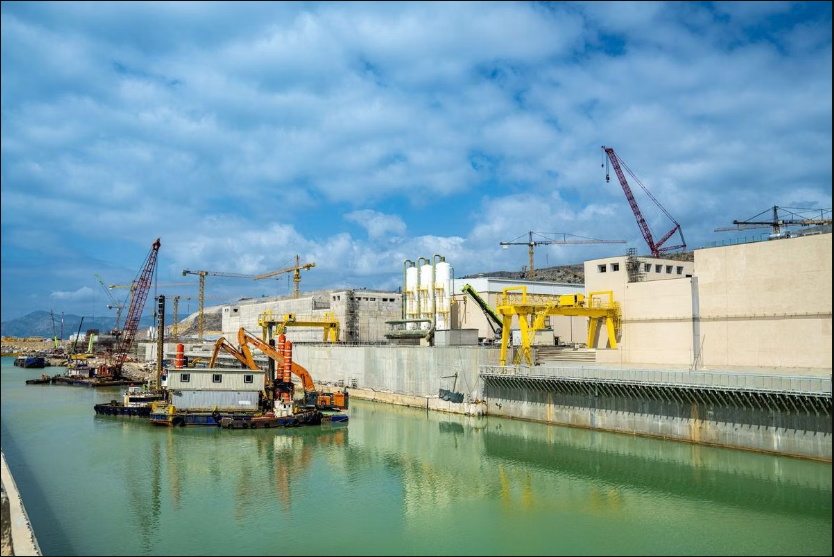
Installation of Passive Heat Removal System Completed for Unit 1 of Turkey's Akkuyu Nuclear Power Plant
Rosatom recently announced that the installation of the Passive Heat Removal System (PHRS) for Unit 1 of Turkey's Akkuyu Nuclear Power Plant has been completed. This means the unit is now equipped with a critical safety system and is ready for the commissioning phase. According to reports, the installed equipment includes approximately 90 components such as heat exchangers, guide vanes, air ducts, and electromagnetic devices, which were installed in stages in the reactor building dome area. The Passive Heat Removal System is one of the key safety systems of a nuclear power unit, designed to remove residual heat from the reactor core under specific operating conditions. The system consists of four independent channels, each corresponding to one steam generator...
2026-08-10
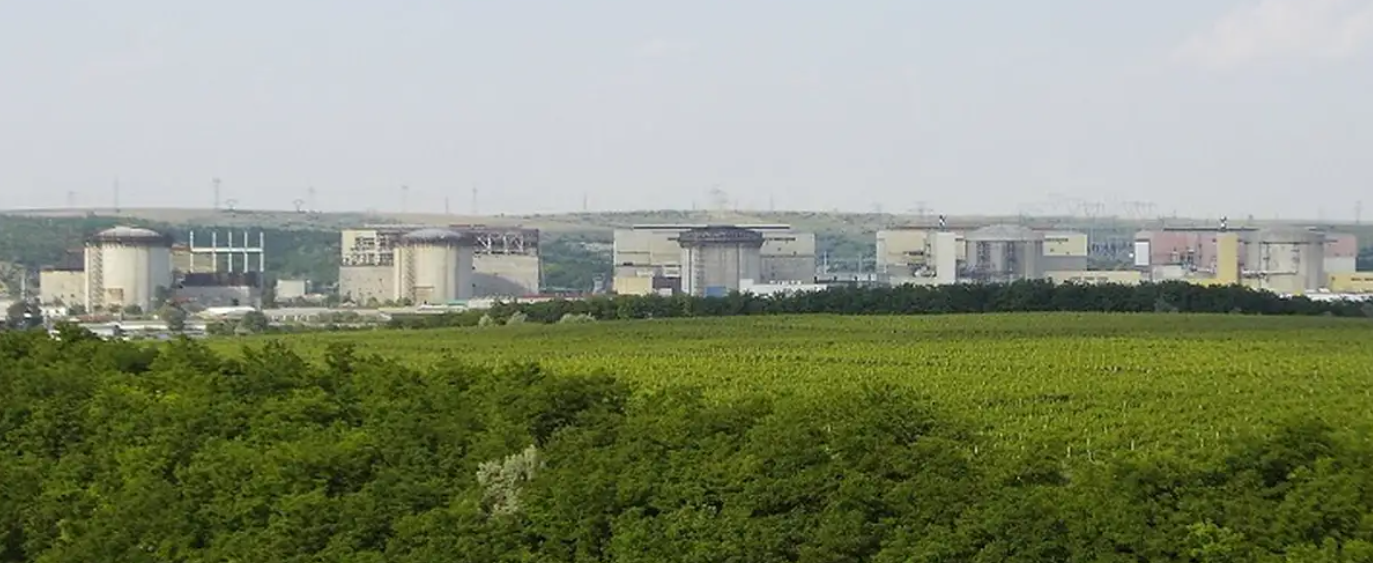
Unit 2 of Romania's Cernavoda Nuclear Power Plant to Operate for at Least 9 More Days
Unit 2 of Romania's Cernavoda Nuclear Power Plant is expected to continue operating for at least 9 more days. Romania's Acting Minister of Defense and Transport, Radu Miruță, stated that after blasting operations and the removal of underwater obstacles in the Danube River, the water level in the Cernavoda area rose by 4 centimeters over the past 24 hours. The previous day, the water level in the area had dropped by 3 centimeters. Recently, due to persistent drought, the Danube River's water level has fallen to historic lows, putting pressure on the plant's water intake and reactor cooling. To increase water supply in the river section near the Cernavoda Nuclear Power Plant, Romania last week implemented unconventional engineering measures, including blasting a rock formation in the Danube and sinking barges loaded with cargo to alter...
2026-08-10
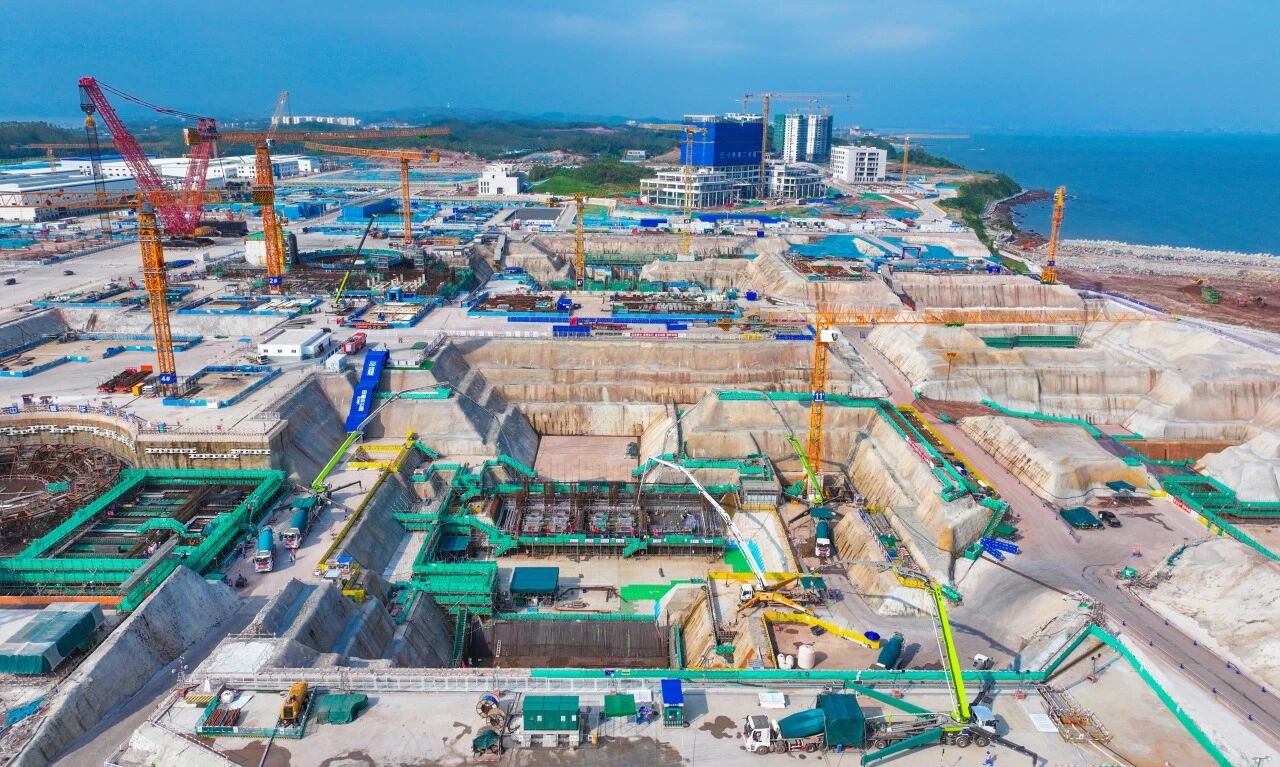
First Concrete Pour (FCD) Successfully Completed for the Conventional Island of Unit 2 at Guangxi Bailong Nuclear Power Plant
At 10:06 on August 9, after 38 hours and 46 minutes of continuous effort, the First Concrete Pour (FCD) for the conventional island of Unit 2 at the SPIC Guangxi Bailong Nuclear Power Plant was successfully completed, marking the full commencement of the main construction phase for the conventional island. The basement floor slab of the conventional island of Unit 2 adopts an integral raft foundation, divided into 9 construction zones using the sequence method. This concrete pour covered Zone 1, starting at 19:20 on August 7, with a cumulative pour of 1,732 cubic meters of concrete, conducted safely and orderly throughout the process. Since July, Typhoon Maysak directly struck Fangchenggang, bringing successive storms, followed by days of high temperatures at the Bailong nuclear site, posing significant challenges to on-site construction. In response...
2026-08-10

"AI-Based Automated Authenticity Verification System for Quality Certificates" — Diao Long, Deputy Chief Engineer of Engineering Quality Assurance, CGN Huizhou Nuclear Power Co., Ltd.
On November 14, 2025, Diao Long, Deputy Chief Engineer of Engineering Quality Assurance at CGN Huizhou Nuclear Power Co., Ltd., delivered a keynote report titled "AI-Based Automated Authenticity Verification System for Quality Certificates" at the "AI+Nuclear Innovation Application Scenario Roadshow" of the Shenzhen Nuclear Expo. The presentation introduced Huizhou Nuclear Power's AI-based automated authenticity verification system for quality certificates, designed to address issues such as low manual verification efficiency, error-proneness, difficulty in traceability, and diverse counterfeiting methods. The system achieves batch, high-speed, and traceable authenticity verification through certificate upload, QR code recognition, web scraping, large model key information comparison, and report generation, and has identified anomalies in multiple real-world counterfeiting cases...
2026-08-08
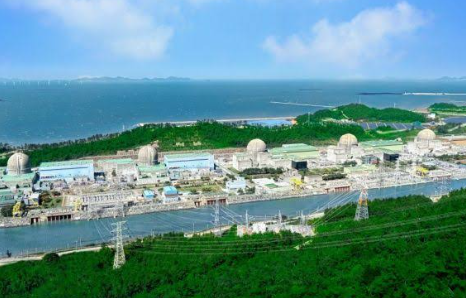
Hanbit Nuclear Power Plant launches 24-hour drone monitoring and strengthens no-fly zone publicity
The Hanbit Nuclear Power Headquarters of Korea Hydro & Nuclear Power (KHNP) recently conducted a special no-fly zone publicity campaign regarding illegal drone flights around the nuclear power plant. The campaign was held on July 27-28 at Gamame and Gusipo beaches near the Hanbit Nuclear Power Plant, focusing on educating summer tourists and drone users about flight control regulations around the plant. The publicity was jointly promoted by the Hanbit Nuclear Power Headquarters together with Yeonggwang Police Station, Gochang Police Station, Mokpo Maritime Police Station, Buan Coast Guard Station, volunteer fire brigades, and beach operators. Personnel at the site explained to visitors the drone flight restrictions around the nuclear power plant, consequences of violations, and precautions...
2026-08-08
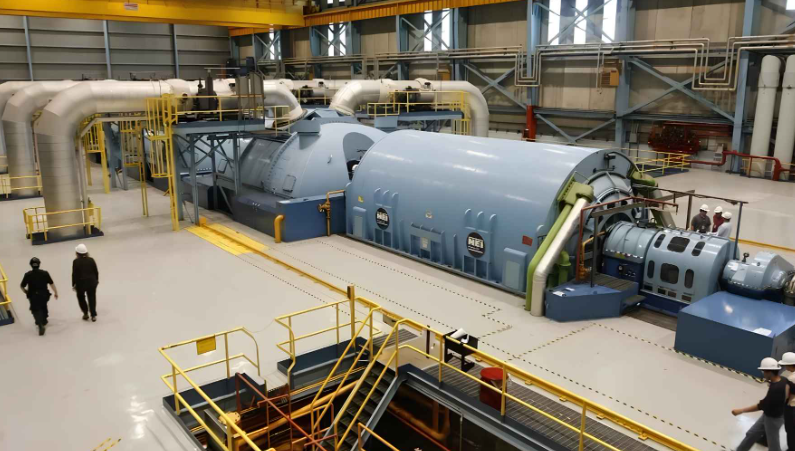
Canadian laboratory validates molten salt separation process with real spent fuel, extracting nearly 90% of plutonium in 24 hours
A chemical experiment in Canada involving real commercial reactor spent fuel has achieved noteworthy progress. Canadian Nuclear Laboratories, in shielded hot cells at Chalk River, used irradiated spent fuel from CANDU reactors to validate the first phase of Moltex Energy's waste-to-stable-salt process. The experiment showed that within 24 hours, 89.4% of the plutonium was transferred into the molten salt; by 60 hours, this proportion rose to 94.3%. Meanwhile, the vast majority of uranium remained outside the salt phase, indicating that the process exhibits strong selectivity in separating target elements. This process, named WATSS, is not a plutonium purification route but rather a group separation technology. In addition to large quantities of uranium, spent fuel contains fission products as well as transuranic elements such as plutonium and americium, the latter being a significant source of long-term radiological risk. WATSS uses high-temperature chloride molten salt and specific reducing metals to convert transuranic oxides into salt-soluble forms, while most uranium oxides remain solid. In this experiment, researchers used niobium as the reducing metal; after 24 hours, only 0.05% of uranium entered the salt, dropping to 0.02% after 60 hours, demonstrating that it does not carry large amounts of uranium into the molten salt system.
2026-08-09
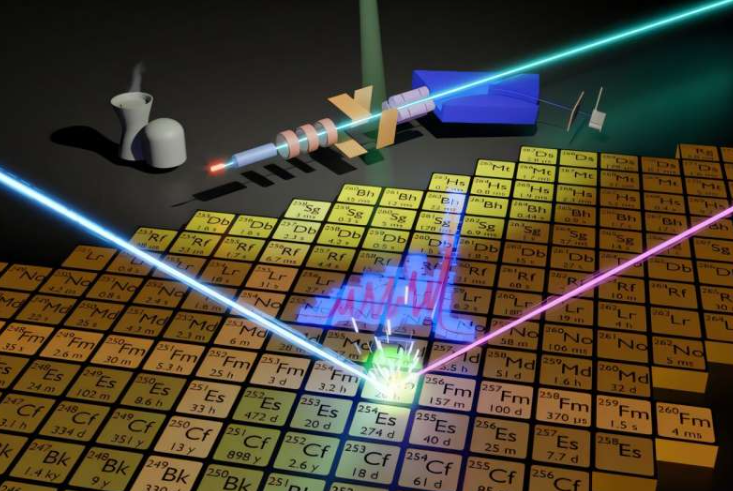
Laser spectroscopy reveals for the first time the precise nuclear shape of fermium-255, offering new clues in the search for superheavy elements
An international research team has, for the first time, precisely determined the nuclear structure of the actinide fermium-255, confirming that its nucleus exhibits a pronounced prolate deformation, similar to a rugby ball. The study, published in *Physical Review Letters*, was conducted in collaboration with 18 institutions, including Johannes Gutenberg University Mainz in Germany, the Helmholtz Institute Mainz, and the University of Gothenburg in Sweden. The findings not only correct several unreasonable nuclear property values in previous standard data tables but also provide crucial experimental validation for modern nuclear theory models. Fermium is a synthetic heavy element that does not exist in nature. Fermium-255 contains 100 protons and 155 neutrons, making its experimental production extremely challenging. The research team...
2026-08-08

Fluor's Q2 New Orders Surge to $6.1 Billion, Nuclear Fuel Enrichment Projects Boost Backlog to $26.9 Billion
U.S. engineering and construction giant Fluor demonstrated a clear acceleration in order intake in the second quarter of 2026, with new project awards reaching $6.1 billion, significantly higher than the $1.8 billion recorded in the same period last year. Among these, nuclear fuel enrichment projects emerged as a key highlight, driving the company's ending backlog to $26.9 billion. The rapid expansion in order volume indicates that customer demand for its engineering, procurement, and construction capabilities is recovering, and also reflects the tangible results of converting earlier front-end design and project development work. In terms of contract structure, 89% of Fluor's new orders this quarter were reimbursable contracts, while reimbursable contracts also accounted for 85% of total backlog, up from 80% in the same period last year....
2026-08-09
228 Research Reactors Worldwide in Operation, Supporting Medical Isotope Production and Neutron Science Innovation
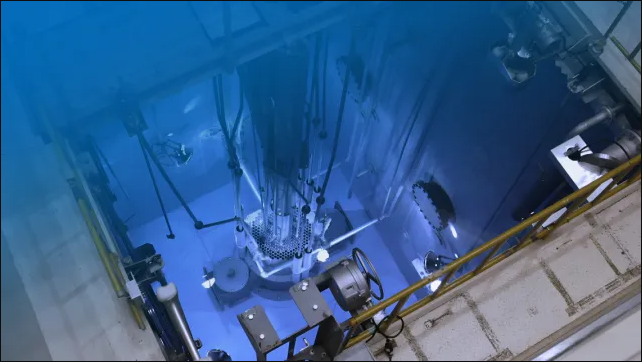
According to the International Atomic Energy Agency on August 7, research reactors continue to drive innovation in science, medicine, and industry worldwide. Currently, 228 research reactors are in operation across 54 countries, with another 23 under construction or in the planning stage. Unlike nuclear reactors used for power generation, these reactors primarily produce neutrons to support medical, industrial, agricultural, geological, forensic, and nuclear science research. A research reactor pool photographed from above. (Photo: IAEA) In the medical field, research reactors are a vital source of medical radioisotopes. Among them, technetium-99m is widely used for diagnosing cancer and diseases of the heart, brain, and bones; a large number of medical diagnostic and therapeutic procedures worldwide rely on this isotope. Other radioisotopes such as iodine-131 are also used in the treatment of cancer and thyroid diseases. The IAEA states that radioisotopes produced by research reactors serve millions of patients globally and are an essential component of modern nuclear medicine systems.
2026-08-09

Russian nuclear power plants generate 129.6 billion kWh of electricity this year
Alexey Likhachev, CEO of Rosatom, recently stated that since the beginning of this year, Russian nuclear power plants have generated a cumulative total of 129.6 billion kWh of electricity, exceeding the target set by the Federal Antimonopoly Service of the Russian Federation by 7.8%. Likhachev noted that Russia is currently in its summer peak electricity consumption period, and nuclear power plants across the country are operating normally overall, with stable power generation and all safety requirements being met. He stated that hot weather does require operating entities to pay greater attention to cooling and heat reduction measures, but this is a seasonal factor that must be addressed in nuclear power plant operations. He pointed out that Russian nuclear power plants have fully considered different climatic conditions during their design and operation phases...
2026-08-08