
Search Results
Keyword:Agricultural Nuclear Technology
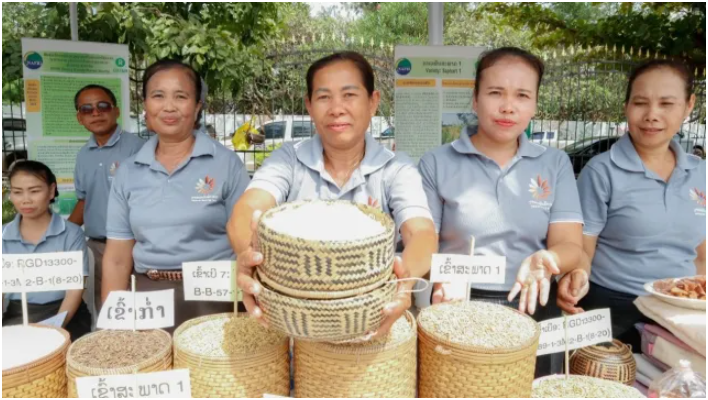
Nuclear technology breeding helps Laos improve rice varieties and increase yields
Rice is a vital staple food and source of income for rural households in the Lao People's Democratic Republic, and serves as the foundation of the country's food security. Over 80% of local farmers grow rice, with paddy fields accounting for approximately 60% of the nation's cultivated land. To enhance food supply capacity, Laos has set a target of increasing rice production to 5.5 million tonnes. The Saphart 1 rice variety was launched at the 2023 National Seed Fair for Food Security and Nutrition. (Photo: S. Phommalath/ RCCRC) Facing challenges such as environmental change, flooding, plant diseases, and increasing pressure on agricultural systems, agricultural researchers in Laos are turning to nuclear technology to improve rice varieties. The National Agriculture and Forestry Research Institute of Laos...
2026-09-01
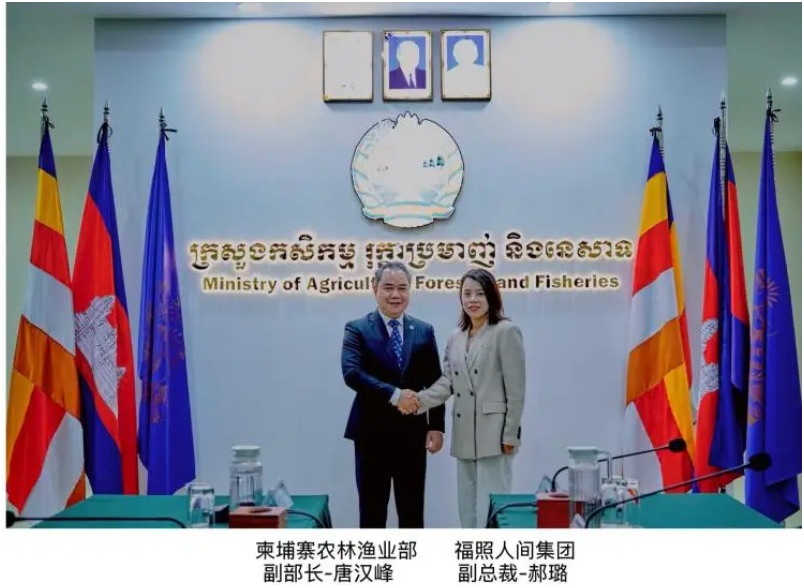
China and Cambodia Sign MOU on Agricultural Supply Chain Cooperation, with Irradiation Processing Technology Listed as a Key Focus
On August 10, Haikou Silk Road Social Science Research Institute and the Ministry of Agriculture, Forestry and Fisheries of the Kingdom of Cambodia signed the Memorandum of Understanding on Research Cooperation for the Stability and Development of the China-Cambodia Agricultural Supply Chain in Phnom Penh. According to the MOU, the industrial application of irradiation processing technology in the agricultural sector has been listed as one of the core cooperation directions for both sides. In this cooperation, the Joint Laboratory for R&D and Validation of Agricultural Product Irradiation Technology played a key supporting role. The joint laboratory was co-founded by Fuzhao Renjian Group and the Institute of Agro-Products Processing Science and Technology of the Chinese Academy of Agricultural Sciences, focusing on breeding, post-harvest loss reduction, agricultural product processing, and food safety, conducting irradiation technology R&D and validation, and promoting the application of relevant outcomes...
2026-08-24

Texas A&M University Develops Rio Red Grapefruit Through Radiation Mutagenesis, Now Accounting for About 75% of Texas Production
In 1984, researchers at Texas A&M University used radiation mutagenesis to develop the Rio Red grapefruit. Forty-two years later, this variety has become the dominant cultivar in Texas's grapefruit industry, accounting for approximately 75% of the state's total grapefruit production. The Rio Red grapefruit is distinguished by its vibrant pink flesh, as well as its greater cold tolerance and higher yields compared to other grapefruit varieties. These traits have facilitated its widespread adoption across Texas growing regions, gradually establishing it as a representative grapefruit variety in the local market. Grapefruit itself was not originally a product of artificial breeding. The earliest known grapefruit seedlings appeared in Barbados in the 18th century, resulting from a cross between the Jamaican sweet...
2026-08-22
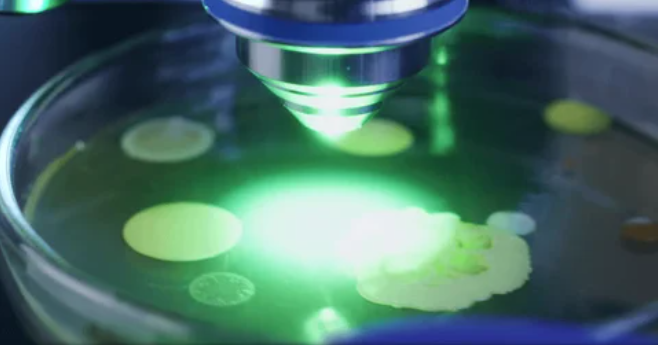
Russian Scientists Develop Bioluminescent Bacterial Bioassay for Screening Safe Low-Dose Radiation Levels in Animals
Russian researchers have developed a rapid bioassay method based on bioluminescent bacteria that can be used to assess safe dose ranges of ionizing radiation for animals, providing an early screening tool for low-dose radiation applications in livestock farming. The study involved researchers from the Institute of Biophysics of the Siberian Branch of the Russian Academy of Sciences, Siberian Federal University, and Krasnoyarsk State Agrarian University. The research team noted that low-dose ionizing radiation ranging from tens to hundreds of milligrays (mGy) may activate a series of physiological processes in animals, including metabolism, growth, and biomass accumulation; however, if the dose exceeds the safe range, it may cause physiological...
2026-08-14
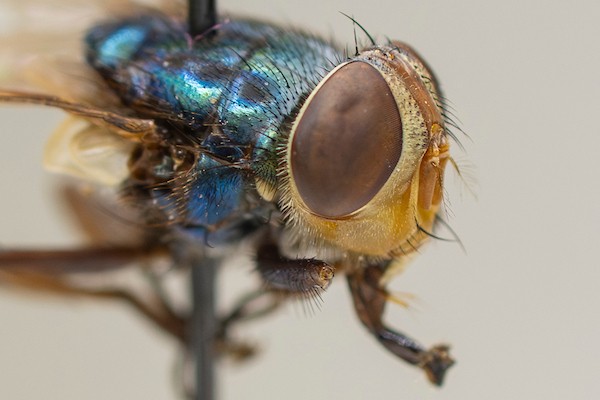
Texas to Accelerate Opening of Sterile Fly Facility to Combat New World Screwworm Outbreak
The U.S. Department of Agriculture announced that, in response to the New World screwworm (NWS) outbreak already detected in Texas and New Mexico, the sterile fly facility at Moore Air Base in Edinburg, Texas, will open early next spring, approximately seven months ahead of the original schedule. Construction on the facility began in April of this year, and once completed, it will produce sterile flies to support outbreak control efforts using the Sterile Insect Technique (SIT). Under the plan, the facility will reach full operational capacity by the end of 2028, producing approximately 300 million sterile flies per week. The Sterile Insect Technique works by releasing sterilized flies into the environment to mate with wild screwworms, thereby interrupting the reproductive cycle and reducing the risk of continued parasite spread...
2026-08-12
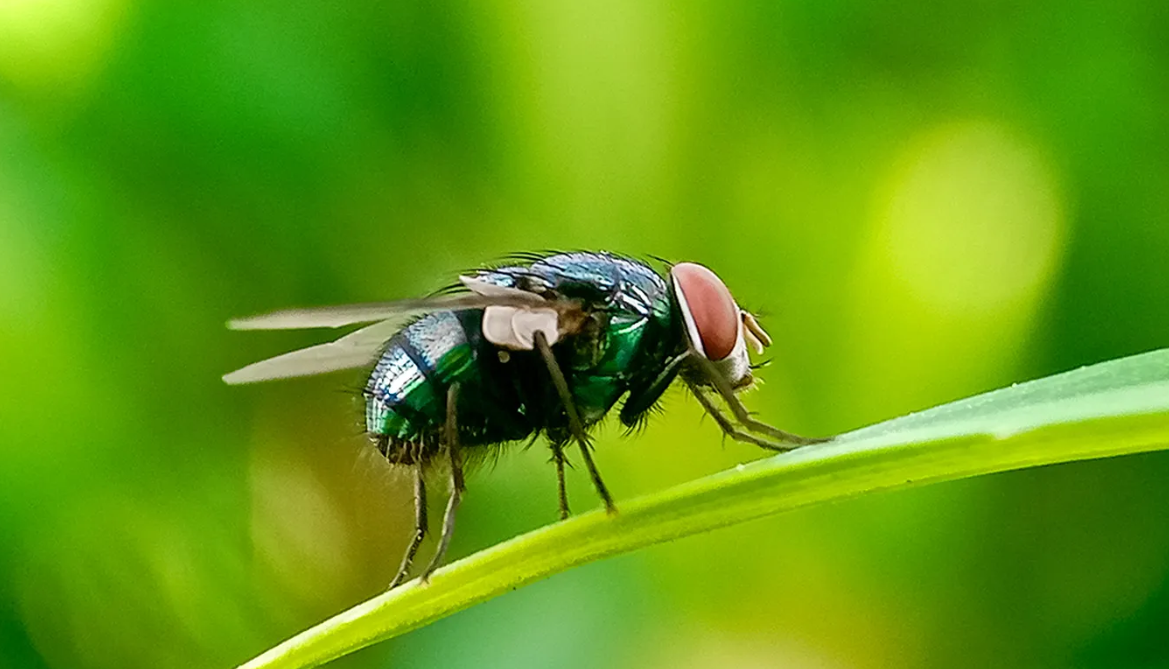
Texas A&M University Leads Development of Novel Wound Treatment for New World Screwworm
On August 10, 2026, the Texas A&M Engineering Experiment Station is leading the development of fast-acting, low-residue wound treatments for livestock infected with New World screwworm. The project, funded at $1.86 million, is led by Dr. Mustafa E. S. Akbulut, Associate Professor in the Artie McFerrin Department of Chemical Engineering at Texas A&M University, with the goal of providing ranchers and veterinarians with immediately deployable field treatment tools after infection occurs in animals. New World screwworm is a parasite that feeds on living tissue. According to available data, the pest is currently spreading in Central America and Mexico, with over 150,000 animal infection cases reported. Recently, cases have also emerged in Texas and New Mexico. Federal models predict that a large-scale outbreak in Texas could result in livestock losses exceeding $1.8 billion. If left untreated, these pests can cause severe harm to livestock, companion animals, and wildlife.
2026-08-11
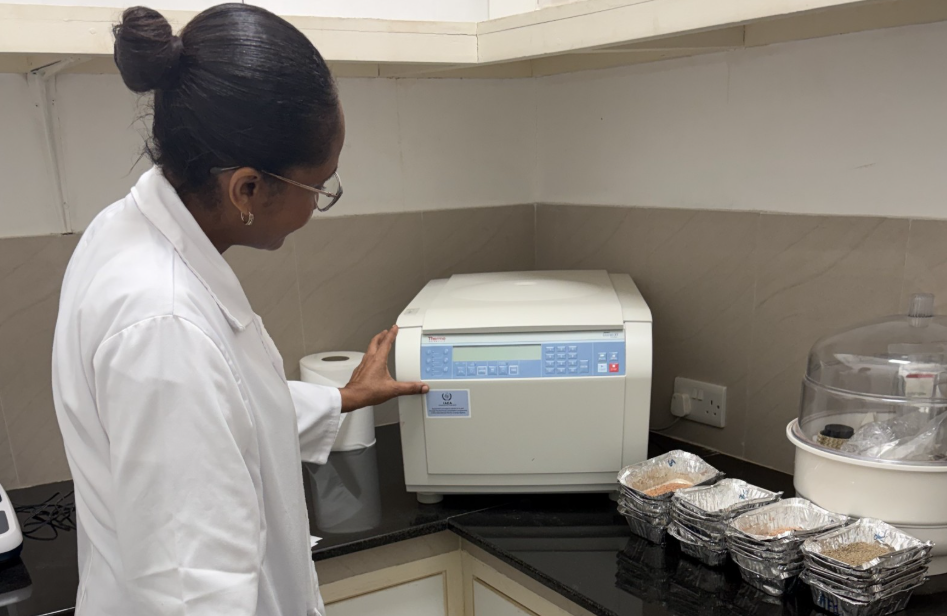
Seychelles Leverages Nuclear Technology to Improve Soil Management and Boost Fruit and Vegetable Production Capacity
With the support of the International Atomic Energy Agency (IAEA), researchers in Seychelles are collaborating with policymakers and farmers to utilize nuclear and isotopic techniques. These methods aim to improve soil nutrient and water management, there
2026-07-27